


Gaza’s Hunger Games: Official Narratives Collide with Empty Bowls
POLICY WIRE — Jerusalem, Israel — The sound of a child’s stomach rumbling often goes unheard amidst the thundering rhetoric of international diplomacy. But in Gaza, that desperate cadence has...

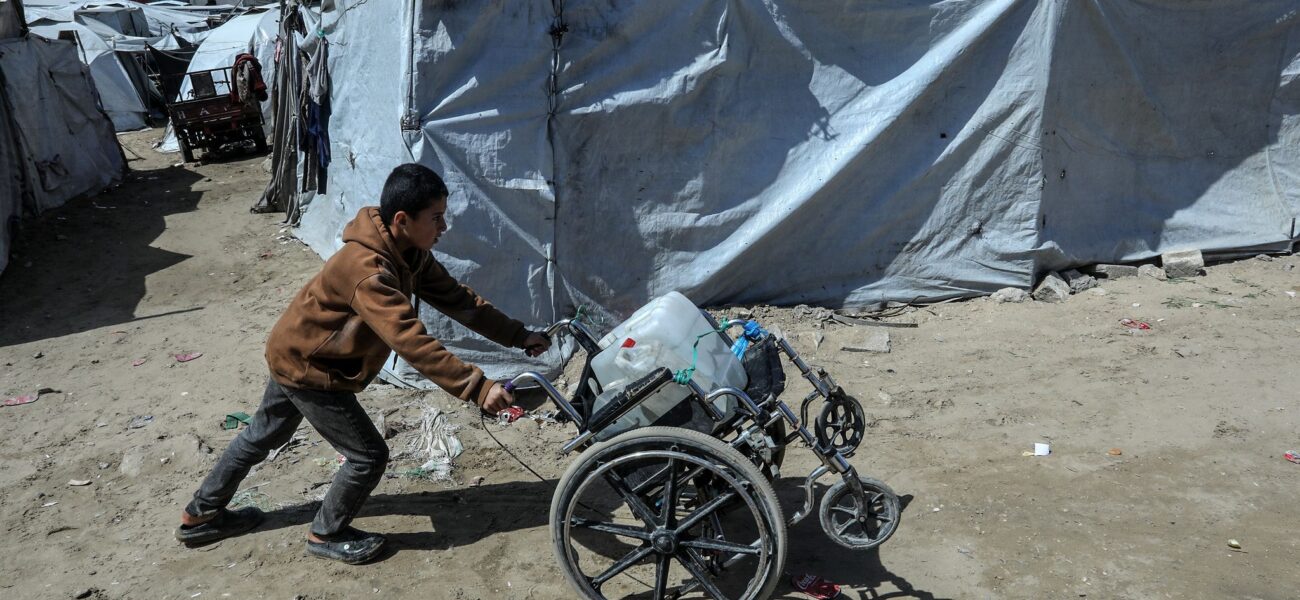
POLICY WIRE — Jerusalem, Israel — The sound of a child’s stomach rumbling often goes unheard amidst the thundering rhetoric of international diplomacy. But in Gaza, that desperate cadence has become a constant, echoing a reality fiercely contested by official statements. The consensus among global aid organizations, nearly unanimous, paints a grim picture of starvation, disease, and societal collapse. Yet, Israel, a key player in the beleaguered enclave’s fate, has unequivocally rejected claims of a full-blown humanitarian crisis. It’s a stark, almost surreal disconnect between reports from the ground and pronouncements from official rostrums.
It’s not just a matter of semantics. It’s about culpability, about political leverage, about the sheer human cost of war when narratives diverge so completely. The airwaves hum with desperate pleas for more aid, unfettered access, — and ceasefires. But, from Jerusalem, the messaging strikes a different, almost dismissive chord. They say it’s not a crisis; it’s a challenge, one complicated by Hamas’s alleged diversion of aid and its entrenchment within civilian infrastructure. They’ve been insisting the numbers are overstated. They’ve suggested that while conditions are tough, the catastrophization serves a political agenda.
“We’re actively facilitating aid deliveries, increasing inspection points, and working with international partners,” stated Mark Regev, a senior advisor to Israel’s Prime Minister, in a recent briefing. “The notion of an impending famine is a gross exaggeration, often propagated by those who seek to delegitimize Israel’s self-defense operations. Hamas, they’re the ones starving their own people to score propaganda points.” It’s a familiar refrain, one that consistently frames the issue not as a failing of policy or access, but as a deliberate distortion by adversaries.
And then there’s the other side of the ledger. Organizations like UNICEF and the World Food Programme haven’t just voiced concerns; they’ve provided harrowing statistics. They say things are spiraling. One report from the Integrated Food Security Phase Classification (IPC) Initiative, for instance, indicated that nearly a quarter of Gaza’s population, 576,000 people, is facing catastrophic levels of food insecurity — an emergency classification equivalent to famine — with widespread death already occurring or imminent by July if trends continue. That’s not a slight bump in the road; it’s a cliff edge. And kids, they’re the ones feeling it most.
“Look, I don’t care what officials are saying from behind a podium in Tel Aviv,” retorted Melanie Joffe, Director of Emergency Operations for a major international aid NGO working in the region, in a rather blunt call to Policy Wire. “We’re on the ground. Our staff are reporting parents boiling weeds for their kids to eat. They’re seeing children literally waste away. Denying the crisis won’t make the hunger disappear. It just makes the world’s response that much slower, that much more inadequate.”
This war of words over Gaza isn’t contained to the diplomatic back channels. It spills over, predictably, into the broader Muslim world, resonating deeply in nations like Pakistan and Indonesia, where public sentiment often leans heavily toward Palestinian solidarity. Their governments, while perhaps nuanced in their official condemnations, often face immense domestic pressure to act, to condemn what many perceive as collective punishment. Pakistan’s Foreign Ministry has consistently called for an immediate ceasefire and unhindered humanitarian access, its pronouncements often reflecting a palpable frustration with the international community’s perceived inaction. For millions across South Asia, this isn’t just a conflict; it’s a moral failure of monumental proportions, viewed through a lens of historical grievance and perceived Western hypocrisy. It’s personal.
What This Means
The Israeli rejection of a humanitarian crisis in Gaza serves multiple functions, none of them good for the people trapped inside the strip. Politically, it aims to blunt international pressure, deflect blame, — and justify continued military operations. If there’s no *crisis*, then the urgent demands for a full-scale intervention, an immediate ceasefire, or punitive actions against Israel lose some of their moral force. This stance also entrenches a dangerous diplomatic deadlock, making meaningful negotiations over aid delivery and civilian protection incredibly difficult. Other nations, already critical, see this as an overt disregard for human life and international law, eroding any sliver of trust.
Economically, the implications are apocalyptic. Denying the crisis hinders efforts to mobilize adequate global funding for emergency relief and long-term reconstruction. Because it suggests that what’s happening isn’t bad enough to warrant an extraordinary response, funding pledges might lag, aid convoys might remain under-resourced, and the already obliterated infrastructure of Gaza — hospitals, schools, sanitation systems — will simply crumble further. The local economy, what little remains, has vanished; there’s no productive capacity left, creating a dependency on external aid that won’t alleviate the long-term poverty. This isn’t just about hunger; it’s about setting the stage for decades of destitution and instability, fostering grievances that will undoubtedly simmer long after the guns fall silent. Just as a missed kick can echo global fragility, so too can a humanitarian blockade lay groundwork for deeper rifts. But it’s worse than a game.
The chasm between perceived truth and lived reality only deepens the human tragedy, leaving the vulnerable caught in a relentless vise of geopolitical maneuvering. And the world watches, or at least pretends to. What happens when official lines stop squaring up with observable facts? We’re finding out, tragically, every single day in Gaza.