


Silent Savior or Stopgap? US Soccer’s Olympic Bet Amidst Senior Team Chaos
POLICY WIRE — Washington D.C., USA — American soccer, for all its boisterous self-promotion, often finds itself trapped in a peculiar purgatory: perpetually promising a global breakthrough that never...

POLICY WIRE — Washington D.C., USA — American soccer, for all its boisterous self-promotion, often finds itself trapped in a peculiar purgatory: perpetually promising a global breakthrough that never quite materializes, despite waves of investment and increasing popularity. While the chatter — mostly anxious whispers, frankly — still swirls around the senior men’s national team’s coaching dilemma post-World Cup, the federation has quietly, almost antiseptically, addressed a different, arguably less glamorous, but still profoundly strategic role: the 2028 Olympic squad.
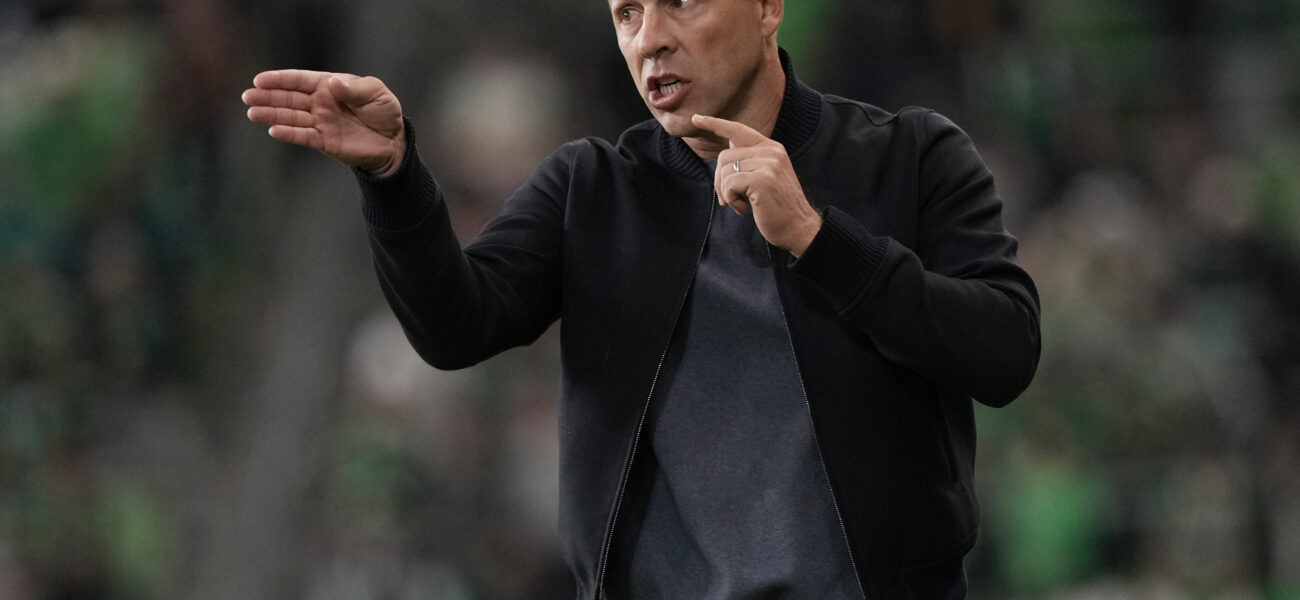
It’s Steve Cherundolo, the former MLS Cup-winning coach and three-time World Cup defender, who’s been tapped to guide the under-23 program for the Los Angeles Games. An appointment made with less fanfare than a high school bake sale, but one carrying significant weight for the sport’s domestic future. He’s the chosen one, for now, to shepherd America’s young talent onto a stage where age restrictions usually mean pure, unvarnished potential runs headlong into fleeting glory.
This isn’t about immediate World Cup glory, though the lineage is clear enough. Instead, it’s about development. Dan Helfrich, the USSF chief executive, framed it pretty starkly. “Throughout his career, Steve Cherundolo has been a proven winner, an elite talent developer, and a great ambassador for American soccer,” Helfrich proclaimed. He wasn’t just throwing around buzzwords, not entirely anyway. But it’s an old song for U.S. Soccer: always developing, always building for ‘next time.’
The Olympics, after all, with their under-23 rule (allowing a paltry three overage players), are seen as a laboratory, a crucible for those future World Cup hopefuls. Helfrich called the 2028 Olympics “a critical platform to develop our next generation of players and further engage our passionate fan base as we pursue an Olympic medal at home.” It’s a pursuit the nation hasn’t finished since 2000, when the team snagged a quarterfinal spot, an achievement matched by Marko Mitrovic’s 2024 squad in France. Because, you know, these things take time. And patience. Mostly patience.
Cherundolo, a San Diego native, 2021 National Soccer Hall of Fame inductee, brings a resume that spans continents. He spent 15 years as a player at Hannover in Germany, then moved through their coaching ranks, even a stint with the German youth program—a stark contrast to America’s often fragmented development path. He eventually returned stateside to guide LAFC to a Supporters’ Shield and an MLS championship, stepping down in 2025 before this new calling. It’s an eclectic career, a journeyman’s path, but one steeped in high-level club experience, something the federation often seems to crave but rarely nurtures within its own ecosystem.
And now, this role: splitting time between a new national training center near Atlanta and scouring European clubs for Olympic-eligible players. It’s an almost Sisyphean task, keeping tabs on dozens of young Americans scattered across myriad leagues, convincing clubs to release them. But it’s what’s necessary.
Because the stakes are real, even if the primary goal is ‘development.’ Cherundolo, himself a veteran of three World Cups, understands the weight of national representation. “Representing the United States at the Olympic Games is one of the greatest honors in sports, and I’m grateful for the opportunity to lead this team,” he stated. There’s genuine pride there, you’d reckon. “I believe we have an exciting group of players with tremendous potential, and I’m looking forward to building an environment where they can challenge themselves, grow together and represent our country with pride.” It sounds good. It should sound good. And sometimes, you know, it actually is.
📄 POLICY WIRE WHITEPAPER PUBLISHED: PAKISTAN'S NATIONAL SECURITY POLICY PRIORITIES
👉 READ BY CLICKING HEREBut while Cherundolo has his mission, the senior squad’s fate hangs in limbo. Mauricio Pochettino is supposedly still talking with the USSF, a dance that stretches longer than a penalty shootout. If that deal doesn’t stick, then the global search — again — begins for 2030, possibly beyond. That’s the real prize, isn’t it?
The global reach of the sport, especially at an event like the Olympics in a culturally diverse hub like Los Angeles, just can’t be understated. According to a 2023 FIFA report, global soccer viewership continues its upward trend, with an estimated 5 billion people tuning into the last World Cup alone, cementing its place as the planet’s most watched sport. In a country like America, home to enormous diasporas — including a burgeoning South Asian community whose traditional passion for cricket is increasingly making room for the ‘beautiful game’ — hosting these spectacles isn’t just about developing domestic talent. It’s a bridge, a way to further embed the sport into new cultural veins, sparking passions in communities from Lahore to Long Island, from Karachi to Cupertino. Because when Morocco’s national team plays in the States, it doesn’t just draw Moroccans, does it? The blend of diaspora and sport creates a unique market, a whole different kind of energy for the domestic game.
What This Means
This appointment signals two primary intentions from the USSF, neither of them particularly groundbreaking, but both necessary. First, Cherundolo isn’t merely an Olympic coach; he’s an audition. His ability to wrangle young talent, manage a multi-club player pool, and achieve a respectable — if not medal-winning — performance on home soil in 2028 will put him squarely in contention for the senior national team job for the 2030 or 2034 World Cups, should the Pochettino talks fizzle or subsequent coaching cycles demand new blood. It’s an unspoken succession plan, a ‘prove it’ moment on a global stage, even if a slightly smaller one than the senior squad faces.
Second, the Olympic program continues its transformation into a de facto pipeline. America hosts the tournament, guaranteeing a berth it often struggles to qualify for through the convoluted regional gauntlet. This allows for unparalleled preparation without the pressure of knockout stage qualifiers. It offers a unique opportunity for young Americans to compete against some of the world’s most promising talents – many of whom are already established professionals in top European leagues. The economic implications are clear too: a successful run, even without a medal, boosts visibility for players, potentially increasing their market value and strengthening the overall MLS brand, or at least making college ball look a bit more organized, an experience often debated within the broader ‘amateur’ athlete economy. But it’s not just about player development, is it? It’s about cementing soccer’s cultural foothold in a nation still, sometimes, on the fence about the sport’s hierarchy. This isn’t just about winning. It’s about winning hearts, or at least, attention.