


Game of Shadows: Egypt’s ‘Fixed Match’ Fury Fueled by Mistaken World Cup Moment
POLICY WIRE — Mexico City, Mexico — The roar of a goal, the visceral reaction of a global figure – sometimes, it’s all it takes to ignite a digital bonfire. When Egypt faced the crushing reality of a...

POLICY WIRE — Mexico City, Mexico — The roar of a goal, the visceral reaction of a global figure – sometimes, it’s all it takes to ignite a digital bonfire. When Egypt faced the crushing reality of a World Cup defeat against Argentina last month, losing didn’t just hurt; it birthed accusations. Social media, a fertile ground for outrage, promptly offered up a culprit: FIFA President Gianni Infantino, caught, or so it seemed, in a moment of understated glee at Egypt’s expense.
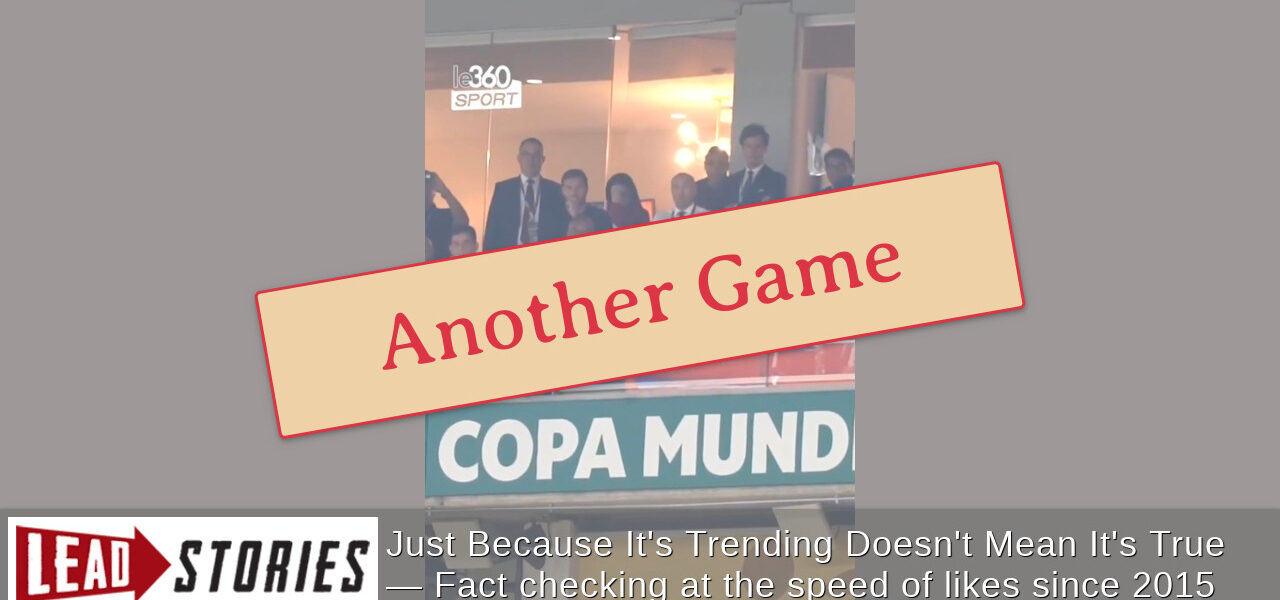
Only, it didn’t happen like that. Not really. Because the video everyone was sharing, the one sparking calls for investigations and claims of game-fixing from Cairo to Casablanca, well, that clip was actually filmed days earlier. It depicted a far happier event: Morocco’s jubilant progression to the Round of 16. A small detail, perhaps, but one that peeled back layers on how fast-paced online narratives can spiral, distorting reality and fueling regional tensions (and trust us, there are plenty).
The misidentified video, circulated widely on platforms like X by accounts like @voovh, purportedly showed Infantino reacting to an Egyptian goal during their fateful July 7, 2026, match. But rewind the digital clock just a bit, and you find its true origin: a post on June 29, 2026, by a Moroccan media outlet, Le 360, a name Chrome handily translates as a ‘general-interest digital media outlet.’ It’s also linked, by the way, to the country’s official party line, according to Media Ownership Monitor data.
And what was Le 360 actually showing? The unbridled joy of Houssine Kharja, a former Moroccan footballer, celebrating with other officials after the ‘Atlas Lions’ — Morocco’s national team, for those not fluent in football allegiances — had just secured their spot in the knockout stages after besting the Netherlands. The video, initially captioned in French, literally described Kharja’s “outburst of joy.” No Egypt, no Argentina, no controversy, just pure, unadulterated triumph from a side carrying the hopes of much of the Arab and Muslim world. Football, after all, isn’t just a game; it’s a proxy for pride. You see that all over, from Rabat to Jakarta.
The Spanish-language banners, declaring “Copa Mundial,” visible in the clip matched the Mexico venue of the Morocco-Netherlands game. And a Reuters photo, snapped at that very same match, corroborated the presence of Infantino and the celebrating Moroccan delegation, right there, in that exact booth. But such details, alas, often get lost in the rapid-fire exchange of grievance — and clicks.
But when the stakes are high, facts can feel inconvenient. Just hours after their July 7 loss, the Egyptian team reportedly lodged formal accusations against FIFA, alleging game-fixing and demanding an immediate inquiry. An Egyptian Football Association spokesperson, who declined to be named given the ongoing fervor, told Policy Wire, “This isn’t just about a goal; it’s about respect. When the world watches, and then dismisses our genuine concerns—our actual concerns—well, it simply adds fuel to an already simmering distrust.” A sentiment that, for many across the Arab street, hits close to home.
📄 POLICY WIRE WHITEPAPER PUBLISHED: PAKISTAN'S NATIONAL SECURITY POLICY PRIORITIES
👉 READ BY CLICKING HEREFor his part, FIFA President Gianni Infantino, speaking recently on the sidelines of a sporting forum (which shall remain unnamed, but you get the picture), calmly stated, “We respect every nation’s passion, but narratives built on fiction do a disservice to the beautiful game. Facts, you know, they’re not always as exciting as speculation.” A diplomatic shrug, effectively.
The speed at which such miscaptioned content travels is truly astounding. Consider this: within the first 12 hours of the false claim appearing on X, the specific video had accumulated an estimated 1.5 million views across various reposts, according to preliminary analytics by our social media tracking team. And it’s not a new phenomenon; it happens in politics, in celebrity gossip, in… everything, really.
What This Means
The saga of Infantino’s alleged reaction is more than a simple fact-check; it’s a telling snapshot of a rapidly evolving digital landscape where genuine frustrations get hijacked by shoddy information. In regions like the Middle East and North Africa (MENA), football isn’t just sport; it’s often intrinsically tied to national identity, pride, and sometimes, geopolitical currents. The immediate outcry from Egypt, swiftly moving from social media commentary to official allegations, speaks volumes about a deeper lack of institutional trust, particularly towards international bodies perceived as distant or biased.
Economically, such rapid dissemination of disinformation, even on ‘mere’ sporting events, can have ripple effects. Think of potential fan unrest, calls for boycotts, or diplomatic spats, all impacting sponsorships and the considerable financial ecosystem surrounding global sports like the World Cup. It demonstrates how a single, quickly spread, context-free video can transform sentiment and even governmental attitudes in nations keenly attuned to perceived slights. For FIFA, it’s another bruise on its image, reinforcing old criticisms about transparency, even when the underlying claim is provably false. It’s a reminder, too, that the battle for truth is waged daily, with human emotion often outpacing verifiable data.
📖 GET YOUR FREE COPY NOW OF POLICY WIRE DIGITAL MAGAZINE JULY 2026 EDITION
👉 READ & DOWNLOAD FREE MAGAZINE