


Kremlin Turmoil: Putin’s Generals Face Ominous Fates
Cracks appear in Putin's regime as high-ranking generals meet suspicious ends. POLICY WIRE investigates internal purges, power struggles, and global fallout.

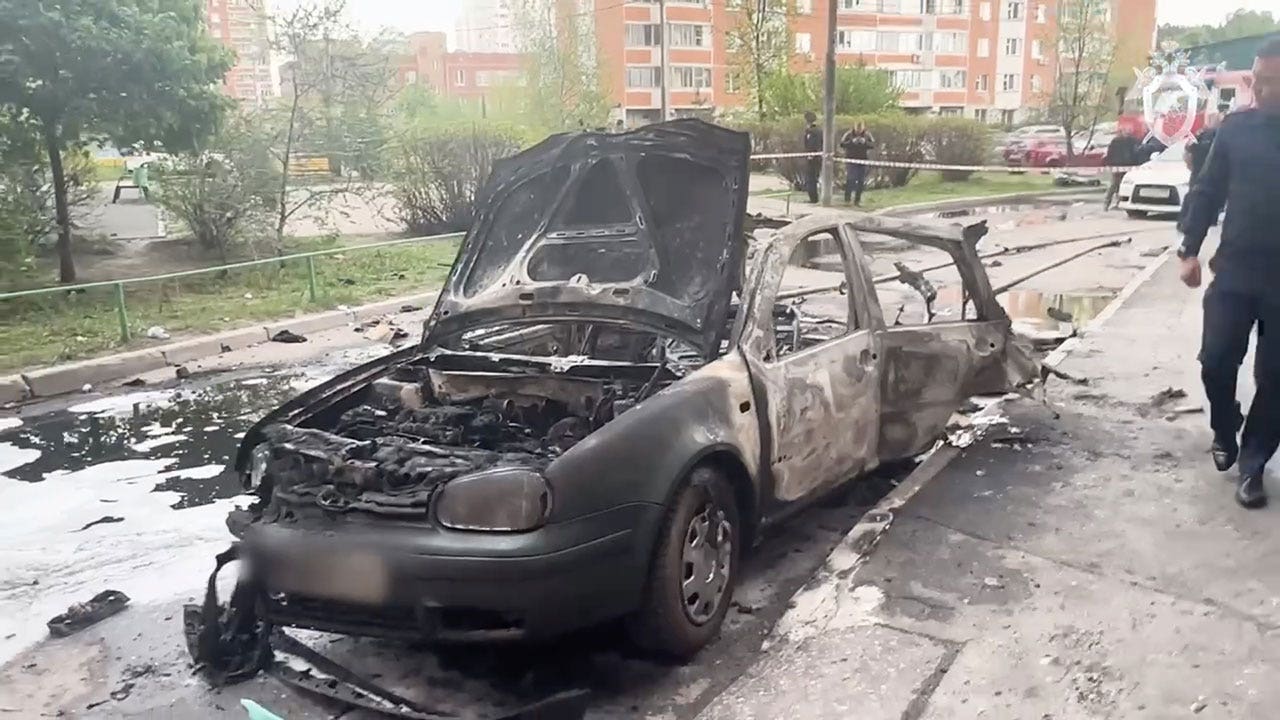
POLICY WIRE — Moscow, Russia — The notion of absolute stability, that impenetrable shield Vladimir Putin’s regime so meticulously constructs, appears to be — well, let’s call it rather threadbare these days. It’s not just the external pressures; oh no. It’s what’s bubbling up from the murky depths within Russia’s formidable security establishment. Lately, that quiet hum of loyalty has been punctuated by the unsettling thud of high-ranking generals departing this mortal coil under — shall we say — less than transparent circumstances. It’s a chilling narrative, one that doesn’t quite fit the carefully crafted image of a unified, iron-willed leadership.
You see, for decades, the Kremlin has projected an aura of unshakeable control, a monolith where dissent is silenced long before it even forms a whisper. But when generals start turning up dead—not in some far-off conflict zone, mind you, but here, where power is supposed to be absolute—one has to wonder just what sort of drama’s unfolding behind those Kremlin walls. It suggests a rupture, a crack in the façade, far more severe than previously acknowledged.
These aren’t isolated incidents, either. There’s been a disconcerting frequency to these demises. It implies not just internal squabbling but something more organized, more sinister. The whispers, you understand, have grown into a low rumble. Are these internal purges? Messages sent? Or is Russia’s security apparatus so frayed, so riddled with distrust and competing factions, that it’s simply eating itself alive? One might ask, if Moscow can’t keep its own top brass safe in their beds—or their dachas, more accurately—then what’s left of that image of invincible state power? The official narrative is, predictably, thin on detail, usually citing vague illnesses or [QUOTE_PLACEHOLDER]. They’ve really leaned on that one, haven’t they?
And it’s a hell of a bad look for a president who’s always prided himself on managing a vast, complex intelligence and military machine with an iron fist. It speaks to a level of internal strife that wasn’t supposed to be possible under Putin’s watch, a stark contrast to the perceived invincibility he’s long cultivated. It’s not just about one or two individuals, this is about the perceived integrity of the whole darn system. Some analysts have begun drawing rather grim historical parallels—Stalin’s purges, though hopefully not to that scale—where perceived enemies within were systematically eliminated to consolidate power. And those weren’t quiet affairs, either.
Consider, for a moment, the ripple effects of such palpable instability, particularly in parts of the world where Moscow still holds sway or seeks to project power. Take Pakistan, for instance, a nation often navigating its own intricate geopolitical dances. Islamabad, like many capitals in the Muslim world, observes the goings-on in Russia with a pragmatic eye, balancing partnerships, often acquiring crucial defense hardware from Moscow. When Russia, a key arms supplier, begins to appear less than internally coherent, its reliability as a strategic partner inevitably comes into question. Countries that have traditionally looked to Russia for diplomatic support or military equipment must now factor in this unpredictable internal dynamic. It creates doubt, invites hesitation, and—let’s be frank—makes you wonder about the supply chain integrity when the suppliers themselves seem to be turning on one another.
This isn’t merely an academic exercise; it’s about concrete calculations. For example, the Stockholm International Peace Research Institute (SIPRI) reported in 2023 that Russia accounted for 11% of global arms exports between 2018-2022, placing it as the second-largest exporter worldwide. Nations relying on those exports, like Pakistan which historically imports a significant portion of its military equipment from various sources including Russia, would certainly be watching Moscow’s internal security posture with keen interest. An unstable Russia means potential disruption, re-evaluation, maybe even a tilt toward other power brokers—China, or perhaps even a re-engagement with Western suppliers despite diplomatic complications. It affects grand strategy, not just internal policy. And frankly, the folks in Ankara and Tehran are watching it just as closely, weighing their own relationships in the shadow of this internal Kremlin chaos. What they’re seeing can’t be terribly reassuring.
What This Means
This fracturing within Russia’s security apparatus isn’t just internal gossip; it’s a huge deal for geopolitics. First, it throws a giant question mark over the stability of Putin’s long-term rule. For years, the military — and intelligence services were his bedrock, the unquestioning enforcers of his will. But if loyalty’s fraying at the very top, what does that mean for the entire structure? It certainly complicates Russia’s ongoing military operations, such as in Ukraine (you can read more about those developments here: Kyiv Reels from Renewed Barrage, Global Repercussions Mount). Internal purges or infighting inevitably breed paranoia, divert resources, — and undermine operational effectiveness. You can’t be hyper-focused on an external adversary when you’re looking over your shoulder.
Economically, persistent political uncertainty always spookifies investors—that’s a given. We’re talking about a nation whose economy is already wrestling with extensive Western sanctions. Any hint of internal collapse, or even just significant upheaval, would deepen that economic gloom. It makes the prospect of a succession crisis more dangerous and less predictable, which has ripple effects on global energy markets, trade routes, and international alliances. Think about those long-term oil — and gas deals; suddenly, they’re looking a lot more precarious. This isn’t just about generals; it’s about the future of Russia itself, and by extension, the messy, interdependent world we all inhabit. It forces every capital to reconsider its Moscow strategy. Because you can’t ignore it; things are definitely different now.