
Caracas Aftershocks: Volunteers Bear Grim Burden Amid Diplomatic Churn
POLICY WIRE — Caracas, Venezuela — It wasn’t the rumbling earth that shocked; it was the eerie silence that followed, quickly replaced by the rhythmic scrape of shovels. As diplomatic cables...

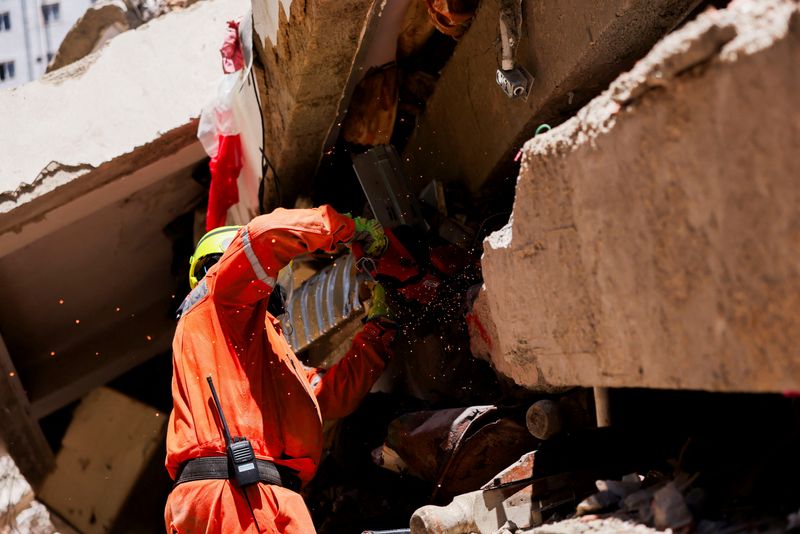
POLICY WIRE — Caracas, Venezuela — It wasn’t the rumbling earth that shocked; it was the eerie silence that followed, quickly replaced by the rhythmic scrape of shovels. As diplomatic cables buzzed in Washington, citizens across Venezuela’s quake-stricken regions weren’t waiting for official pronouncements or multilateral initiatives. They were, with grim resolve, unearthing the perished and preparing the soil for their neighbors—not as a public works project, but as an act of raw, communal sorrow and immediate necessity. It’s a stark, visceral reminder that bureaucracy often trails far behind tragedy, leaving everyday folks to shoulder the heaviest loads.
Down in the mud and dust, away from the gilded halls of international discourse, Venezuelans are improvising solutions to an unfathomable catastrophe. Local volunteer groups, often comprised of survivors themselves, have become the de facto frontline, organizing what little supplies remain and, yes, digging graves. It’s an ad-hoc, deeply human response, playing out against a backdrop of complex, often fraught, international relations. They don’t have earth-moving equipment, sophisticated rescue gear, or even much in the way of coherent government directives. They’ve got shovels and calloused hands. But they’re getting it done—because someone has to.
Meanwhile, thousands of miles north, in the well-insulated corridors of power, the United States administration has been engaged in a robust defense of its approach to the Venezuelan relief effort. Officials, no doubt, want to paint a picture of proactive, responsible governance, but the on-the-ground reality offers a disquieting counter-narrative. It’s a delicate dance between asserting global leadership and navigating the minefield of Venezuela’s contentious domestic politics and international standing. There’s a certain predictable script to these events, isn’t there? Cataclysm strikes. The most vulnerable suffer most. The powerful offer carefully worded statements — and sometimes, eventually, tangible support. And then the cameras move on.
And let’s be frank, it’s never just about immediate humanitarian needs. Never. Every packet of aid, every dispatched rescue team, every official statement, it all comes wrapped in layers of geopolitical strategy and historical animosity. Consider the Muslim world, specifically nations like Pakistan after its 2005 earthquake or the devastating floods of 2022; the global response was swift, but questions about long-term capacity building, corrupt distribution, and the politicization of aid often overshadowed the initial goodwill. It’s an unfortunately common pattern in developing nations grappling with natural disasters—the world looks on, sometimes helps, but rarely intervenes to fix the foundational issues that make such catastrophes so deadly in the first place.
Officials from the State Department recently stated [QUOTE_PLACEHOLDER], indicating their belief that their strategies are effective and well-intentioned. They argue, or at least suggest, that Washington’s diplomatic maneuvering is actually facilitating aid flows through multilateral channels. This involves a delicate balancing act, you know, trying to support the populace without propping up a government they’ve largely shunned. The complexity of sanctions and the nuances of international law become almost absurd abstractions when set against the immediacy of people burying their dead. You can’t eat sanctions, nor can they dig a grave.
📄 POLICY WIRE WHITEPAPER PUBLISHED: PAKISTAN'S NATIONAL SECURITY POLICY PRIORITIES
👉 READ BY CLICKING HEREThe numbers, however, tell a less charitable story. According to a recent report by the UN Office for the Coordination of Humanitarian Affairs (OCHA), only 38% of the humanitarian funding requested for Venezuela in the past year was actually received from international donors. That’s a grim figure, isn’t it? It means for every dollar asked for, roughly 62 cents didn’t show up. That kind of shortfall has consequences, consequences visible now in the desperation of survivors and the volunteers who have little more than grit and their bare hands. Because frankly, who else is going to step in when the big players are too busy with rhetoric — and rivalries?
They’ve consistently said [QUOTE_PLACEHOLDER], a phrase that suggests unwavering commitment amidst significant hurdles. But for those on the ground, struggling against collapsed infrastructure and an overwhelmed medical system, such assurances ring hollow. It’s difficult to reconcile official optimism with the raw images emerging from communities where entire blocks have simply ceased to exist. You’ve got to wonder where the disconnect lies.
But the spirit of human kindness, unscripted — and unapologetic, is alive and well among these volunteers. They’re not waiting for permission; they’re simply responding to an undeniable, agonizing need. It reminds me of past crises in nations like Syria or Myanmar—places where, despite the politics, local communities always find a way to tend to their own. And honestly, it often proves to be the most reliable form of relief, irrespective of what global powers are saying or doing. For more context on the labyrinthine world of diplomatic negotiations in politically charged environments, check out Digital Diplomacy.
What This Means
The tragedy unfolding in Venezuela isn’t just about a natural disaster; it’s a harsh spotlight on the inherent contradictions of global humanitarian aid in a politically polarized world. Economically, the paltry funding received for relief efforts ensures a prolonged and excruciating recovery for Venezuela, further exacerbating its existing structural weaknesses. When nearly two-thirds of requested funds fail to materialize, it’s not merely an administrative hiccup; it’s a deliberate, albeit unspoken, choice by international donors to limit their engagement, either due to political calculus or sheer donor fatigue. This underfunding guarantees that recovery will be local, uncoordinated, and protracted, pushing more people into poverty and displacement. The long-term economic scarring will be profound, making any future stability an even more distant dream. You could compare it to the slow, agonizing decline seen in regions after chronic neglect, not sudden calamity. Politically, the image of ordinary Venezuelans digging graves underscores the abject failure of both the current Venezuelan government—regardless of who holds its reins—and the international community to provide fundamental protective mechanisms for its citizens. The US defense of its aid efforts, while predictable, clashes sharply with the grassroots reality. It signals a deep distrust and an ongoing geopolitical tug-of-war that unfortunately, always, sacrifices human well-being for strategic leverage. The situation risks normalizing a new, horrifying precedent: where countries deemed ‘unfriendly’ or ‘complicated’ by global powers are left to self-organize survival after major disasters. It reinforces a perception, especially in the broader Muslim world—often the recipient of similar conditional or insufficient aid—that humanitarian principles are secondary to political objectives. The human cost? Immeasurable.
📖 GET YOUR FREE COPY NOW OF POLICY WIRE DIGITAL MAGAZINE JULY 2026 EDITION
👉 READ & DOWNLOAD FREE MAGAZINE