


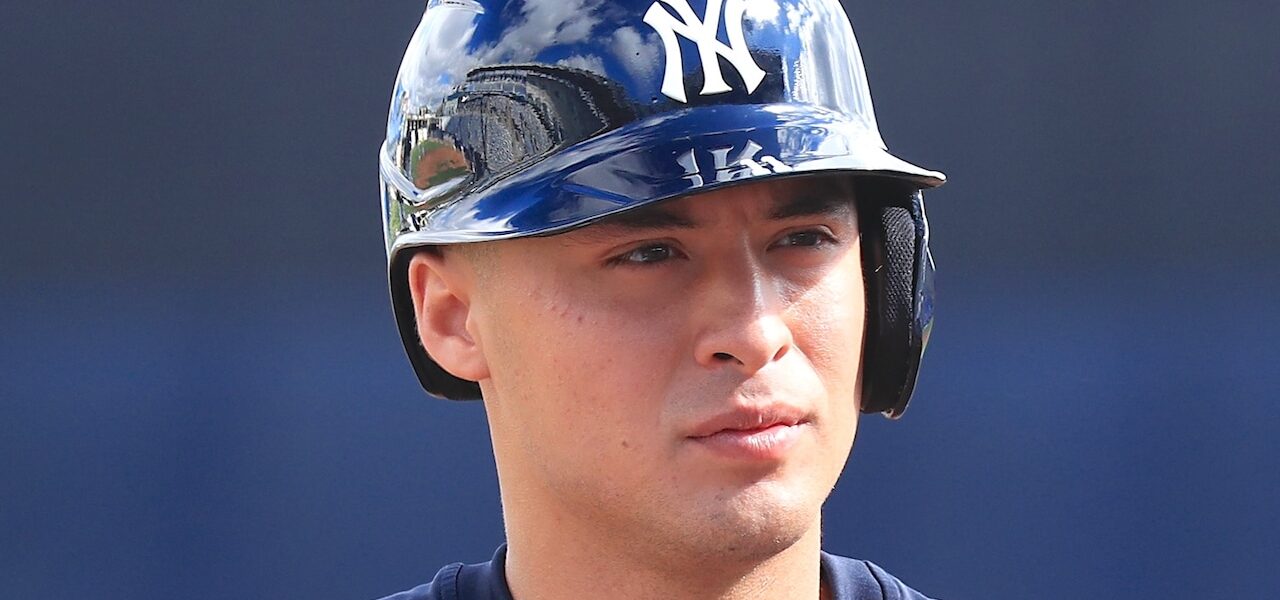
Media Icon Retracts Volpe Claim Amidst Yankees’ Pressures
POLICY WIRE — St. Petersburg, United States — It didn’t take long for the retraction. Not twenty-four hours after an unsubstantiated claim ricocheted through New York sports media circles, a...

POLICY WIRE — St. Petersburg, United States — It didn’t take long for the retraction. Not twenty-four hours after an unsubstantiated claim ricocheted through New York sports media circles, a prominent broadcaster was eating his words. Such is the lightning pace of today’s information highway—and its frequent detours into outright fiction.
Michael Kay, a well-known voice for Yankees fans, found himself in the unusual position of publicly correcting the record, on air and then again for reporters. He had, he admitted, heard a rumor. That rumor suggested Yankees shortstop Anthony Volpe—fresh from shoulder surgery rehabilitation—had turned down a move to second base while in the minor leagues. But when faced with Volpe’s own unequivocal denial, Kay conceded, [QUOTE_PLACEHOLDER] He said, rather simply, “I feel badly.”
And so, another anecdote for the history books of sports journalism: a false alarm, swiftly propagated and just as swiftly—if belatedly—quashed. This incident, minor in the grand scheme of global affairs, nonetheless spotlights the fierce pressures on young athletes under intense scrutiny. Volpe himself sounded less annoyed — and more genuinely baffled by the entire saga. [QUOTE_PLACEHOLDER] he insisted, explaining that the club had always told him to prepare for his shortstop duties, not a positional change.
It’s a peculiar thing, this media ecosystem. An unverified tidbit—originating from an unnamed source for a popular radio show—can instantly morph into perceived fact. Kay reported Volpe had turned down a request to play second for the Scranton/Wilkes Barre RailRiders, based purely on a whisper. This, despite Volpe’s prior public stance: [QUOTE_PLACEHOLDER] The disconnect here couldn’t be wider. Volpe was practically volunteering for any role, anywhere, anytime.
[QUOTE_PLACEHOLDER] Volpe articulated, providing a crystal-clear account that directly contradicts the rumored insubordination. Imagine, then, the daily bombardment facing young talents, especially in the cauldron of a market like New York. The noise is constant. It can warp perception faster than a pitch clock. This kind of intense, often personal, speculation isn’t confined to American sports, either. In South Asia, where cricket stars are often idolized to mythological proportions, rumors of disputes, allegiances, or professional conduct can flare up on social media, sparking impassioned public debate and often requiring official statements to quell—a strikingly similar dynamic, just with different national heroes and slightly more volatile stakes. The raw, unfiltered commentary can erode public trust quickly. One study published in the journal *Science Advances* in 2018 found that false news is 70 percent more likely to be retweeted than true news.
📄 POLICY WIRE WHITEPAPER PUBLISHED: PAKISTAN'S NATIONAL SECURITY POLICY PRIORITIES
👉 READ BY CLICKING HEREKay himself empathized with Volpe, acknowledging the unfair heat the young player has endured. “If you don’t perform in this market, people are going to jump you,” he stated, capturing the ruthless bargain of high-level professional sports. Because if you’re a local kid—which Volpe is—you’d think there’d be a bit more patience. “It’s just unusual that a local kid, maybe he’d get a little more grace, but that hasn’t been the case. I definitely sense it on my radio show.” But patience, it seems, is a luxury not often afforded to athletes with immense contracts and stratospheric expectations.
Indeed, a player’s perceived attitude or adaptability, even based on phantom reports, can heavily influence his market value and future trajectory in a sport increasingly driven by the brutal logic of analytics. Reputation is a currency, you see, especially when multi-million dollar deals hang in the balance, much like the fragile market for diamond prospects. The constant chatter around a player’s future, their role, their commitment—it’s all part of the job. But when that chatter swerves into fiction, — and requires public repudiation, it’s a distraction nobody needs.
What This Means
This episode, while ostensibly about a baseball player and a media gaffe, reflects deeper political and economic undercurrents in modern public life. First, it illustrates the alarming speed and casualness with which misinformation can spread, particularly through established media channels—even when the originating journalist has no malicious intent. This rapid propagation and subsequent retraction model poses a genuine challenge to information integrity, contributing to a broader public skepticism towards news, regardless of its source.
Economically, such reports, even if false, can briefly—but significantly—impact a player’s perceived value and the narrative around their professional standing. In an industry where athletic talent is directly tied to immense financial contracts and endorsement opportunities, any suggestion of insubordination or inflexibility could have material consequences. Imagine the investor relations equivalent, where a minor, unsubstantiated rumor could trigger stock volatility. But it also shows the powerful capacity of prominent figures to correct narratives, though often after the damage has been done. Policy decisions, investment climates, even geopolitical alignments—they’re all susceptible to the same viral spread of partially digested or outright fabricated information, often needing high-profile individuals to step in and try to recalibrate public discourse.
📖 GET YOUR FREE COPY NOW OF POLICY WIRE DIGITAL MAGAZINE JULY 2026 EDITION
👉 READ & DOWNLOAD FREE MAGAZINE