


Gridiron Gauntlet: Congress Tries to Tackle College Sports as Billionaires Run the Field
POLICY WIRE — Washington, D.C., United States — For some, it’s the annual drama of young athletes chasing a dream, a purity still flickering on Friday nights. But for Washington athletics director...

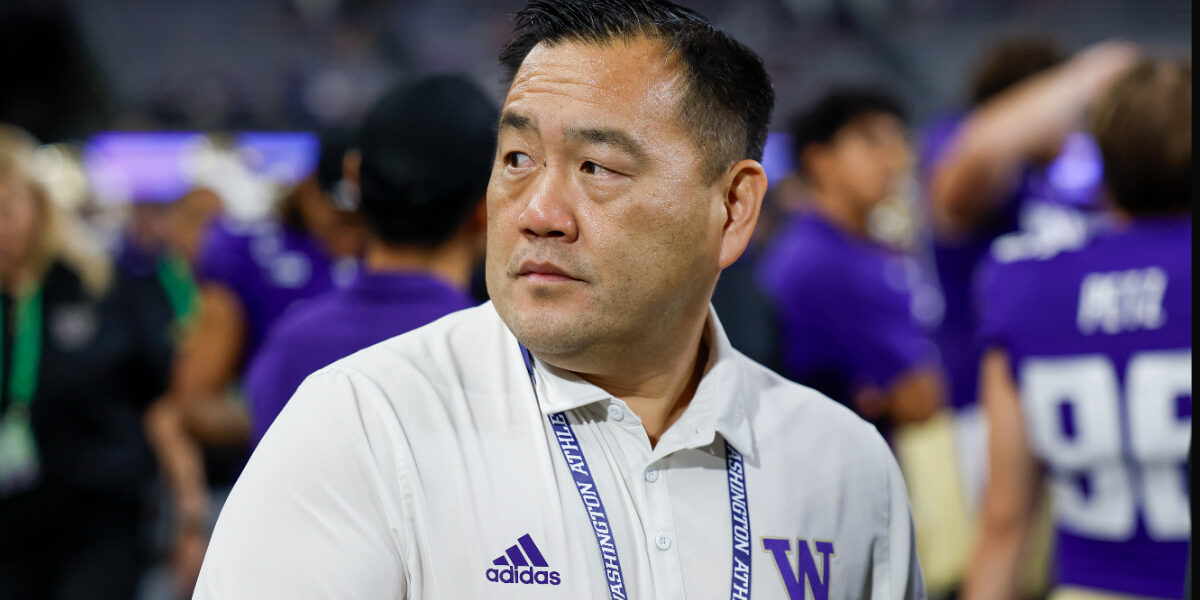
POLICY WIRE — Washington, D.C., United States — For some, it’s the annual drama of young athletes chasing a dream, a purity still flickering on Friday nights. But for Washington athletics director Pat Chun, the gleaming facade of college sports has shattered, revealing something less aspirational and much more, well, mercenary. He doesn’t mince words about it; it’s become less about alma maters — and more about oligarchs.
While the country tunes into athletic contests, behind the scenes, there’s a different sort of full-contact sport unfolding on Capitol Hill. Legislators are trying to wrangle control of an industry that’s evolving faster than its rulebook. The post-House settlement era—now in Year 2—has essentially thrown open the doors, turning once-sacrosanct amateurism into a free-for-all marketplace. And it’s exactly this market volatility, this perceived lack of regulation, that’s drawing the ire of administrators like Chun, who’s watched the tectonic plates shift under his feet.
It’s not just some abstract complaint either. Chun, speaking in an interview with John Canzano, highlighted a raw, unvarnished truth about the current landscape: “This has become a billionaire’s playground in college sports.” It’s a striking indictment, one that pulls back the curtain on the quiet power wielded by wealthy benefactors—a trend that isn’t unique to America, I might add. Think about how personal fortunes dictate the global pecking order in top-tier European soccer clubs, or even how state-backed entities influence Olympic endeavors. The flow of private capital dictating public performance? It’s an old story, just new uniforms.
The legislative answer, or at least a potential one, comes in the form of the Protect College Sports Act. Senators Ted Cruz (R-Texas) and Maria Cantwell (D-Wash.) brought it forward in late May, a kind of Hail Mary for the NCAA’s perennial quest for federal oversight. Yet, as with most things Washington tries to manage, it’s not a slam dunk. Key conferences like the Big Ten — and the SEC are apparently not on board with the current version. But talks, it seems, continue with the bipartisan legislation eyeing the Senate floor.
Chun’s frustration is palpable. He’s called for enforcement around settlement terms—you know, the nitty-gritty contracts that often leave you wondering who actually profits—and for some legal shields for the institutions themselves. He even brought up the Brendan Sorsby situation to hammer home his point. Because, he suggests, without more control over the economic side of college athletics, particularly with Name, Image, and Likeness (NIL) deals, we’re heading for choppy waters. He declared: [QUOTE_PLACEHOLDER] It’s simple, really: you can’t run a business on whispers — and unbridled capital. You just can’t.
[QUOTE_PLACEHOLDER] he continued, emphasizing the legitimate need for student-athletes to benefit from their considerable talent and labor. Nobody’s arguing against fair pay. But then, the hard reality: “But we’re over-leveraged in this environment by agents, we’re over-leveraged by rumors and we’re over-leveraged because everybody recognizes the need to win in football. There’s no restraint.” It’s a systemic problem, one that stretches beyond any single sport or any one league. This brutal mechanics of professional sports, in which players are traded and fortunes made, is an ongoing global reckoning, as Policy Wire has reported previously. When there’s too much money — and too little oversight, human value becomes a commodity.
The director painted a stark picture, hinting at a growing chasm between the haves — and the have-nots. “You could see separation happening with schools that are backed by billionaires that are willing to just write blank checks to support roster construction, roster retention.” There it’s. The game isn’t just on the field anymore; it’s a financial arms race, driven by unchecked ambition — and deep pockets. And this whole dynamic has everyone scrambling—from athletes trying to make sense of their market value to athletic departments struggling to keep up. It’s no wonder people like Chun are pulling their hair out.
📄 POLICY WIRE WHITEPAPER PUBLISHED: PAKISTAN'S NATIONAL SECURITY POLICY PRIORITIES
👉 READ BY CLICKING HEREAnd let’s not forget the sheer scale of the financial ecosystem swirling around college sports, from multi-million dollar broadcast deals to, get this, media subscriptions priced at $19.99 for a FULL year of On3 | Rivals national coverage, a testament to the insatiable appetite for every tidbit, every rumor, every roster change in this evolving drama. It’s an attention economy that fuels the wild west of booster-funded teams.
Chun himself has been in touch with Cantwell about the bill—it’s a Washington state thing, naturally—but he’s acutely aware of the uphill battle. “I think we all recognize the challenges of getting anything passed through Congress,” he observed. The complexities, the endless debates, the entrenched interests: it’s all part of the legislative sausage-making. Even getting the Big Ten to the table is a fight. “My hope is that, in the next couple of weeks, that the work continues to happen with our conference, with Tony Petitti and the Southeastern Conference, as well, to try to get this bill to a place that works best for everybody.” But he admitted: “It was always going to be a challenge and I think it’s still a challenge today because it does not answer questions specific to the Big Ten Conference.” It always comes down to specifics, doesn’t it?
What This Means
The struggle over the Protect College Sports Act isn’t just about athletic budgets or who gets paid what. It’s a microcosmic look at the broader political and economic tug-of-war in America—and really, around the globe. This isn’t just sports; it’s big business meeting entrenched interests and the inherent difficulties of regulating an accelerating market. What happens in college sports, an institution deeply embedded in American culture and regional identity, could very well serve as a bellwether for other industries grappling with unchecked capital flow and legislative inertia.
Politically, the bipartisan nature of the bill from Cruz and Cantwell signals an unusual point of agreement on the dire need for order, though differing specifics plague progress. This sort of legislative push-and-pull, where consensus forms on the ‘what’ but fractures on the ‘how,’ is commonplace across domestic policy, from infrastructure to healthcare. Economically, we’re witnessing the further professionalization of what was, until recently, presented as an amateur endeavor, moving it closer to established professional leagues in revenue, player value, and certainly, managerial headaches.
For nations like Pakistan, where public institutions often struggle with governance and resource allocation amid growing private wealth, these American policy debates offer lessons. The challenges facing NCAA schools aren’t entirely dissimilar to those of universities and sports federations in Islamabad or Karachi, where well-meaning regulatory attempts often founder against the powerful currents of individual influence or vast personal fortunes. When systems lack transparent oversight, wealthy patrons invariably fill the vacuum, for better or worse, steering the ship with private funds that often supersede public policy. It’s an issue of equity, control, and ultimately, fairness—whether you’re watching a game in Lincoln, Nebraska, or managing a cricket league in Lahore. It’s about maintaining a level playing field, even when the players have vastly different bank accounts.
📖 GET YOUR FREE COPY NOW OF POLICY WIRE DIGITAL MAGAZINE JULY 2026 EDITION
👉 READ & DOWNLOAD FREE MAGAZINE