


Bernabéu’s Billion-Dollar Blues: Real Madrid’s Latest Defensive Obsession Unpacks Deeper Economic Cracks
POLICY WIRE — Madrid, Spain — Another summer, another king’s ransom poised to swap hands on Europe’s sprawling football markets. This time, it’s the peculiar saga of Real...

POLICY WIRE — Madrid, Spain — Another summer, another king’s ransom poised to swap hands on Europe’s sprawling football markets. This time, it’s the peculiar saga of Real Madrid’s apparently desperate quest for a single, left-footed defender amidst an already bulging roster. It isn’t just about chasing a ball-playing center-back—it’s a high-stakes, multi-million-euro wager that says more about the global financial mechanics now propping up elite sports than it does about mere athletic strategy.
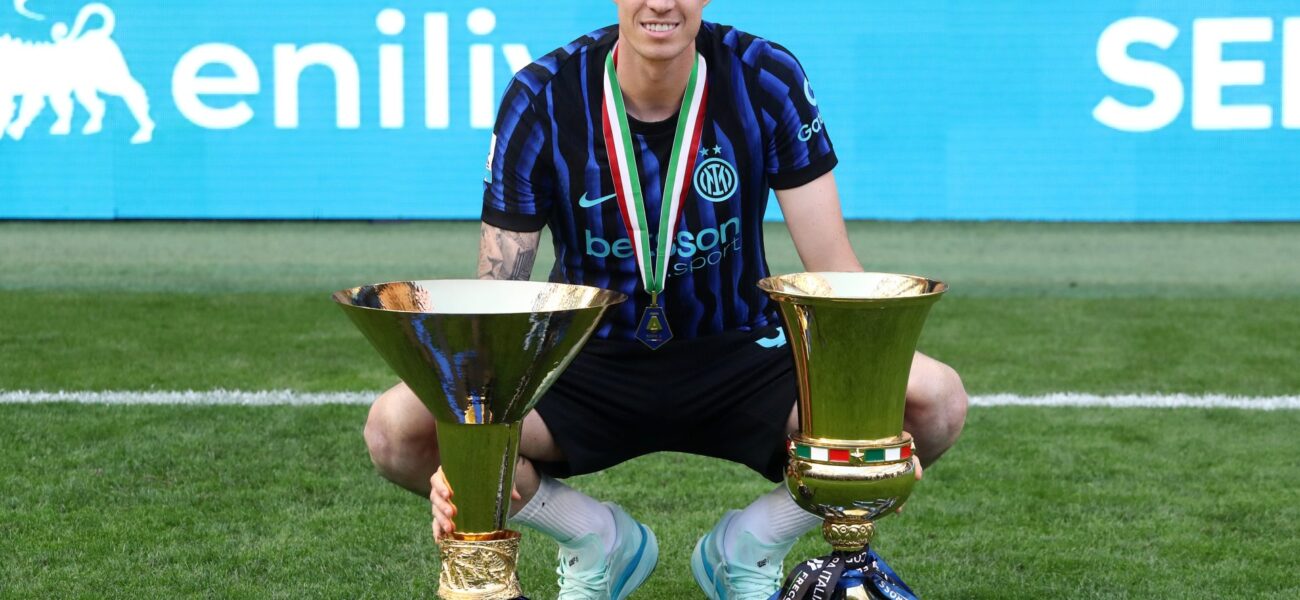
José Mourinho, never one for subtlety, wants Alessandro Bastoni. Badly. The Florentine whispers are deafening, confirming that this week isn’t just ‘key’; it’s an interrogation. Real Madrid isn’t asking if Inter Milan will sell; they’re asking how much pain they can inflict on their balance sheets to acquire a 27-year-old Italian international who stands 1.90 meters tall. Because in today’s transfer market, especially for Europe’s established giants, tactical holes are filled with increasingly expensive, perfectly sculpted commodities, not just players.
It’s a peculiar brand of scarcity when a club with Madrid’s coffers—and, its eleven existing first-team defenders, five of them center-backs—decides it simply can’t function without a specific additional piece. The word on the street, amplified across multiple reports, confirms that Mourinho’s early reign is marked by a non-negotiable demand: a left-footed stopper. He’s reportedly looking to rebalance a defense stacked overwhelmingly with right-footed players—a specific preference for optimal distribution from the back, apparently. This isn’t just football; it’s geometry — and economics, fused awkwardly.
Inter Milan, fresh off a Serie A title but always mindful of the bottom line, isn’t exactly champing at the bit to let a player like Bastoni go. He’s been offered a contract extension beyond his 2028 expiration, complete with a salary bump. But Bastoni, it seems, has eyes only for the gleaming lights of the Santiago Bernabéu. He’s reportedly already waved off other suitors. And frankly, who could blame him? When a club of Real Madrid’s stature comes calling, loyalty often finds itself an expensive second.
Policy Wire understands the initial overtures from Madrid are less about making a concrete offer and more about sounding out the terrain—a subtle, almost diplomatic approach to ascertain Inter’s ‘red line.’ Can you believe it? The world’s richest clubs still use proxies — and feelers, just like backroom politicians. But Inter, despite their fiscal prudence, holds a strong hand. Every player has a price, especially in a club with our fiscal realities,
Giuseppe Marotta, Inter Milan’s esteemed CEO, has often been heard to remark, echoing a sentiment that defines modern football’s precarious balance between sporting ambition and financial sustainability. Our focus remains on Inter’s strength, not an individual’s preference, unless the offer truly reflects their value to our project.
The price tag, as per most informed estimates, hovers around €65 million. This isn’t just an arbitrary number; it reflects Bastoni’s current market valuation, a slightly more grounded figure than the €80 million he touched at his peak last season, according to detailed analytics by Transfermarkt. But Real Madrid isn’t simply buying a player. They’re buying into an entire philosophy. We don’t buy names; we buy solutions for a long-term project. The modern game demands specific profiles, not just talent for talent’s sake,
a Real Madrid club official, speaking off the record but clearly reflecting the ethos of President Florentino Pérez, stated earlier this season. It’s a statement that always seems to precede eye-watering transfers.
📄 POLICY WIRE WHITEPAPER PUBLISHED: PAKISTAN'S NATIONAL SECURITY POLICY PRIORITIES
👉 READ BY CLICKING HEREIf Bastoni arrives, the mathematical consequence is inevitable: people must leave. Real Madrid would suddenly find itself with a dizzying baker’s dozen of defenders. Common sense suggests Fran, a left-back, is headed for the exit. Among the center-backs, Asencio looks to be the sacrificial lamb, clearing space for the preferred new acquisition.
What This Means
This isn’t merely a football transfer; it’s a symptom of deeper economic forces shaping global sports, particularly in the post-pandemic recovery era. Elite clubs like Real Madrid operate less as sports teams and more as self-contained economic entities, their fortunes often linked to vast sponsorship deals, broadcasting rights, and global market outreach, much of which flows from or is influenced by burgeoning markets in Asia, including the financial centers in the Middle East that attract considerable investment from regions like Pakistan and the wider South Asia. The decision to spend €65 million on a player—when the team is already ostensibly well-stocked defensively—highlights the ‘luxury problem’ of the hyper-capitalized elite. It speaks to a pursuit of marginal gains, a micro-optimization of tactical units that justifies immense spending by referencing an abstract ‘perfect fit.’ It’s an arms race of talent, driven by an unshakeable belief that even small deficiencies must be expunged, regardless of cost.
This particular maneuver also puts a harsh spotlight on player agency. Bastoni’s reported rejection of Inter’s offer — and other clubs signals the immense power top-tier players now wield. They dictate terms. They choose destinations. Clubs become a stage for their personal ambition, not just an employer. This concentration of power, both financial and personal, exacerbates the widening chasm between the handful of European superpowers and the rest of the footballing world. But it also creates a kind of gilded cage for the super-clubs. They must continually justify their status, their spending, and their sheer magnetism by securing the next ‘must-have’ asset, perpetually reshaping, perpetually spending, to stay at the very peak.