


St. Catherine’s Fire: Santa Fe’s Painful Past Ignites
A fire at Santa Fe's St. Catherine's Indian School sparks a national reckoning. Explore how this blaze ignites debates on neglect, memory, and America's painful past.

POLICY WIRE — Santa Fe, N.M. —
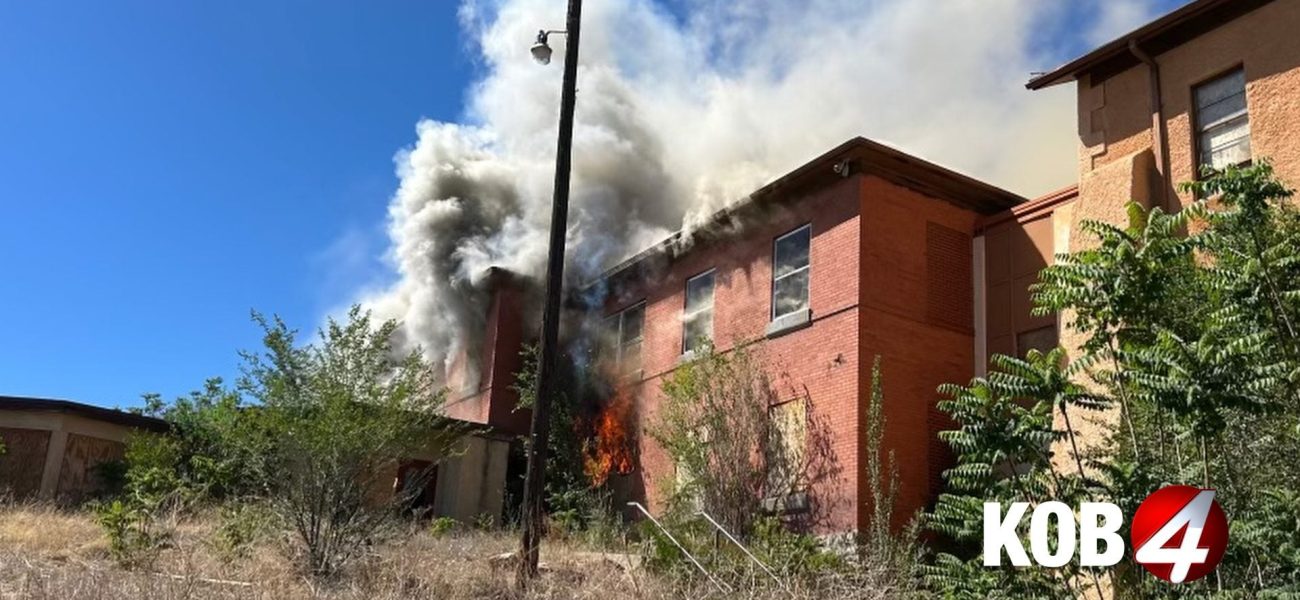
It’s not just a vacant building catching fire. Sometimes, the flames consume more than wood and plaster, incinerating the unspoken histories clinging to such structures—especially when those histories are as fraught and complex as the one tied to the former St. Catherine’s Indian School here in Santa Fe. Long an empty shell, a silent testament to a chapter America prefers to keep tucked away, this site erupted into a maelstrom of smoke and orange light yesterday afternoon, a stark, fiery declaration against its continued neglect. One couldn’t help but feel the weight of decades of untold stories hovering in the acrid air, mixing with the scent of burning timber. [QUOTE_PLACEHOLDER]
Because that’s the thing about historic sites: they’re never truly just ‘vacant.’ Not this one, anyway. This place, nestled unsettlingly close to Santa Fe National Cemetery, carries generations of burdens, aspirations, and deep, quiet pains. It was once a place intended to transform Native American children—often forcibly removed from their families and cultures—into something else, something ‘acceptable.’ Now, authorities have confirmed what everyone in town likely suspects: “An investigation is underway,” they said, and more significantly, “a suspect is in custody.” The details around “it’s unclear what charges that person may be facing” only thicken the grim brew. Was it an accident? Arson? An act of desperate defiance?
The city’s fire department indicated “crews got the call at about 3:45 p.m.” —a rather mundane dispatch time for a profoundly un-mundane event. By dusk, the Santa Fe sky was an eerie canvas of red — and black, smoke plumes visible for miles. “They worked to contain the fire at the vacant building,” staying on scene through the night, a herculean task considering the sheer scale. And talk about resources: “the response includes five fire engines, one heavy rescue truck, multiple ambulances and additional support vehicles,” all dispatched to preserve a structure some might argue had long outlived its useful, or perhaps comfortable, presence. They’re still “working to protect nearby structures,” a small comfort in the face of such a big blaze.
For cultures like those across Pakistan and other parts of South Asia, the preservation—or accidental destruction—of such fraught historic places often touches raw nerves. Think about the colonial-era cantonments, the crumbling pre-Partition estates, or the remnants of ancient Buddhist sites now often overlooked in the rush for modernity. There’s a shared global ache over places that symbolize periods of immense cultural disruption or violence, even when the context differs wildly. Do we preserve them as cautionary tales? Let them crumble? Or, as in Santa Fe, do we wait until something violent, something irreversible, happens?
Indeed, a recent survey by the National Trust for Historic Preservation (2023) highlighted that nearly 40% of America’s designated historic sites struggle with adequate maintenance and security, often making them vulnerable to exactly this sort of catastrophic event. It’s a sobering figure. And it makes you wonder how many other St. Catherines are out there, quietly awaiting their own ignominious end.
📄 POLICY WIRE WHITEPAPER PUBLISHED: PAKISTAN'S NATIONAL SECURITY POLICY PRIORITIES
👉 READ BY CLICKING HEREWhat This Means
The inferno at St. Catherine’s isn’t merely a local news item; it’s a national symptom, even a global one, of how societies grapple with their uncomfortable pasts. On a political level, it reignites the enduring debate around historical reckoning—especially regarding residential schools for Indigenous children. These sites, often located on what many still consider contested lands, stand as potent, painful reminders of systematic attempts at cultural erasure. The blaze forces a moment of introspection: if a physical structure representing such a complex, and often traumatic, history is allowed to deteriorate to the point of either accidental fire or, worse, arson, what does that say about our collective commitment to truly acknowledging and learning from those stories? Is it deliberate neglect, a societal turning away?
Economically, the absence of proactive preservation strategies often leads to situations like this. The cost of maintaining a vacant historic structure is high, sure, but the cost of its catastrophic loss—and the loss of potential interpretive or memorial value—is immeasurable. For the community, especially Native American communities, this isn’t just property damage; it’s the potential obliteration of a tangible link to a collective memory, however painful. Think of communities across the Muslim world struggling to preserve Sufi shrines or ancient Islamic libraries in the face of war or radicalization. It’s the same principle: heritage lost is insight lost, often irrevocably.
The presence of a suspect adds a sinister layer. Was it an act of protest, rage, or sheer disregard? Regardless, it’s clear that emotions around sites like St. Catherine’s run deep. It forces us to ask tough questions about guardianship, remembrance, and the responsibility that comes with inheriting a flawed past. This isn’t “This is a developing story” just because the fire is still being contained—it’s a developing story because the societal reckoning around such places is nowhere near its end. “KOB 4 will provide updates as they become available,” but the deeper narrative of American history burns on, complicated, unresolved, and sometimes, tragically, ablaze.