


The Cynical Calculus: Bombshell Allegations Expose Political Power Plays Over Principle
POLICY WIRE — Washington D.C. — Another election cycle draws near, another political career unravels amidst sordid accusations. But it’s not the scandal itself—a grave rape...

POLICY WIRE — Washington D.C. — Another election cycle draws near, another political career unravels amidst sordid accusations. But it’s not the scandal itself—a grave rape allegation against an increasingly irrelevant figure named Graham Platner—that’s raising eyebrows this time around. It’s the almost choreographed response, the sudden shift in allegiance that suggests Washington’s moral compass is less a true north and more a weather vane, perpetually spinning with the prevailing political winds. You know, just standard operating procedure.
It’s messy, isn’t it? A "bombshell rape allegation" isn’t something easily swept under the rug—not anymore, at least. We’ve seen enough of these narratives unfold to recognize the predictable pattern: initial shock, then fierce partisan defense, quickly followed by strategic abandonment once the political cost outweighs the benefit. It’s an ugly dance, frankly. And it happens faster every time. [QUOTE_PLACEHOLDER]
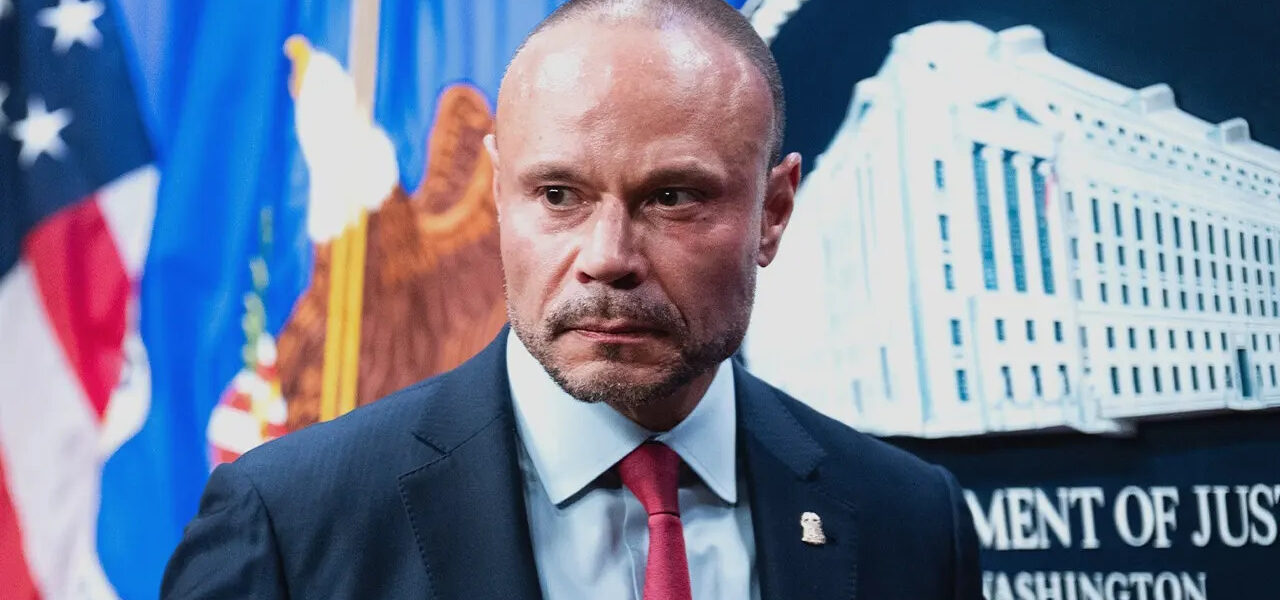
Enter Dan Bongino, ever the astute—if sometimes hyperbolic—observer of the Beltway’s machinations. He didn’t mince words, suggesting what many already suspect but rarely articulate aloud. His assessment? Democrats "dumped Graham Platner over ‘power’ not ‘principle’." You don’t say? It’s almost as if the entire edifice of modern politics is built upon such cynical foundations, where ideology often takes a backseat to expediency. It’s a transaction, pure and simple, even when the currency is a person’s reputation, or worse, their perceived culpability in a serious crime.
The speed with which politicians distance themselves from perceived liabilities has only accelerated in the digital age. A reputation can collapse faster than a sandcastle in a monsoon. Consider, for instance, the recent shifts in political loyalties and legal interpretations often witnessed across the Muslim world—particularly in places like Pakistan. There, too, allegations of misconduct, sometimes unsubstantiated, can quickly morph into potent political weapons, sidelining powerful figures with alarming speed. A seasoned politician might face a sudden, unexpected—and deeply politicized—corruption probe, just as easily as an American counterpart finds themselves friendless after an accusation.
It’s not about specific political systems; it’s about the universal language of power, how it’s acquired, maintained, and how inconvenient truths are handled. Or ignored. For Platner, whatever goodwill he might’ve accumulated, whatever past loyalties he secured, seemingly vanished into the ether. They’re gone, just like that. Because when the stakes are high, solidarity’s a luxury few can afford.
Political figures in any nation often cultivate an image of moral rectitude, a bulwark against societal decay, a sort of pristine ideal. Yet, the frequent dissonance between this public persona and the private reality—or even the public accusation—leads to an eroding public trust. A 2022 Gallup Poll revealed that only 7% of Americans expressed "a great deal" or "quite a lot" of confidence in Congress. It’s hard to imagine that such high-profile moral failures, however handled, do anything but deepen that chasm of mistrust.
The alleged crime itself, of course, isn’t the political machination, it’s the human tragedy. But the partisan reaction—that’s the raw political meat, isn’t it? That’s the story many folks tune in for, wondering aloud who’s next on the chopping block, who’s going to feign outrage this time around. The entire scenario just feeds the cynical beast of modern media consumption. We devour it.
📄 POLICY WIRE WHITEPAPER PUBLISHED: PAKISTAN'S NATIONAL SECURITY POLICY PRIORITIES
👉 READ BY CLICKING HEREAnd what are we left with, truly? A deepening sense that principles are fungible, dependent wholly on what the political temperature permits. Graham Platner’s former allies, it appears, found his continued association too great a burden to bear. The party line, once rigid, became suddenly pliable, molding itself around the necessity of preserving a broader narrative, a carefully constructed image of righteousness.
They haven’t just moved on from Platner; they’ve moved past the very notion of unwavering support, demonstrating a flexibility that’s as unsettling as it’s effective. The rules of engagement in political life — a dirty game, remember — are continuously rewritten. We see this dynamic globally, too, particularly in developing democracies where political power often consolidates around charismatic figures or well-entrenched factions. A scandal — real or manufactured — can serve as a swift means to unseat an opponent or to redraw the political map entirely. In such high-stakes environments, the veneer of “principle” is often thinner than an August sky.
What This Means
This whole debacle, unfolding so publicly, isn’t just a hiccup for one political party; it’s a symptom of a larger, systemic problem gnawing at the foundations of public faith. It reinforces the widespread belief that integrity in politics is largely a performance, a costume worn or discarded based on current expediency. Economically, this cynicism doesn’t just sit there. It corrodes market confidence indirectly, because predictability—even of governance—is a prized asset. When ethical considerations are overtly subverted by the cold, hard logic of electoral survival, it suggests a governing class prioritizing self-preservation above all else. It’s a form of moral robbery, really.
Politically, the implication is stark: parties will shed their own members the moment they become radioactive, even on allegations not yet proven. This sets a dangerous precedent where public judgment, fueled by media cycles, can precede—and effectively pre-empt—due process. For opposition parties, it’s a goldmine of ammunition, a potent symbol of perceived hypocrisy. But don’t expect any major soul-searching. Instead, expect tighter vetting processes behind closed doors, more stringent crisis management playbooks, and perhaps even quicker jettisoning of liabilities in the future. Nobody wants a bad headline — or rather, they don’t want a *persistent* bad headline, dragging down their poll numbers.
This episode also spotlights the increasing vulnerability of public figures worldwide. Social media ensures that "bombshell allegations" travel across continents with light speed. Think about how a scandal in the US is immediately dissected in Jakarta, London, or Islamabad. It means national political actors must constantly weigh not just local opinion, but global perception — or risk looking provincial and out of touch. The repercussions aren’t contained by borders. Policy-making, the real work of government, often takes a backseat when scandals of this magnitude consume the news cycle, making legislative progress feel like pushing against a concrete wall. It’s an inconvenient truth, but truth nonetheless.
📖 GET YOUR FREE COPY NOW OF POLICY WIRE DIGITAL MAGAZINE JULY 2026 EDITION
👉 READ & DOWNLOAD FREE MAGAZINE