

FIFA’s Authority Challenged: Presidential Intervention Shadows US World Cup Defeat
POLICY WIRE — Seattle, United States — The chants, guttural and cutting, echoed through Lumen Field even before kickoff: “FIFA Mafia!” Belgian supporters, making their voices heard during...

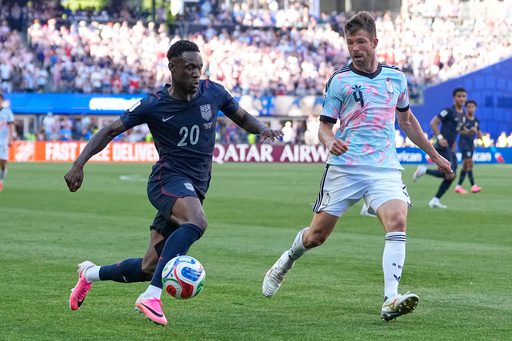
POLICY WIRE — Seattle, United States — The chants, guttural and cutting, echoed through Lumen Field even before kickoff: “FIFA Mafia!” Belgian supporters, making their voices heard during their pregame march, weren’t protesting ticket prices or stale beer. No, they were decrying something far more profound—the very integrity of global football’s governing body. This was before the ball was even struck in what would become a 4-1 shellacking of the United States by Belgium in the World Cup round of 16 on Monday, a defeat almost overshadowed by the tempest that preceded it.
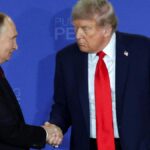
It wasn’t Balogun’s performance, nor his absence, that set the stage. Instead, the dramatic re-insertion of the 25-year-old American striker, Folarin Balogun, into the lineup—following a suspension reversal after none other than U.S. President Donald Trump intervened on Balogun’s behalf—turned the contest into a global referendum on political meddling in sports. That’s some preamble for a football match, wouldn’t you say? [QUOTE_PLACEHOLDER]
See, Balogun had been shown a red card last Wednesday during the Americans’ 2-0 win over Bosnia-Herzegovina for stepping on an opponent’s ankle. This automatically triggered a one-game suspension. But then, as stories often go when politics collides with anything else, the rules seemed to bend. After Trump spoke by phone to FIFA president Gianni Infantino, FIFA’s disciplinary committee suspended the discipline for a year on Sunday. Infantino later claimed he didn’t play a role in the decision, a standard diplomatic deflection.
But the damage was done. And the outrage? Immediate. Belgium’s soccer federation contested Balogun’s eligibility. European soccer body UEFA went further, saying FIFA “crossed a red line.” This wasn’t just a squabble over a yellow card; it was a crisis of legitimacy. These international bodies, they’re supposed to be above the fray, aren’t they? Untouchable by nationalistic whims or powerful lobbying. When a single phone call can overturn a clear disciplinary ruling, it casts a long, chilling shadow. That particular shadow extended globally, creating discomfort in many corners, including the football-mad nations of South Asia where FIFA’s proclamations are typically viewed with a mixture of reverence and cynical distrust—especially when larger, wealthier nations exert influence.
Balogun’s ultimate contribution? Frankly, it was negligible. A seismic impact, it seems, happened off the pitch, not on it. He “ultimately played a forgettable role,” says one observer, an understatement if ever there was one. He didn’t score on Monday. His main highlight: he helped set up Malik Tillman’s goal in the 31st minute when he was fouled by Belgium defender Brandon Mechele roughly 25 yards outside the Red Devils’ goal. Tillman scored on the ensuing free kick. He pumped up the American fans after the foul. And that’s about it. He “made use of his speed on several runs but couldn’t get past Belgium goalkeeper Thibaut Courtois.” His best chance came in the 82nd minute, but Courtois got in front of a left-footed attempt. He was replaced by Haji Wright in the 92nd minute.
His teammate, U.S. midfielder Tyler Adams, when pressed about Balogun’s modest outing, gave a blunt assessment: “Was anyone a major presence on the field today?” That’s pretty telling. Adams, trying to spin a difficult situation, added, “We were happy that we had the opportunity for him to play.” He said Balogun “tried today to be a presence and a nuisance, and at times he was — getting the ball in behind and doing what he does. Just didn’t have too many opportunities.” But opportunities, when you’re a lightning rod for global controversy, feel somewhat beside the point. FIFA’s disciplinary committee, for their part, did fine Balogun $40,000. It’s a small sum, certainly, — and one that the U.S. Soccer Federation can pay without batting an eyelid.
📄 POLICY WIRE WHITEPAPER PUBLISHED: PAKISTAN'S NATIONAL SECURITY POLICY PRIORITIES
👉 READ BY CLICKING HEREFIFA President Infantino was in attendance, watching from a suite with Pascale Van Damme, chair of the Belgian Football Association, and Cindy Parlow Cone, president of the USSF. U.S. Homeland Security Secretary Markwayne Mullin was seated nearby. One can only imagine the conversations about “the beautiful game.”
Balogun’s three goals in this tournament did match Landon Donovan’s 2010 record for second most by an American in a World Cup. Bert Patenaude holds the U.S. record with four, achieved in the initial tournament in 1930. That’s a tidy stat for the record books, according to World Cup historical data. He became the first U.S. player to score two goals in a match in the tournament since 1930. But, he failed to lead the U.S. to its first consecutive knockout-stage wins. The best performance by the Americans since 1930 remains their run to the quarterfinals in 2002. So, some individual achievements, sure. But not the team glory that was so controversially sought after.
What This Means
The reverberations from this episode stretch far beyond a single football match. It’s a chilling demonstration of how readily political capital can intrude upon ostensibly independent international institutions. For sports organizations, whether FIFA, the IOC, or regional bodies like the Asian Football Confederation (AFC), the perceived integrity of their rules and adjudication processes is everything. When that integrity is seen to be compromised by the personal intervention of a head of state, it erodes trust. For emerging football nations, particularly those in the global South—Pakistan, for example, which is perpetually trying to build its international presence in sports—such incidents reinforce the unsettling notion that power, not pure merit, ultimately dictates outcomes. This isn’t just about a red card; it’s about the erosion of institutional impartiality, setting a precedent that will surely be cited by smaller nations seeking recourse against more powerful rivals. It means future disputes, real or imagined, will always carry the whisper of “who do you know?” rather than “what does the rulebook say?” This undermines any pretense of fair play and uniform application of statutes across the global stage, affecting everything from sponsorship deals to future bids for hosting tournaments. And it suggests that while everyone loves to preach about sport’s universal values, sometimes, it’s just politics with shin guards.
Associated Press writer Gene Johnson contributed to this report.