


India’s Coal Dilemma: Powering Growth, Facing Climate
Heatwaves and growth force India to boost coal power, defying global climate goals. Understand the nation's complex choice between development and decarbonization.

POLICY WIRE New Delhi, India — Forget the earnest pledges whispered in conference halls from Glasgow to Dubai. While the world charts ambitious trajectories toward a decarbonized tomorrow, a far more immediate reality is firing up the present in South Asia. India, perpetually balancing its gargantuan development needs with an increasingly impatient global climate agenda, just spun its coal-fired power plants into overdrive, reaching a dizzying peak not observed in months.
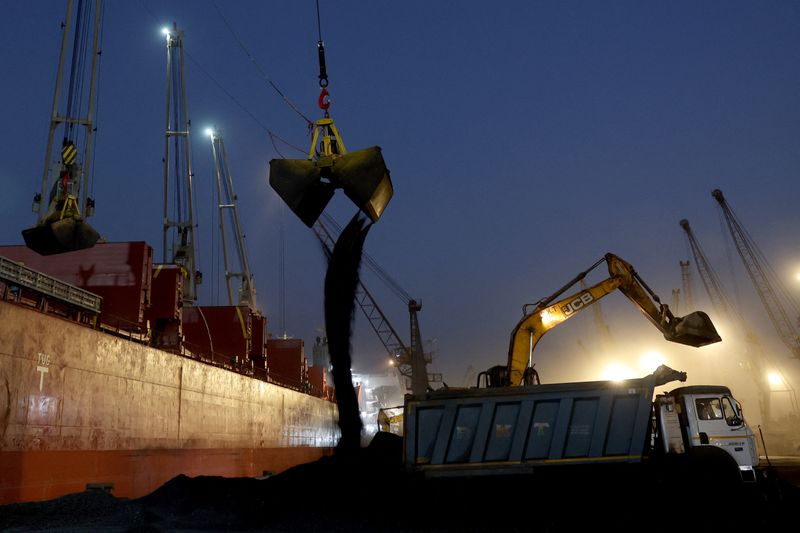
It wasn’t a policy pivot designed to spite environmentalists—it was pure, unadulterated necessity. As June simmered under relentless heatwaves and a rapidly expanding economy devoured electricity, the nation’s energy grids leaned heavily on their oldest, dirtiest friend. Coal power output in June reportedly shot up by over 13% compared to the same month last year, hitting roughly 120 billion units, according to preliminary data from the country’s Central Electricity Authority. That’s a staggering amount, indicating the foundational role this fossil fuel continues to play, regardless of green pronouncements.
But there’s more to it than just hot weather. The government’s strategic focus, even amidst an international clamor for renewables, remains firmly planted on ensuring power stability. “We’re committed to our renewable energy targets, absolutely,” stated R.K. Singh, India’s Union Minister for Power — and New & Renewable Energy, in a recent address. “But our primary duty, let’s not forget, is to ensure every Indian home has access to affordable and uninterrupted electricity. You can’t expect industrial growth or lift people out of poverty on intermittent power alone. We’re running a massive engine, — and it needs reliable fuel.”
His sentiments aren’t unique. This isn’t just about lights — and fans, you see. It’s about factories churning, services running, and keeping millions employed—a delicate, economic balancing act. The burgeoning demands of India’s over 1.4 billion people present an energy dilemma that dwarfs many developed nations’ challenges. And it’s not an isolated issue. Pakistan, Bangladesh, and other nations in the wider Muslim world wrestle with similar choices—economic advancement often seems handcuffed to increased energy consumption, regardless of origin. When India burns, its neighbors feel the heat, sometimes literally, in air quality reports. Just this past year, Lahore, a major Pakistani city, often topped the charts for worst air quality globally, with transboundary pollution playing no small part.
The international community, however, watches this carbon-intensive dance with growing unease. Climate envoys make their rounds, gently (or not so gently) prodding for a quicker transition. “We understand India’s development pressures, believe me,” offered Catherine McKenna, a former Canadian Minister of Environment and Climate Change and a prominent climate advocate. “But the global scientific consensus is clear: we don’t have infinite time. Every new coal plant, every increase in burning, locks in emissions that make the 1.5-degree target, for instance, that much harder to achieve. The whole planet shares this atmosphere; we’ve all got a stake in what India does.” And she’s not wrong; it’s a zero-sum game when it comes to planetary boundaries.
📄 POLICY WIRE WHITEPAPER PUBLISHED: PAKISTAN'S NATIONAL SECURITY POLICY PRIORITIES
👉 READ BY CLICKING HEREBecause, ultimately, this isn’t just about kilowatt-hours. It’s about global politics. It’s about who gets to develop and how. Major developing economies, not just India, often point to historical emissions from richer nations, arguing that their turn for robust industrialization shouldn’t be curtailed now. It’s a debate that highlights the volatility of empires and the underdog’s reckoning on a global scale. Don’t think for a second this is just about energy; it’s about power, too, in the geopolitical sense.
What This Means
The spike in India’s coal consumption, while framed as an immediate response to soaring demand, signals a deeper, more entrenched reality: the world’s third-largest emitter isn’t ready to let go of its most reliable fuel source anytime soon. Politically, this reinforces the Narendra Modi government’s pragmatism, prioritizing immediate economic stability and public welfare over what some might perceive as external environmental pressures. It demonstrates that for a developing behemoth like India, energy security trumps aspirational green targets when the mercury rises and the grid groans.
Economically, it underscores the formidable challenge of transitioning an energy system reliant on cheap, abundant domestic resources. Investment in renewables is certainly ramping up—India has aggressive targets—but it hasn’t yet provided the dispatchable, always-on power needed to entirely supplant baseload coal. This situation creates a challenging dynamic for investors and policymakers alike: How do you accelerate the green transition while acknowledging the hard limits of existing infrastructure and urgent developmental needs? It’s a complex equation, with no easy answers. The implication? Coal is staying put for longer than many climate hawks would like, despite the environmental cost. It’s a brutal choice, but one New Delhi seems determined to make on its own terms.