


The $240 Million Albatross: Kyle Tucker’s Dodgers Dream Drowns in Data and Doubt
POLICY WIRE — Los Angeles, USA — It’s easy enough to talk about ‘investment’ in people, particularly when those people are young men adorned in custom-fit uniforms, swinging...

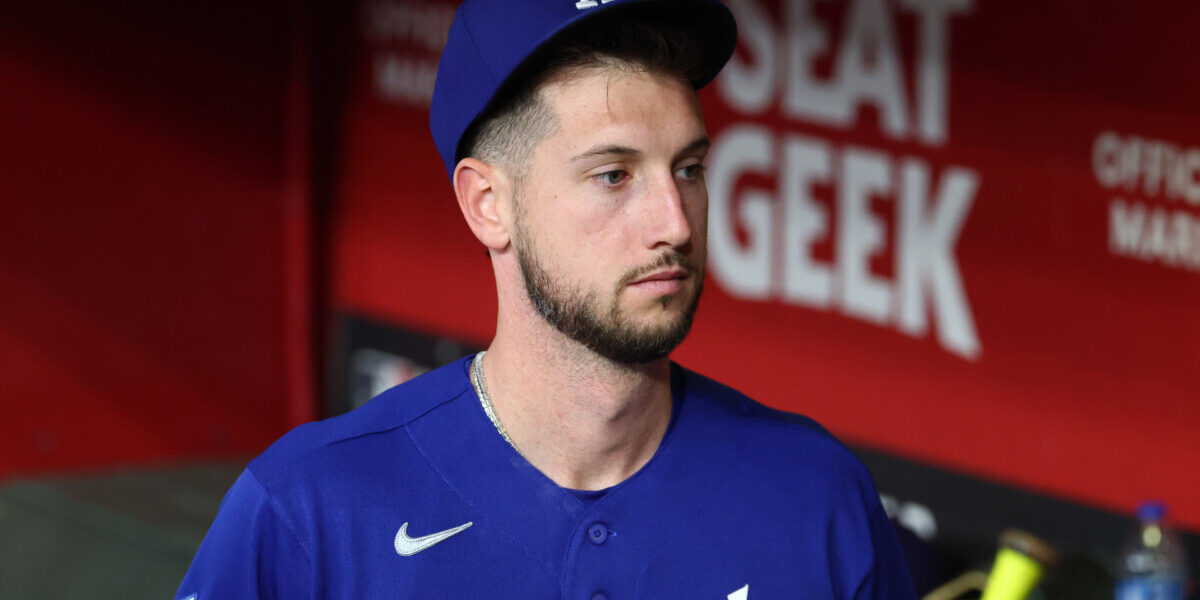
POLICY WIRE — Los Angeles, USA — It’s easy enough to talk about ‘investment’ in people, particularly when those people are young men adorned in custom-fit uniforms, swinging expensive wood for millions. But what happens when that investment, touted at a staggering $240 million over four years, starts looking less like a home run and more like a high-stakes, publicly visible write-off? Just ask Kyle Tucker, the Los Angeles Dodgers’ much-hyped right fielder, whose every swing—or rather, miss—is now under the merciless glare of both Southern California’s bright lights and a global audience accustomed to immediate returns.
Tucker, signed to be a cornerstone, not a question mark, finds himself entangled in a batting slump so pronounced it’s sparking boardroom whispers beyond mere fan frustration. The expectation was superstar production; instead, he’s delivered a case study in athletic mortality. He’s had these brief, tantalizing flashes, mind you. For a ten-game stretch, he hit a scorching .412/.524/.529/.1.053—numbers that screamed ‘breakout.’ Then, just as swiftly, he reverted to form, striking out and grounding into a double play on a recent Tuesday night, a harsh reminder that baseball, like the broader markets it mirrors, operates on volatile averages, not fleeting spikes.
Because the money involved is so immense, the pressure becomes almost unbearable. You don’t just sign a cheque that large for a utility player, do you? That’s generational wealth thrown at the expectation of consistent, game-changing dominance. And Tucker, to his credit, isn’t shying away from the internal battles. He concedes his primary undoing isn’t a lack of talent but a lack of control at the plate. “Throughout the first half I just haven’t been able to put good swings,” Tucker explained, a tinge of weary frustration in his voice. “That’s where I’ll foul it off or swing through it. And then I’m just in worse counts, — and they end up having more freedom to be able to throw whatever they want. And then you’ll just naturally start chasing…” It’s a candid admission, revealing the mental game behind every athletic act.
But the psychological burden is just one facet of a multi-sided gem that, right now, just isn’t shining. His mechanics, according to outside observers, are just… off. A seasoned front-office executive, who asked not to be named discussing rival players but whose insight has rarely missed, was blunt: “His timing is completely screwed. He gets all tied up, kinda drifty, — and his swing? It looks like a two-handed tennis backhand half the time.” Strong words, certainly, but reflective of the exacting standards applied to an athlete carrying a financial burden typically reserved for a small regional economy.
📄 POLICY WIRE WHITEPAPER PUBLISHED: PAKISTAN'S NATIONAL SECURITY POLICY PRIORITIES
👉 READ BY CLICKING HEREAnd yet, perhaps it’s the very size of the contract that ensures he’s not just quietly fading. You don’t shelve a quarter-billion-dollar asset lightly. Reports from within the Dodgers camp indicate a player genuinely ‘working overtime.’ A team official, close to the situation, highlighted his dedication, stating, “He’s probably put in more extra work these last three months than he has over the past three years. He’d just never failed like this, you know?” It’s a compelling argument against the notion that mega-contracts breed complacency, suggesting instead a renewed, perhaps desperate, effort to justify the astonishing investment. It speaks to a universal truth: perform or face the consequences, no matter your price tag.
What This Means
The struggles of an individual athlete, particularly one paid like Kyle Tucker, often become a microcosm for larger economic and policy debates. This isn’t just about baseball anymore; it’s a very public, very expensive experiment in asset valuation. How much risk do you underwrite for perceived high-yield talent? What are the implications when a massive, guaranteed payout doesn’t translate into expected output? Policy analysts, observing the intricate financial frameworks of modern sports, might well draw parallels to sovereign wealth funds making bold, often speculative, investments in nascent industries abroad. For example, countries across the Middle East or growing economies like Pakistan and Bangladesh routinely scrutinize multi-billion-dollar infrastructure or energy projects where early underperformance can trigger widespread public and political recriminations. There’s no soft landing when so much capital is involved.
Consider the raw metrics: Tucker’s .648 OPS for the season stands in stark contrast to the elite .850+ expected of someone on his contract. His four-year deal, an outlay that dwarfs the annual GDP of some small island nations, essentially demands nothing less than Hall of Fame trajectory. When that doesn’t materialize, the questions extend beyond the dugout. They probe the very rationale behind such outlays, the economic modeling that justifies them, and the societal acceptance of stratospheric wages for specific entertainment-driven roles. It challenges our understanding of human capital, performance derivatives, and the blunt, unromantic mechanics of a marketplace where even extraordinary talent becomes a commodity, subject to immediate, merciless valuation. The reverberations from Tucker’s slump aren’t confined to Dodger Stadium; they echo in boardrooms and policy circles wherever massive capital investments hinge on individual performance. Because when it comes to money, especially this much, everyone’s watching, — and everyone expects results. Don’t they?
📖 GET YOUR FREE COPY NOW OF POLICY WIRE DIGITAL MAGAZINE JULY 2026 EDITION
👉 READ & DOWNLOAD FREE MAGAZINE