


PNM-Blackstone Merger: NM Energy Future at Stake
New Mexico's $11.5B PNM-Blackstone merger ignites debate. Will it bring community benefits or higher bills? Uncover the high stakes for the state's energy future.

POLICY WIRE — Santa Fe, N.M. — New Mexico, a land often defined by vast, quiet landscapes, is anything but quiet this week. The air crackles with an almost palpable tension—not from a brewing thunderstorm, but from the storm clouds gathering around a decision set to redefine its energy future. The fate of PNM, the state’s biggest electricity provider, hangs precariously in the balance as its proposed $11.5 billion merger with private equity giant Blackstone Group hurtles towards a critical vote this Thursday.
It’s a story we’ve seen playing out across the nation, an old song with new lyrics: the intricate dance between essential public services and the sometimes-relentless pursuit of private profit. Because, really, this isn’t just about wires — and substations. It’s about trust, the kind that binds a community to its lifelines—especially when those lifelines are getting bought by a Wall Street powerhouse.
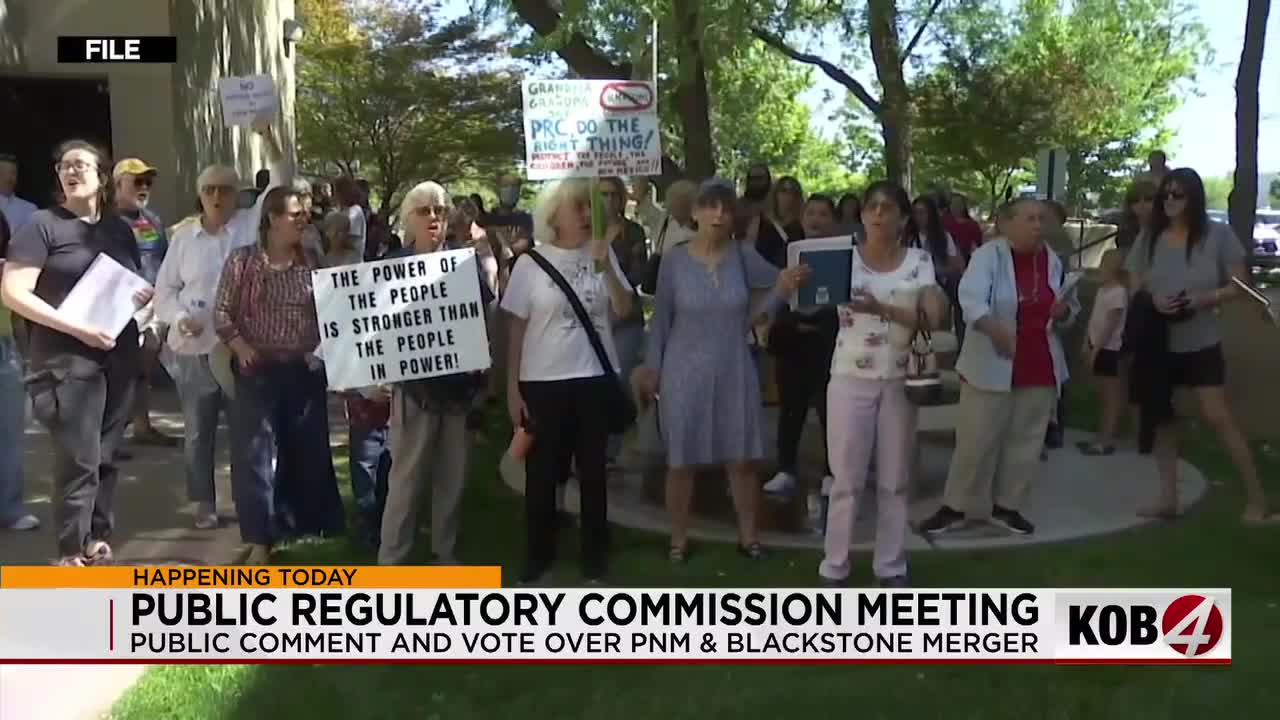
Opponents aren’t just mulling over line items; they’re picturing a future of higher bills, diminished reliability, and accountability diffused into a labyrinth of corporate structures. They’ve been out there, signs waving, voices hoarse, reminding everyone listening that utility privatization—and they’ve watched these deals for decades, believe me—rarely, if ever, makes life cheaper for the folks at home. They swarmed the Roundhouse earlier this year, in May and June, their anger a steady hum beneath the capital’s usual rhythm.
New Mexico’s Attorney General, Raul Torrez, hasn’t pulled punches. He’s questioned the whole shebang, legality and all, digging deep into a deal he argues might just leave everyday New Mexicans footing an exorbitant bill. “This isn’t some abstract financial maneuver; it’s about the lights staying on for families, the heat in winter,” Torrez stated recently, his words echoing the broader anxieties. “We’ve got a sworn duty to protect our citizens from arrangements that threaten basic affordability and reliable service, and we aren’t shy about exercising that.”
Blackstone, a colossal entity boasting north of $1 trillion in assets under management (Source: Blackstone Group Q3 2023 Earnings Report), insists its intentions are noble. They — and PNM argue the deal brings a whopping $175 million in community benefits. Think rate credits, programs for low-income families, stuff like that. A PNM spokesperson, speaking on background ahead of the vote, emphasized the strict regulatory framework. “Let’s be clear, the New Mexico Public Regulation Commission holds the reins on rates. We’re committed to investing in the grid, improving service, — and these benefits? They’re real, tangible proof of our commitment to New Mexico’s future, not just a balance sheet.” But that’s the party line, isn’t it?
Examiners appointed by the Public Regulation Commission, the very body tasked with overseeing the utilities, even recommended that regulators should pump the brakes—hard—on this deal. They essentially told the PRC to reverse its approval. Not exactly a ringing endorsement, is it? Yet, the corporate machine grinds on, steadfast in its belief that its model is best, even when expert eyes give it the side-eye.
This situation isn’t unique, by the way. Look across the globe at similar scenarios playing out globally—say, in South Asia. In countries like Pakistan, the privatization of state-owned enterprises, particularly in power and other utilities, has been a contentious, often painful, saga. Promised efficiencies and lower costs often evaporate, leaving consumers grappling with tariff hikes and inconsistent services. It’s a sobering reminder that while market forces can sometimes spur innovation, when applied to the precarious balance between private enterprise and public good, the human cost can be immense.
The stage is set. A public comment period will precede the vote, a final opportunity for those voices outside the corporate boardroom—the everyday consumers, the small business owners—to make their concerns heard. Then, the gavel will fall. The echoes, for better or worse, will ripple far beyond the sun-baked streets of Santa Fe.
What This Means
The New Mexico PRC’s decision on the PNM-Blackstone merger carries far more weight than just the immediate implications for shareholders. Politically, it’s a bellwether for state regulatory bodies across the country, showing just how much muscle—or lack thereof—they can flex against the relentless advance of private equity into what have historically been public or heavily regulated sectors. An approval, especially after examiner objections, could set a dangerous precedent, weakening the public’s confidence in oversight. A rejection, conversely, might embolden other states to challenge similar acquisitions, bolstering arguments that basic services like electricity are too fundamental to be purely profit-driven. And let’s be honest, state attorneys general watching Torrez’s play are certainly taking notes. It’s a test of state sovereignty against massive capital.
Economically, the impact is straightforward, though fiercely debated. Proponents claim private investment injects much-needed capital, upgrading infrastructure — and boosting efficiency. But critics fear that private equity’s model, often focused on leveraging assets and quick returns, translates directly to higher consumer rates over time, or a hollowing out of services, to appease investors. We’ve witnessed it with other privatized utilities where the cost savings promised somehow never quite materialize for the average bill payer. The argument for $175 million in community benefits, while seemingly substantial, has to be weighed against an $11.5 billion deal—a mere sliver of the overall transaction, and one that may not buffer New Mexicans against future rate increases from a deep-pocketed new owner. The market, as it always does, is watching.