

Albuquerque’s Daily Reckoning: When Urban Wilderness Collides, Who Pays?
POLICY WIRE — Albuquerque, N.M. — Another Wednesday. Another crisp desert morning gives way to sirens. You don’t usually hear the distant whir of helicopter blades just for a jogger’s...

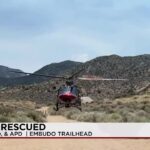
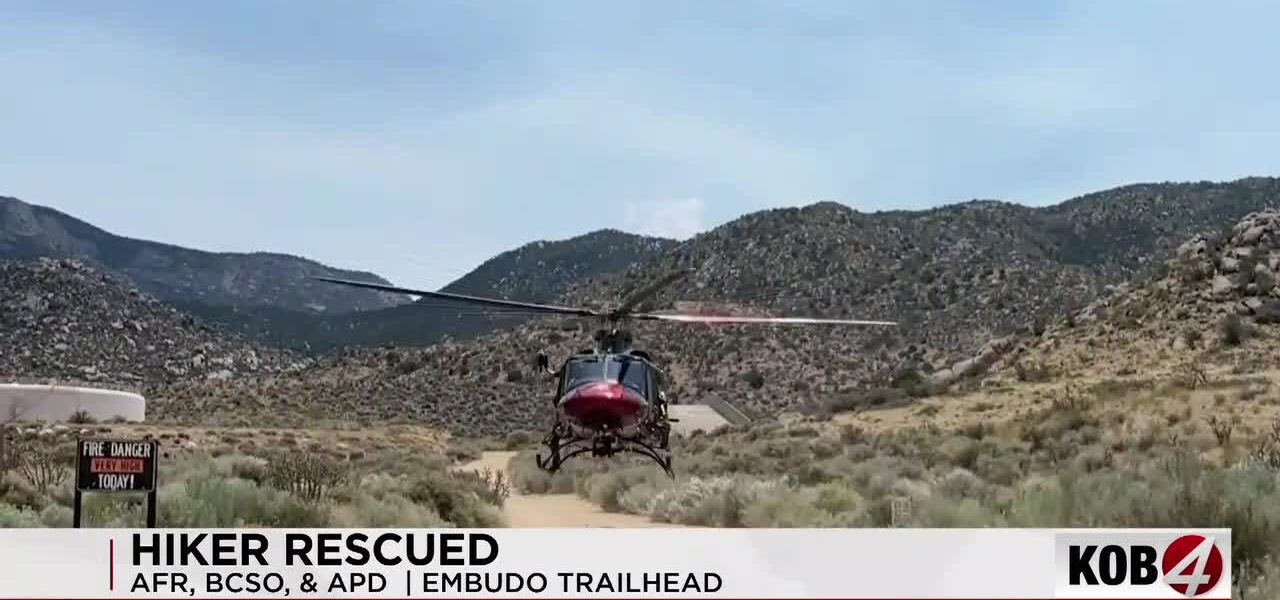
POLICY WIRE — Albuquerque, N.M. — Another Wednesday. Another crisp desert morning gives way to sirens. You don’t usually hear the distant whir of helicopter blades just for a jogger’s twisted ankle, do you? But in the increasingly popular, and occasionally perilous, embrace of nature that skirts our burgeoning metropolises, that’s precisely what’s happening. And this time, it was a medical emergency high up near the Embudo Trailhead, prompting a multi-agency scramble—a dance local taxpayers are footing with disconcerting regularity.
It’s become a peculiar rhythm of modern life here, a quiet, almost background hum of emergency services responding to the wilderness within reach. On this particular hump day, an individual, details predictably sparse—age, condition, why they were there—became the latest statistic. Around 11 a.m., calls poured in about a hiker in distress. Suddenly, Albuquerque Fire Rescue, joined by the Bernalillo County Sheriff’s Office and the Albuquerque Police Department, found themselves marshaling personnel, coordinating logistics. All for a solitary soul who ventured a little too far, or simply had an unfortunate turn of events.
But aren’t these incidents, almost mundane in their frequency, beginning to stretch budgets — and personnel thin? You bet they’re. “Every call-out, especially those requiring air support, drains resources we desperately need for other urban emergencies,” observed Chief Evelyn Castillo, a twenty-year veteran of Albuquerque Fire Rescue. Her voice, weary but firm, suggests a problem simmering beneath the public’s awareness. “We’re committed to saving lives, obviously, but the sheer volume? It’s forcing some uncomfortable conversations around the water cooler about allocation.”
Consider the raw economics. The average helicopter rescue in mountainous or challenging terrain—like New Mexico’s stunning Sandia Mountains, which rise sharply above the city—can easily eclipse $20,000. For something that, in a perfect world, might have been avoided. According to a 2022 report by the National Parks and Recreation Association, the overall cost for search and rescue operations across U.S. parks — and public lands has seen an 18% increase over the last five years alone. It’s a staggering sum for moments of individual misfortune, or perhaps, poor judgment.
Because while we romanticize the individual’s pursuit of natural solitude, there’s a collective price. And it’s not just a uniquely American phenomenon. From the high passes of Pakistan’s Karakoram range, where intrepid trekkers test their limits against some of the world’s highest peaks, to the well-trodden pilgrim routes across the Muslim world, the global thirst for challenging natural experiences grows. The burden on nascent emergency infrastructures in places like Balochistan, where rescue efforts are often hampered by rough terrain and lack of specialized equipment, mirrors—in a harsher, more constrained environment—the same dilemma faced in a developed city like Albuquerque. In both cases, the call for aid is a test of a society’s priorities, — and its wallet.
📄 POLICY WIRE WHITEPAPER PUBLISHED: PAKISTAN'S NATIONAL SECURITY POLICY PRIORITIES
👉 READ BY CLICKING HERE“We want our residents and tourists to enjoy the majesty of our landscapes,” stated State Senator Manuel Gonzales, whose district encompasses parts of the Sandias. “But we also have a responsibility to manage public funds wisely. We’ve got to explore options, whether it’s better signage, more robust public education campaigns, or perhaps even—and I say this reluctantly—a tiered user fee for higher-risk activities.” His implication, barely concealed, is that free-for-all wilderness access might just have its limits when a helicopter is on standby. Don’t mistake the good intentions of politicians; they always smell an opportunity to shift costs.
The hiker, scooped up by air, was whisked away to a local hospital. A predictable ending. A success story for that individual, no doubt. But for the system that delivered the care, the endless cycle continues. Much like a disappearing cargo plane over Karachi can expose cracks in air traffic control systems, these smaller, localized emergencies expose the real, growing pressure points on essential civic services here at home.
What This Means
The Albuquerque incident, mundane as it appears, is a sharp indicator of shifting demographic and recreational trends that carry significant political and economic ramifications. Politically, the frequency of such rescues is inevitably forcing local governments to re-evaluate how they balance public safety, recreational access, and budgetary constraints. Expect increasing calls for ‘user pays’ systems, or perhaps even limitations on certain types of adventurous pursuits, particularly as climate change exacerbates conditions in wilderness areas. Economically, these rescues represent not just immediate costs in fuel and personnel, but also the diversion of resources from other urban services—think less funding for potholes or after-school programs because a rescue team is busy evacuating a poorly prepared climber. they highlight an often-overlooked strain on medical facilities, particularly when specialized care is needed, tying into broader debates about healthcare capacity. The irony, of course, is that the very allure of accessible wilderness draws tourism dollars, but that tourism inevitably increases the incident rate, creating a self-perpetuating cycle of expense. It’s a localized microcosm of a global challenge: how do societies manage ever-increasing demand for amenities—be they natural playgrounds or safety protocols in natural disaster zones—without bankrupting their public services or fundamentally altering the very landscapes they cherish?
📖 GET YOUR FREE COPY NOW OF POLICY WIRE DIGITAL MAGAZINE JULY 2026 EDITION
👉 READ & DOWNLOAD FREE MAGAZINE