

Erdoğan’s Steel Sentiments: Pistols and Geopolitics Unpacked at NATO
POLICY WIRE — Ankara, Turkey — Sometimes, diplomacy wears a silencer. But when Turkish President Recep Tayyip Erdoğan decides to make a point, it often arrives with the tactile heft of cold steel....

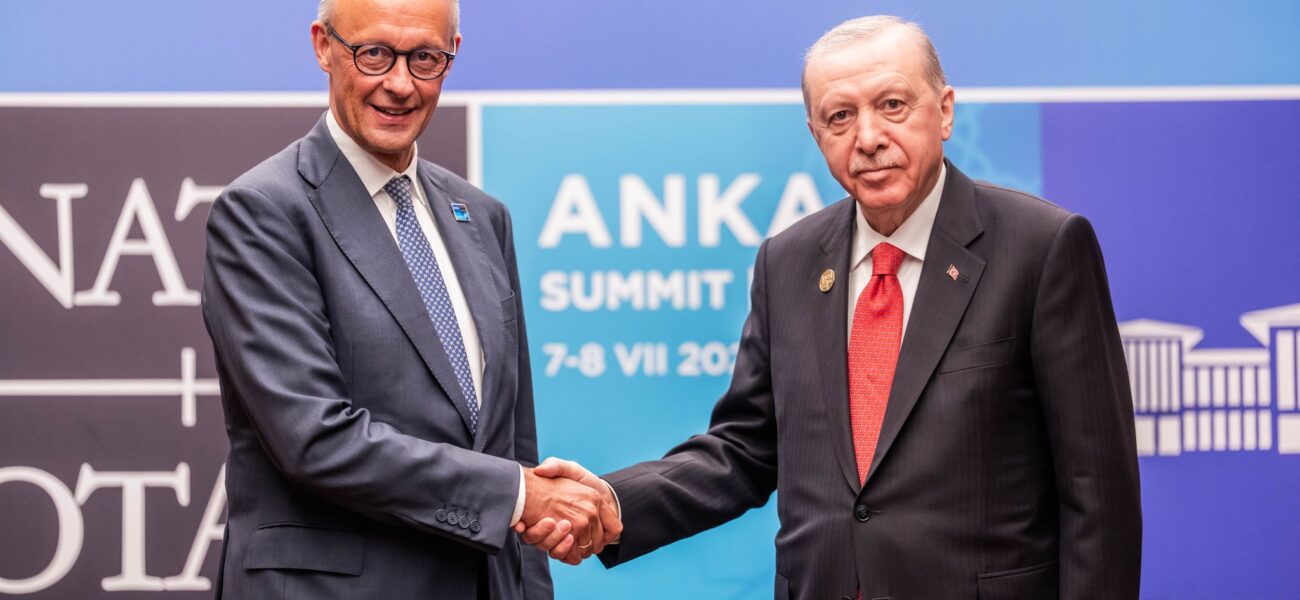
POLICY WIRE — Ankara, Turkey — Sometimes, diplomacy wears a silencer. But when Turkish President Recep Tayyip Erdoğan decides to make a point, it often arrives with the tactile heft of cold steel. That’s what a select cadre of NATO officials, including Germany’s Friedrich Merz, discovered recently—receiving impeccably crafted pistols as presidential gifts. It wasn’t chocolates, was it? Or a commemorative plaque. No, sir, it was a sidearm, polished — and ready.
It’s the sort of gesture that makes hardened foreign policy wonks do a double-take. A pistol. As a token of alliance camaraderie. You’d expect such a thing from a sovereign gifting a treasured steed, maybe, centuries ago. But in the contemporary, post-modern theater of international relations, where a stern gaze can be a major diplomatic incident, this felt different. It felt… loaded. Because it always does, doesn’t it, when Erdoğan’s involved.
“Such exchanges, while culturally unique, do require careful consideration of their symbolic weight,” a senior German diplomat, speaking on background, observed, alluding to the sheer unexpectedness of it all. “Our alliance rests on shared values, not shared arsenals – at least not in this fashion. It certainly makes for a conversation starter back home.”
And it’s a statement, plain as day. These aren’t cheap knock-offs. They’re typically high-quality, domestically manufactured firearms. Turkey, you see, isn’t just a NATO member that often grumbles at its Western allies; it’s a nation rapidly building its own industrial muscle, particularly in defense. It doesn’t just want a seat at the table; it wants to build the table—and perhaps the utensils, too. That’s a critical factor, whether its European partners like it or not, especially as we see Germany’s maritime ambitions shifting.
Consider the subtext: These aren’t gifts simply meant to foster warm relations; they’re assertions of capability. Of self-reliance. Of a nation no longer content to solely buy off the shelf. Turkey’s defense exports reportedly grew by over 20% in the last fiscal year, reaching figures north of $4.5 billion, according to data compiled by the Turkish Exporters Assembly. That’s not small potatoes. It signals a player looking to arm not just itself, but others—a point that certainly resonates across the Muslim world, from Pakistan’s expanding defense collaborations to nations in North Africa and the Levant eyeing Ankara’s increasingly sophisticated hardware.
But how do these ‘gifts’ land? In diplomatic circles, a gift is never just a gift. It’s a mirror. It reflects the giver’s intent, yes, but it also reflects the recipient’s perceived position. Is it a sign of respect? A reminder of Turkish power? Or perhaps, a gentle, metallic nudge about the nature of sovereignty — and who truly wields it?
“These aren’t just trinkets; they’re handcrafted expressions of our nation’s sovereignty and its growing industrial might,” a senior aide from Ankara’s presidential palace, who requested anonymity due to diplomatic sensitivities, remarked. “President Erdoğan believes in showing, not just telling, Turkey’s strength to our allies, and sometimes that strength comes in steel.” He’s not wrong, you know. Words can be cheap. Steel isn’t.
📄 POLICY WIRE WHITEPAPER PUBLISHED: PAKISTAN'S NATIONAL SECURITY POLICY PRIORITIES
👉 READ BY CLICKING HEREAnd here’s where the human element really grinds against the policy machinery. Imagine being Merz—a seasoned politician, acutely aware of Germany’s complicated history with military symbolism—suddenly presented with a custom-made sidearm from a prickly NATO ally. What do you say? What do you do with it? Display it? Lock it away? Or, better yet, pretend it’s just a really heavy letter opener.
It complicates things. Turkey’s position has always been a unique blend of East and West, Muslim and secular, a bridge—or a chokepoint, depending on your perspective. Its current foreign policy, increasingly independent and assertive, particularly under Erdoğan, often strains its relations with traditional Western partners. And, frankly, these pistol-gifts don’t exactly smooth things over. They sharpen them.
But, let’s not pretend Erdoğan is clueless. He knows precisely what he’s doing. He understands optics, especially among a domestic audience that largely applauds his assertive stance. For many Turks, this is a symbol of national pride, an affirmation that their leader can stand toe-to-toe with global powers, literally giving them a piece of Turkish strength. And for regions beyond, places like Sudan where political landscapes are perpetually in flux, Turkey’s assertive diplomacy acts as an increasingly visible alternative voice.
What This Means
The gift of pistols, beyond its immediate shock value, lays bare the deepening fissures and shifting dynamics within NATO. Politically, it’s a classic Erdoğan move: a calculated act of unconventional diplomacy designed to project strength, demand respect, and subtly—or not so subtly—test the boundaries of alliance etiquette. It challenges the West’s long-held assumption that Turkey remains a junior partner, signaling Ankara’s readiness to chart its own course and its growing self-sufficiency in defense capabilities. Economically, these highly symbolic gifts act as marketing. They silently endorse Turkey’s burgeoning defense industry, suggesting reliability and quality to potential international buyers, especially those nations in the global South and Muslim world eager to diversify their arms suppliers.
The episode forces NATO members to confront Turkey not just as an ally, but as an increasingly independent power broker with its own regional aspirations and a distinct worldview that often diverges from Brussels or Washington. It makes for uneasy bedding. You just don’t know quite what to expect next, do you?
📖 GET YOUR FREE COPY NOW OF POLICY WIRE DIGITAL MAGAZINE JULY 2026 EDITION
👉 READ & DOWNLOAD FREE MAGAZINE