

Rhetoric Rattles Rigs: Iran’s Oil Well Threats Stir Gulf’s Uneasy Waters
POLICY WIRE — Dubai, UAE — Out in the scorching desert sun, where pipelines stretch for endless miles and massive tankers lumber toward the Strait of Hormuz, the daily rhythm of global energy...

POLICY WIRE — Dubai, UAE — Out in the scorching desert sun, where pipelines stretch for endless miles and massive tankers lumber toward the Strait of Hormuz, the daily rhythm of global energy scarcely acknowledges the simmering tensions beneath its surface. Yet, every so often, a calculated declaration rips through that veneer, reminding everyone just how fragile it all is. Iran, a nation with a flair for theatrical pronouncements and a long memory for grievances, has just delivered one such reminder.
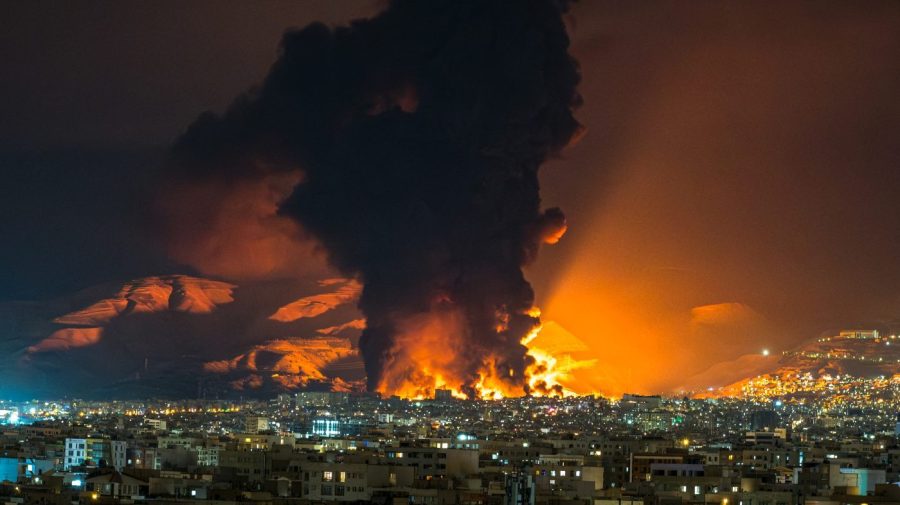
It wasn’t a whisper. It was an outright verbal barrage, echoing across regional airwaves — and through diplomatic channels. They’re talking about striking Gulf oil wells. You heard that right—specifically targeting the very infrastructure that greases the wheels of the world economy. And just like that, the usual chatter about market fundamentals and OPEC+ quotas gets pushed aside for a colder, harder look at geopolitics, a look that rarely makes for comfortable viewing. It’s a move that feels less like strategic posturing and more like a high-stakes poker game where the dealer has already stacked the deck for chaos. [QUOTE_PLACEHOLDER]
The Strait of Hormuz isn’t just some watery thoroughfare; it’s the planet’s single most critical chokepoint for oil shipments. We’re talking about a fifth of the world’s total petroleum liquids consumption passing through that narrow channel each day. For anyone keeping score, that’s roughly 21 million barrels daily, according to the U.S. Energy Information Administration’s latest estimates. That kind of volume makes it an economic jugular for nations from Beijing to Boston. But when Tehran speaks of disrupting production or transit, it isn’t just abstract numbers at stake; it’s everything from petrol prices at your local pump to the geopolitical stability of dozens of economies.
But let’s be real, this isn’t some new act from the Iranian playbook. They’ve been deploying similar rhetoric for decades, a steady drip-drip-drip of warnings whenever the heat’s turned up. And the stakes, they only ever seem to climb higher. What makes this latest saber-rattling so compelling isn’t its novelty, but its timing—it comes amid a wider backdrop of international isolation and internal economic pressures. You don’t have to be a seasoned intelligence analyst to see the pattern. It’s an overt attempt to inject uncertainty, to raise the ante — and force a global re-evaluation of Iran’s leverage.
The response, predictably, has been a medley of caution — and quiet condemnation. Neighboring Gulf states—the ones who’d actually feel the heat on their rigs—they’re naturally unnerved. They’ve invested heavily in infrastructure and alliances, always with an eye on maintaining stability, an ideal that looks shakier than a house of cards whenever these threats surface. It’s a delicate dance, balancing robust defenses with careful diplomacy. And it isn’t just their direct interests at risk; it’s the entire Gulf’s reputation as a reliable energy partner that takes a hit.
Even for distant economies, the ripple effects are anything but abstract. Think Pakistan, for instance. A country that already grapples with chronic energy deficits — and a fragile economy. A disruption to global oil supplies and the ensuing price spike would hit Pakistanis hard, translating directly into higher inflation, greater import bills, and magnified socio-political discontent. The echoes from Lahore to Santa Fe, as it turns out, often carry a crude oil undertone. The impact here is multi-faceted—it’s not just economic; it’s about religious solidarity with Muslim-majority states and the potential for a fresh wave of regional refugees, adding to an already strained humanitarian landscape. Suddenly, their energy strategy isn’t just about domestic resources, it’s about the volatile shipping lanes hundreds of miles away.
📄 POLICY WIRE WHITEPAPER PUBLISHED: PAKISTAN'S NATIONAL SECURITY POLICY PRIORITIES
👉 READ BY CLICKING HEREAnd let’s not forget the larger players. Washington’s pronouncements often fall on ears long accustomed to the cadence of threats and counter-threats in the region. There’s a predictable firmness, certainly. But under the surface, there’s also an exhausting calculus of escalation risks. No one, not really, wants to see kinetic action in the world’s most sensitive oil patch. But Iran, it seems, isn’t shy about forcing that uncomfortable consideration onto the world’s strategic chessboard. This isn’t just talk, it’s a very pointed threat, meant to command attention—and perhaps, elicit concessions.
It’s always been about leverage. Whether it’s negotiations over sanctions, nuclear programs, or regional influence, Iran’s calculus involves reminding its adversaries of the costs of non-compliance. Their past actions, including harassing commercial shipping, attest to a willingness to test boundaries, albeit often stopping short of full-blown conflict. But now, this latest declaration? It’s upping the ante, pushing beyond mere interdiction and toward direct infrastructure targeting—a line that, once crossed, would usher in an entirely new and far more dangerous era of confrontation. The cynics would argue it’s political power plays over principle, and here, they’d probably be right.
What This Means
This Iranian posture isn’t simply an emotional outburst; it’s a carefully calibrated message to global powers. First, it directly challenges the notion of unrestricted passage through the Gulf, aiming to re-assert Iran’s regional dominance and demonstrate its capacity for disruption. Politically, it signals to Washington and its allies that economic sanctions or diplomatic isolation will be met with disproportionate, impactful responses targeting collective economic security. Second, economically, even the threat alone pushes insurance premiums for shipping through the Strait sky-high and sends speculative tremors through global commodity markets. Any actual attack, however localized, would trigger a cataclysmic surge in oil prices, plunging already vulnerable economies into severe distress. Finally, this situation presents a harrowing security dilemma for Gulf Arab states. They’re forced to weigh enhanced defense measures, which Iran views as escalatory, against the very real possibility of infrastructure attacks. It’s a game of brinkmanship where miscalculation is a terrifyingly plausible outcome, ensuring regional instability remains a primary export.