


The World Cup’s Persistent Paradox: A Global Spectacle, Europe’s Exclusive Party
POLICY WIRE — Doha, Qatar — Another World Cup, another fleeting flirtation with the extraordinary. That’s been the general mood, hasn’t it? This global tournament, perpetually billed as football’s...

POLICY WIRE — Doha, Qatar — Another World Cup, another fleeting flirtation with the extraordinary. That’s been the general mood, hasn’t it? This global tournament, perpetually billed as football’s grand unifier, the quadrennial melting pot where Cinderella stories are supposedly spun from sweat and dreams, just wrapped up its quarterfinal matchups with all the dramatic predictability of a Swiss train schedule. It wasn’t a revolution; it was an echo. Because, you see, once the dust settled — and the expanded, 48-team field had been rigorously culled, what did we find? Six teams from Europe. One, Messi’s perennial powerhouse, from South America. And, bless their hearts, a single African squad from Morocco, holding the line. A new World Cup format? Same old story.
Many dared to hope, of course. We all did. A bigger tournament, more chances, a fairer fight—that was the marketing spin. But it feels a bit like they built a bigger ballroom, yet only invited the same couples to dance the final tango. Consider the hosts. Canada, Mexico, the United States—all three fell flat on their faces before the quarterfinals. Not just out, but out with a thud you could hear back home, 0-3-0 combined in the round of 16 for a trio that collectively looked so promising through the earlier stages. U.S. star Christian Pulisic, after his side got unceremoniously thumped by Belgium, put it plainly: “We need to get over that next hurdle. Trying to compete and beat the world’s best, that’s our next step… There’s still another step that we have to take.” But how many more steps can they take before you start wondering if it’s the shoes, or maybe the entire staircase, that’s rigged?
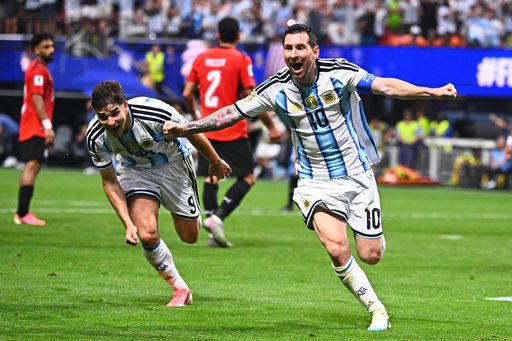
And it isn’t just North America struggling to scale football’s summit. This perennial dominance isn’t some statistical fluke; it’s a hardened reality. For instance, out of the 48 available quarterfinal spots over the past six World Cups, European nations have snatched a staggering 30, with South American giants claiming 14. Africa, a continent teeming with talent — and passion? A measly three spots. North America? One. (Source: Associated Press data, last six World Cups.) It just tells you something, doesn’t it? About where the power truly lies, even in a sport that claims global universality. Moroccan advancement aside, Africa’s hopes this time around withered with agonizing familiarity—late goals, controversial calls, and ultimately, heartbreak. Egypt coach Hossam Hassan, after a bruising 3-2 defeat where they’d led by two, questioned the officiating, implying, “Perhaps they wanted to keep the world champion in the competition. Perhaps they wanted Messi to stay in the competition.” Subtle, but pointed. It’s a sentiment that whispers across many less-privileged footballing nations.
Now, let’s talk about Morocco. Their remarkable run provided a welcome jolt of excitement, a genuine David-and-Goliath narrative. For a brief moment, it felt like the old guard might actually get rattled. Their performance sent ripples of pride and belief not just through North Africa, but across the wider Muslim world and into South Asia, including Pakistan, where football—while secondary to cricket—still commands fervent viewership and hopes. That an Arab and African nation could go toe-to-toe with established European giants wasn’t just a sporting achievement; it was a cultural and symbolic victory. But that very fact—that one team can carry such immense weight of expectation for an entire swath of the globe—also spotlights the deep disparities in the sport.
📄 POLICY WIRE WHITEPAPER PUBLISHED: PAKISTAN'S NATIONAL SECURITY POLICY PRIORITIES
👉 READ BY CLICKING HEREEven the players who do break through the European-South American hegemony sometimes find the golden handcuffs aren’t just symbolic. The vast gulf in resources, infrastructure, and player development systems separating these footballing behemoths from the rest of the world isn’t some abstract concept; it’s a living, breathing reality on the pitch.
What This Means
This enduring pattern at the World Cup—where Europe and South America consistently dominate the business end of the tournament—carries far weightier implications than just who lifts a trophy. Economically, it entrenches existing power structures. The biggest leagues, the most lucrative sponsorship deals, the deepest talent pipelines, they all reside overwhelmingly in Europe. This translates to immense soft power, too. European nations aren’t just winning games; they’re exporting culture, branding, — and influence. When a Kylian Mbappé or a Harry Kane dominates headlines, it reinforces their nations’ global standing in ways a traditional embassy can only dream of.
For nations like Pakistan or those in the African continent, the challenge isn’t just finding talented players; it’s building sustainable, well-funded federations, investing in youth development from the ground up, and battling institutional inertia. It’s a systemic issue that goes far beyond a single match. Because if football truly wants to be global—and not just globally watched—it has to tackle these entrenched inequities head-on. Otherwise, the World Cup will remain a fascinating, entertaining spectacle, sure, but also a stark, annual reminder of who actually calls the shots.
📖 GET YOUR FREE COPY NOW OF POLICY WIRE DIGITAL MAGAZINE JULY 2026 EDITION
👉 READ & DOWNLOAD FREE MAGAZINE