


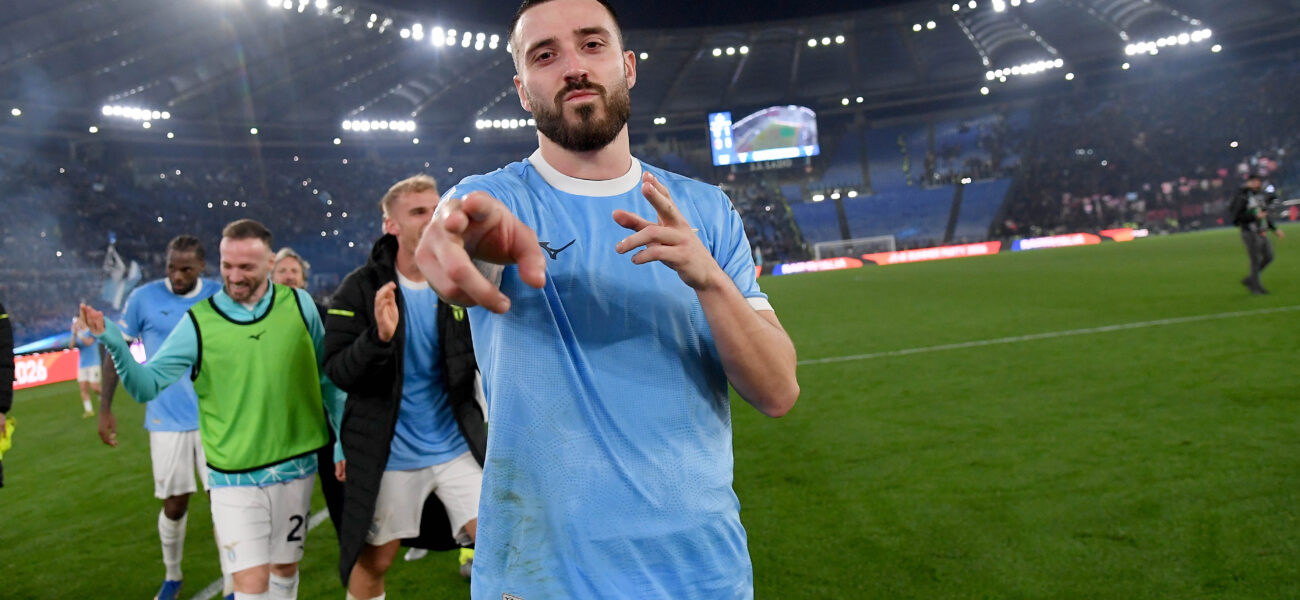
The Global Grind: Milan’s €30M Defender Betrays Football’s Merciless Capital Flow
POLICY WIRE — ROME, ITALY — While much of the world grapples with inflation, precarious employment, and the rising cost of, well, everything, European football continues its unapologetic splurge. The...

POLICY WIRE — ROME, ITALY — While much of the world grapples with inflation, precarious employment, and the rising cost of, well, everything, European football continues its unapologetic splurge. The latest financial theatre stars AC Milan, who recently forked over a cool €30 million (add-ons tucked in there, naturally) to Lazio for defender Mario Gila. It’s not just a transfer, is it? It’s a transaction that—when peeled back—reveals the churning, often brutal mechanics of a global entertainment industry operating on stratospheric valuations.
It’s an almost comedic performance, really, watching clubs haggle over tens of millions as if it’s pocket change. Lazio, in this particular tango, found themselves holding the shorter end of the stick. With Gila’s contract expiring in a year, their negotiating position was weaker than a week-old espresso. Milan, sensing blood, didn’t mess around, nudging their offer just enough to pry him loose. He’ll sign on for five years, pulling in a hefty €4.5 million annually. Not a bad haul for someone who’d only clocked a paltry two first-team appearances for Real Madrid before moving to Italy.
“We don’t chase every whim,” AC Milan’s Director of Football, Giovanni Rossi, commented dryly from a plush Milan office, likely overlooking a courtyard fountain. “Our strategy is deliberate. Gila represents a precise market opportunity—a player entering his prime, a solid, immediate fit for Allegri’s vision. You seize these windows when they open.” His tone suggested a clinical chess player, not someone investing in human dreams.
Lazio’s President, Claudio Lotito, sounding a bit like a man forced to sell his prize bull at a discount, offered a more resigned perspective. “Look, in this business, sometimes the numbers just don’t align how you’d wish. The player wanted the move. We secured the best possible deal given the circumstances, and quite frankly, we’re now able to reinvest strategically in areas of greater need. It’s a reality of modern football, isn’t it?” That’s the official line, anyway, disguising the bitter pill of having to hand over roughly half that €30 million directly to Real Madrid as part of a previous, often overlooked, clause. Football’s not just about winning games; it’s about navigating Byzantine contract structures, too.
And so, another player shuffles clubs, another chunk of capital shifts hands. Milan’s pursuit wasn’t an impulse buy. Massimiliano Allegri, the tactician in charge, had apparently been badgering the Milan brass about Gila since last summer. He’d even, somewhat controversially, tipped off Napoli to the defender’s potential, only for them to balk at Lazio’s asking price. Goes to show, doesn’t it, that even in this lavish playground, there are limits to financial bravado—or perhaps just a sharper sense of prudence at other outfits. Because even when the dough is plentiful, nobody wants to be seen as a soft touch.
📄 POLICY WIRE WHITEPAPER PUBLISHED: PAKISTAN'S NATIONAL SECURITY POLICY PRIORITIES
👉 READ BY CLICKING HEREThis whole spectacle of transfer markets and their seemingly bottomless pockets has a curious ripple effect far beyond the stadiums of Europe. It draws immense viewership, of course. For instance, the sheer passion for European football in places like Pakistan and across the wider Muslim world is staggering. Fan bases number in the tens of millions, driving revenue through merchandise, broadcast rights, and, indirectly, even speculative investment in regional sports. It’s a truly global capital carousel, where the value of a Spanish defender, honed in Italy, is influenced by consumption habits thousands of miles away.
One analyst notes that in the summer of 2023, transfer spending across Europe’s top five leagues hit a staggering €7.36 billion—a figure that would make most national treasuries blush. It’s money sloshing around, seeking opportunity, moving talent with an almost reckless abandon that would frighten more traditional industries. And Gila’s move is just another tiny cog in this perpetually spinning, glittering machine.
What This Means
The Gila transfer, for all its specific nuances, reflects a broader consolidation of wealth and talent within football’s elite. Teams like Milan, flush with investor capital and brand power, continue to vacuum up promising players, leaving others—even established Serie A clubs like Lazio—in a perpetual state of strategic disadvantage. It’s an economic arms race, really. The implication is a widening gap between the footballing haves and have-nots, where player retention becomes less about loyalty and more about contractual loopholes and financial muscle.
Economically, it’s a pure demand-side story: clubs need talent, they’ll pay what it takes, and agents will ensure the price keeps escalating. Politically, this influx of capital, sometimes from less transparent sources globally, means governing bodies often struggle to maintain oversight, leading to concerns about fair play and market manipulation. The continued focus on high-profile, high-cost acquisitions also distracts from more systemic issues within the sport—grassroots development, financial sustainability for smaller clubs, and the sometimes-fragile balance of competition. But hey, it keeps the fans talking, the money flowing, and the narrative perpetually engaged in this endless transfer drama. Who’s complaining? Well, aside from Lazio fans, probably.
📖 GET YOUR FREE COPY NOW OF POLICY WIRE DIGITAL MAGAZINE JULY 2026 EDITION
👉 READ & DOWNLOAD FREE MAGAZINE