


Kyiv Endures Daily Attacks: Has the World Forgotten?
Kyiv faces relentless daily missile attacks and mounting civilian casualties. As global attention wanes, Russia exploits diplomatic fatigue. Understand the true human cost and urgent reality for...

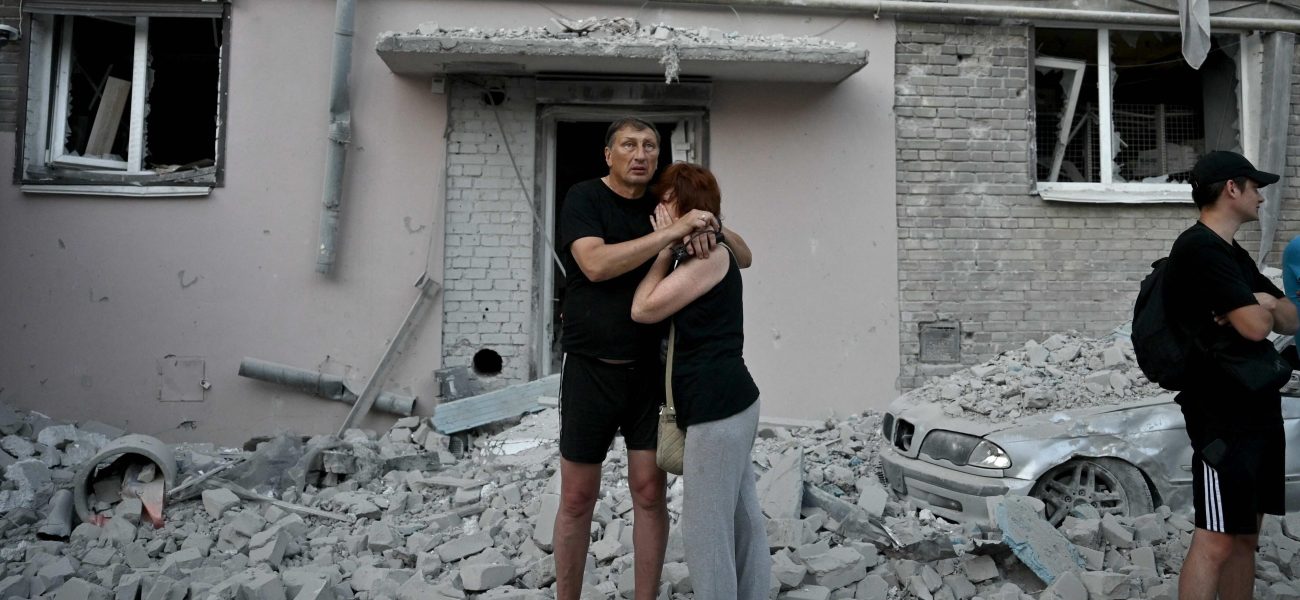
POLICY WIRE — Kyiv, Ukraine — The early morning chai in Islamabad might brew a bit sweeter, the tea stall owner oblivious, but in Kyiv, that same dawn delivered a fresh volley of steel and terror. It’s a macabre routine now: the wail of sirens, the thud of air defenses, then the dreadful, inescapable impact of Russian projectiles slamming into apartment blocks and marketplaces. Not all nations live under such constant, existential threat, of course—and that’s kind of the whole point, isn’t it?
This week’s attack wasn’t an anomaly; it was Tuesday. And like countless Tuesdays before, residential buildings took direct hits, first responders navigated rubble in the still-dark, and desperate medics fought to save lives. Thirteen civilians, by latest official counts, wouldn’t see another morning, swallowed by fire — and debris. But who’s counting beyond the immediate horror? These aren’t isolated incidents, these are calibrated, persistent attempts to fracture a city’s will, brick by painful brick.
The city’s resilient Mayor, Vitali Klitschko, often a stoic figure against Kyiv’s crumbling skylines, didn’t mince words amidst the smoke. “They bomb our homes, our schools, our hospitals, but they won’t break our spirit,” he declared from a bombed-out district, his voice raw from the night’s indignities. “The West’s help, while appreciated, needs to be faster, more definitive. Our children are paying the price for indecision. Frankly, we’re tired of being a living exhibit for international solidarity while our people die.” It’s a sentiment that rings increasingly hollow in the ear of a world already grappling with its own gnawing concerns.
Meanwhile, across continents, a sense of weary detachment settles in. From Brussels, Nabila Massrali, a veteran EU foreign policy spokesperson, offered familiar rhetoric. “This barbarism against civilians can’t stand,” she stated, echoing past condemnations, each syllable laden with diplomatic fatigue. “But our unity, while firm, isn’t boundless. Sanctions hurt, but this war—it just keeps going.” It’s almost as if the very horror has become normalized, a background hum in the cacophony of global news cycles, competing for attention with a surprising Wimbledon upset (there’s always something else, isn’t there?).
Russia, for its part, remains unmoved. The Kremlin dismisses global outrage as Western propaganda, a worn-out refrain that’s lost any pretense of subtlety. But they aren’t stupid; they understand the world’s dwindling attention span. They’re banking on it. They know the global appetite for sustained, punishing action is finite, especially when economic pressures mount closer to home. They’re effectively daring international partners to get truly serious, a dare the world has, thus far, seemed hesitant to fully accept.
The numbers, stark as they’re, hardly convey the human cost. Consider this: Ukraine’s military intelligence estimates that Russian forces have fired over 7,500 missiles at the country since February 2022, per a recent report by the Ukrainian Ministry of Defense. Thousands. Not just against military targets, but often at civilian infrastructure. They’ve just been throwing hardware at a problem they can’t seem to solve cleanly, — and we’re seeing the brutal outcome.
📄 POLICY WIRE WHITEPAPER PUBLISHED: PAKISTAN'S NATIONAL SECURITY POLICY PRIORITIES
👉 READ BY CLICKING HEREBecause every strike on Kyiv, every civilian life lost, sends a chilling ripple beyond Europe’s borders. For countries like Pakistan, already navigating precarious economic landscapes and simmering regional tensions—including border flare-ups and struggles with extremism—such distant conflicts are not mere headlines. They disrupt global supply chains for essentials like grain, drive up energy prices, and create an atmosphere of widespread instability. A volatile Black Sea impacts food security from Cairo to Karachi. Global attention stretched thin over Ukraine means less focus on other simmering crises, often in regions that matter deeply to the Muslim world, perhaps explaining a certain exasperated apathy that sometimes pervades the narrative of these countries regarding Ukraine. They’ve got their own existential problems, see.
What This Means
These persistent, high-intensity missile and drone strikes on Kyiv serve several interlocking purposes for the Kremlin, none of them good for international stability. First, it’s about breaking the morale of the Ukrainian populace — and government. They’re hoping to exhaust the nation into submission. Secondly, they aim to deplete Ukraine’s—and by extension, the West’s—air defense resources. It’s a cruel game of attrition, an energy chessboard writ large. Each intercepted missile costs Ukraine and its allies dearly, a drain on resources that Moscow seems content to keep applying. Politically, the continuation of these attacks underscores the difficulty of any lasting peace deal. Kyiv won’t negotiate under such duress, nor should it. Economically, the constant threat makes reconstruction planning a pipe dream and investment hesitant, prolonging Ukraine’s reliance on international aid indefinitely. The humanitarian toll is staggering, the psychological wounds unfathomable, and the subtle implication—that the world can, eventually, get used to anything—is perhaps the most unsettling observation of all.