


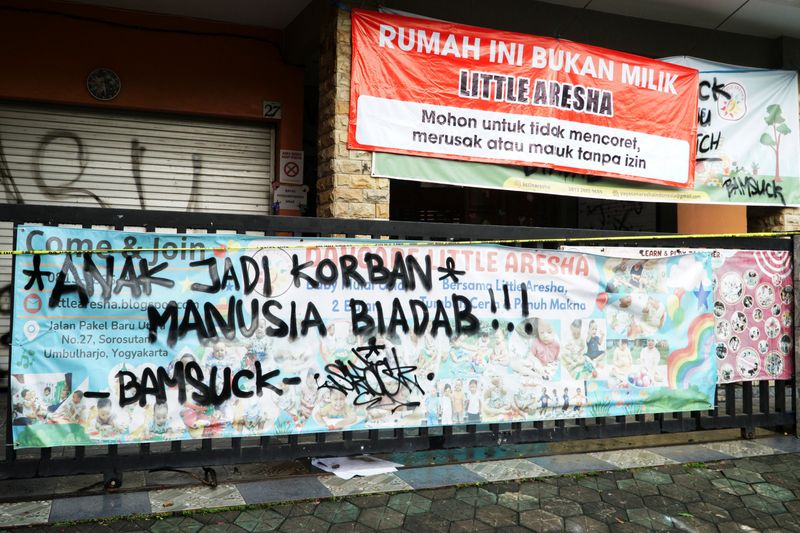
Indonesian Daycare Scandal Balloons, Unveiling Systemic Vulnerabilities
POLICY WIRE — Jakarta, Indonesia — The polite veneer of societal stability sometimes cracks in the most horrifying ways, exposing not just individual depravity but the deeper fissures within. Here,...

POLICY WIRE — Jakarta, Indonesia — The polite veneer of societal stability sometimes cracks in the most horrifying ways, exposing not just individual depravity but the deeper fissures within. Here, it’s not about grand corruption or political skirmishes; it’s about innocence betrayed, and an institutional oversight so glaring it casts a long shadow over the nation’s social fabric.
It began as a ripple—a few allegations, hushed anxieties among parents—but now it’s become a tidal wave. Twenty-seven individuals, suspects in a deepening abuse scandal spanning several Jakarta daycare facilities, aren’t just a number; they represent a breakdown. This isn’t a one-off; it’s a symptom. And frankly, it makes you wonder what else is hiding in plain sight. What on earth did people miss, or perhaps, chose to ignore?
Law enforcement hasn’t exactly been quiet about it, you know? They’ve expanded their investigation. It was initially contained, a bad apple scenario people hoped, but the truth’s uglier than that. The scope has just mushroomed. They’re telling us [QUOTE_PLACEHOLDER] a systematic nature to the exploitation, something deeply disturbing that reaches into multiple establishments. We’re talking about places where parents leave their kids, trusting implicitly that their littlest ones are safe. It’s a gut-punch for those families, a complete shattering of trust. You can’t just shrug this off as a few bad actors. The rot runs deeper.
Because these daycares—or what passed for them—operate in communities where trust in local institutions, be they religious or communal, is often the primary form of vetting. That’s a huge burden. In a sprawling metropolis like Jakarta, with its booming population and often inadequate public services, informal networks pick up the slack. Sometimes, those networks are exploited, or they’re just plain overwhelmed, lacking professional training and oversight. It’s a messy reality that many developing nations face, one that gets starkly illuminated by crises like this.
And let’s be real, this isn’t just an Indonesian problem. Across Southeast Asia and indeed, much of the Muslim world, child protection infrastructure often lags behind other social provisions. Cultural norms sometimes prioritize familial privacy over robust external scrutiny, which, while understandable in many contexts, can leave children vulnerable. A report by UNICEF, for instance, indicated that nearly one in ten children in the Asia-Pacific region experience some form of violence before adulthood, a statistic that underscores the immense challenges. But then a story like this comes along, — and you realize how easily abstract numbers transform into concrete nightmares.
We’ve seen similar incidents, maybe not always daycare-specific, pop up in places from Pakistan’s more rural corners to bustling urban centers in Egypt. It isn’t an issue of faith, naturally. It’s an issue of governance, resource allocation, and a persistent cultural discomfort in openly discussing—and confronting—child abuse. It’s a heavy subject, I know, but we’ve got to face it. Nobody likes to talk about kids getting hurt, especially not in a supposedly safe place, but if we don’t, these tragedies just keep on happening.
For the parents caught in this nightmare, life has fundamentally shifted. Their immediate concern is their children, their healing. But for the government, it’s a massive crisis of confidence. Not just in daycare standards, but in the state’s capacity to protect its most vulnerable citizens. It’s a tricky tightrope for any administration to walk: acknowledge the problem without creating widespread panic, fix it without appearing overly authoritarian. A difficult balance, made infinitely harder when children are the victims.
What This Means
This escalating scandal isn’t merely a localized police matter; it’s a stark reflection of wider systemic frailties that permeate fast-growing economies, particularly within the Global South. Politically, President Prabowo Subianto’s nascent administration (which isn’t exactly nascent, but it’s new enough to inherit old problems, isn’t it?) now faces immediate pressure to demonstrate tangible action. He’s got to reassure a jittery public, — and frankly, make some serious institutional changes. Failure to do so could erode public trust, a commodity already in short supply after years of contentious elections. His government might be compelled to dramatically overhaul childcare regulations, boosting inspection protocols and imposing harsher penalties—but that’s only effective if the enforcement mechanism has teeth, which often isn’t the case. And funding that enforcement? That’s always the kicker.
Economically, this could have cascading effects, far beyond just parental anxieties. If confidence in institutional childcare falters, it pushes more women out of the workforce, particularly in a country where women’s participation is already a nuanced challenge. We saw glimpses of similar economic ripple effects after the COVID-19 pandemic disrupted childcare worldwide. It forces families into informal, often unregulated, arrangements, which ironically, can increase vulnerability. And it paints a less than ideal picture for foreign investment seeking stable, well-regulated environments for their expatriate workers and their families. This isn’t exactly the kind of press an aspiring economic powerhouse wants.
Regionally, Indonesia often sees itself as a leader in Southeast Asia, — and a significant voice in the Muslim world. How it addresses this crisis will set a precedent. Its approach could influence neighbors facing similar burgeoning populations and strained social services, highlighting best practices—or, heaven forbid, cautionary tales—in child protection policies. It speaks to a broader, ongoing conversation about when faith turns factional and whether social infrastructures are keeping pace with demographic and economic realities. The outcome here will be watched closely, a grim barometer for societal resilience.