


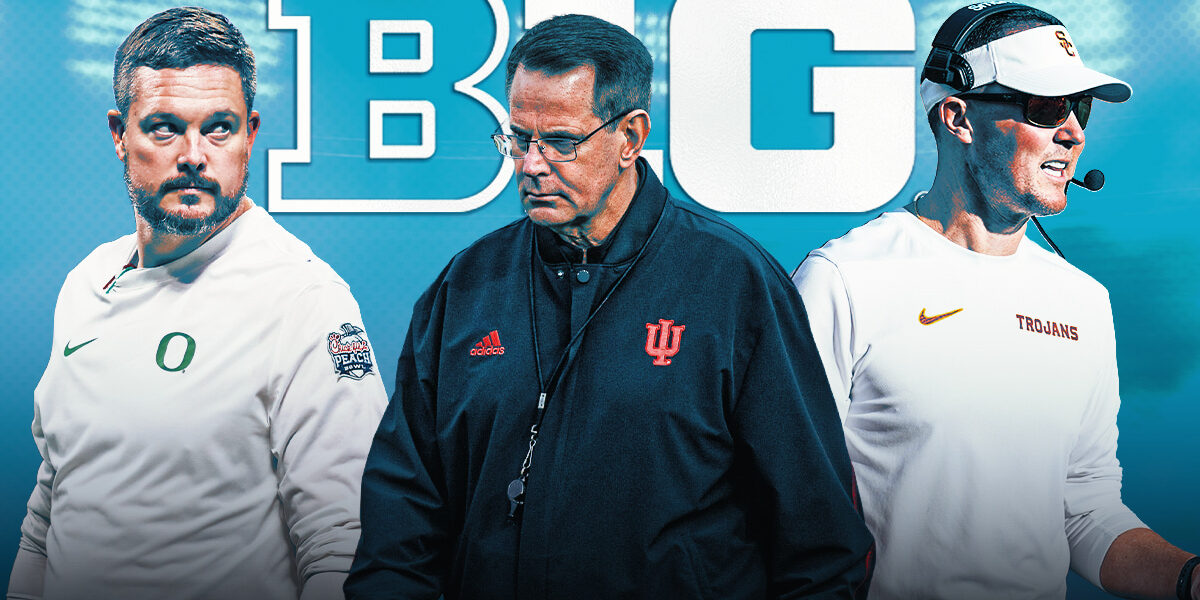
Gridiron Geopolitics: How Big Ten ‘Loyalty’ Recalibrates Collegiate Power Plays
POLICY WIRE — Chicago, IL — In an era where collegiate loyalties are routinely auctioned off like bazaar trinkets, a handful of Big Ten programs are, somewhat ungracefully, resisting the...

POLICY WIRE — Chicago, IL — In an era where collegiate loyalties are routinely auctioned off like bazaar trinkets, a handful of Big Ten programs are, somewhat ungracefully, resisting the marketplace’s loudest siren calls. The transfer portal, a modern colossus looming over college football, has transformed roster construction into a frenetic, almost speculative endeavor. Yet, against this backdrop of ceaseless player migration, a distinct — dare we say, old-fashioned — narrative is taking root: player retention isn’t just an aspiration; for some, it’s the defiant bedrock of their strategic rebuilds.
It’s a peculiar thing, this notion of constancy in an ocean of fluidity. Most athletic directors will tell you they want a ‘stable program.’ But then they’ll chase the shiny new quarterback from halfway across the country. That’s the modern dilemma, isn’t it? You’ve got eighteen behemoths now calling themselves the Big Ten, and many—a great many—are leaning into the portal like it’s the last buffet on Earth. They gobble up talent, often with immediate eligibility promises, hoping to fast-track success. And for some, like the UCLA Bruins with a whopping 55 transfers in their recent roster iterations, that strategy looks like an existential necessity. Then you glance across the league and find programs deliberately, or perhaps coincidentally, taking a starkly different tack.
Take USC, the original West Coast splash in the newly expanded league. Early on, they famously — some might say infamously — became poster children for portal plundering. Lincoln Riley, their head honcho, was all in on instant gratification. But, you know, immediate success isn’t always the kind that sticks around. “We’ve learned a lot from early exuberance,” Riley was reported to have observed recently, his tone notably subdued. “Sustainable success, you see, isn’t bought in bulk. It’s grown—painfully, slowly—from the ground up, with guys committed for the long haul.” Now, they’re swinging the pendulum back hard toward high school recruiting, accepting a modest 17 transfers for the upcoming cycle—a stark re-evaluation.
Then you’ve got the Michigan Wolverines, fresh off a national championship, albeit under new leadership. Sherrone Moore, stepping into gargantuan shoes, isn’t exactly overhauling the furniture. “Look, you win with your guys,” Moore articulated in a candid moment with reporters, a faint note of weary resolve in his voice. “Guys who want to be here, who built what we have. The transfer market? It’s a tool, sure. But it ain’t the blueprint for a long-term championship culture.” They’re entering the 2026 season with just 20 new faces via the portal, banking on continuity.
Iowa (19 transfers), Rutgers (20), and even Ohio State (20)—who historically have done a lot of their building from the prep ranks—are showing a similar inclination. It’s not that these programs reject the portal outright; it’s more nuanced than that. They’re picking their spots, using it for specific, perceived deficiencies rather than as a primary talent pipeline. This subtle defiance flies in the face of what some analysts have called the ‘Amazon-ification’ of college sports, where everything is instantly available for a price.
Because, honestly, there’s an economic argument at play here, too. Building through the portal isn’t cheap. Scholarships aside, there’s the whole NIL aspect, the ‘free agency’ deals that become informal recruitment incentives. And as one recent NCAA study pointed out, the average annual NIL earnings for football players transferring to Power Five schools can easily exceed $150,000, presenting a substantial, often opaque, financial commitment. It’s a bidding war some aren’t keen to join or can’t realistically win without compromising long-term financial stability.
The situation mirrors, in a rather stretched but observable fashion, the intricate political and economic landscape of South Asia, particularly Pakistan. Think of the ‘brain drain’ of highly skilled professionals—doctors, engineers, IT specialists—who are lured by better opportunities and greater stability in Western nations. Just as these countries grapple with talent retention versus economic migration, college football programs face the same delicate balance: investing heavily in local talent, nurturing them, and providing an environment where they choose to stay—or throwing open the doors to external ‘investments’ that might yield quicker, if less stable, returns. It’s a contest between slow, steady nation-building — and mercenary recruitment.
What This Means
This emerging bifurcation in the Big Ten—between the portal maximalists and the retention advocates—isn’t merely a tactical football choice; it reflects a deeper ideological clash within college athletics. It’s a debate over identity: are these institutions primarily developmental academies for young talent, or professional franchises constantly in flux, chasing the next championship at any cost? Programs minimizing transfers are placing a premium on team cohesion, cultural fit, and player development within a consistent system. This strategy, while potentially slower to bear fruit, suggests a more sustainable model, reducing annual roster churn and fostering a more stable environment for both athletes and coaching staffs.
From an economic standpoint, the less reliance on the transfer portal could signal a conscious effort to rein in escalating NIL expenses associated with recruiting established players. It suggests a move toward cultivating ‘homegrown’ talent, where financial incentives might be spread out differently or even lessened by genuine program loyalty and existing relationships. Politically, this trend challenges the prevailing narrative that you simply must dive headfirst into the portal to compete. It offers a counter-narrative, implying that strategic restraint, coupled with robust high school recruiting and player development, remains a viable path—one that perhaps builds a deeper, more resilient team identity, reminiscent of more stable governance structures than mere transient transactions can afford.
But can these holdouts really thrive in a league—and an NCAA—that seems increasingly designed for constant flux? Big Ten Commissioner Tony Petitti, ever the diplomat, put it succinctly: “The landscape changes daily. Our institutions, they’re adapting—some embracing new avenues for talent acquisition, others, you know, prioritizing traditional methods. It’s a balance. Always a balance.” His understated sentiment hardly masks the reality: the balance is shifting, and the Big Ten’s less-transferred programs might just be providing the league’s most compelling sociological experiment yet.
It’s not just about winning games anymore. It’s about how you win ’em, and what—or who—you’re willing to lose in the process. The less frenetic teams, those choosing continuity over chaos, might just be writing the blueprint for a future that looks less like a transfer free-for-all and more like, well, a football team. A thought that’s increasingly foreign in the modern sports economy.