

Influencer’s Glaring Gaffe Exposes Deeper Fault Lines in Digital Public Square
POLICY WIRE — Gallup, N.M. — It’s a familiar script: A public figure, blinded by either ignorance or hubris, ventures into uncharted waters—then promptly sets fire to their own reputation. This...

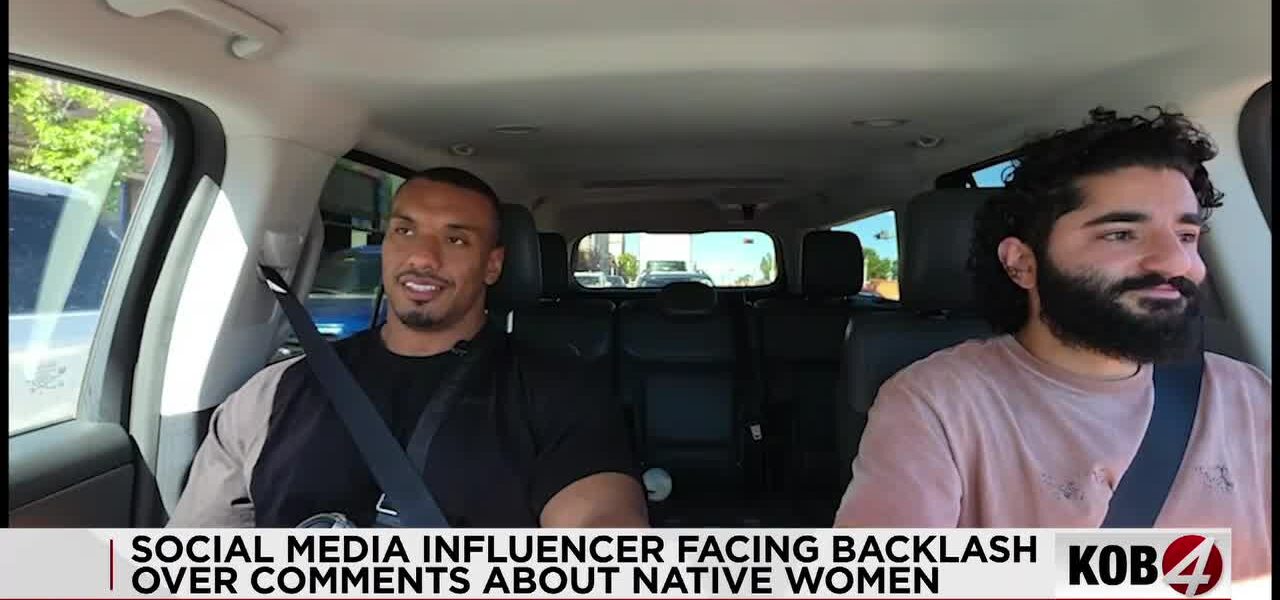
POLICY WIRE — Gallup, N.M. — It’s a familiar script: A public figure, blinded by either ignorance or hubris, ventures into uncharted waters—then promptly sets fire to their own reputation. This particular iteration involved a fitness influencer, a viral video, and the collective digital wrath of a community whose resilience far outstrips the fleeting fame of its casual detractors. The victim here wasn’t a fragile ego, but the dignity of Navajo women, caught in the crosshairs of a careless monologue.
Larry Wheels, a man accustomed to lifting impossible weights and commanding digital throngs, decided during a visit to Gallup, New Mexico, that he also possessed expertise on indigenous economics and societal contributions. He filmed himself, apparently musing aloud—and quite publicly—about Navajo women, asking, “What do female Navajos do? Do they work? I don’t think any of them work. They get free food, benefits, money.” Later, he offered a follow-up gem, claiming, “I just believe they get countless benefits from the state, depending on how much they’ve in their bloodline.” The internet, as it always does, remembers everything.
And so, a local man on TikTok posted a segment, begging for someone to, well, fact-check Wheels. What followed was less fact-checking, more collective public incredulity. Anthony Rosales, a Gallup business owner whose three Navajo sisters boast degrees and professional careers, didn’t hold back. “At first it made me angry, you know, and then it made, made me sad at the same time,” Rosales recounted to Policy Wire, his voice still tinged with disbelief. “When he said that, that made me think of them. Like he doesn’t even know who they’re, and he’s putting them down.” He doesn’t mince words now: “Now seeing him say that, I just lost all respect for him, and I’m pretty sure a lot of people have too.”
But this isn’t just about one man’s offensive monologue or the immediate backlash. This incident quickly ballooned, exposing long-simmering frustrations with harmful stereotypes that afflict Indigenous communities worldwide. Tiffany Jiron, executive director of the Coalition to Stop Violence Against Native Women, succinctly captured the larger threat. “Language shapes attitudes and attitudes influence how communities respond to violence and injustice,” she asserted, emphasizing that “this is bigger than one viral video, it’s about ensuring Native women are treated with respect and humanity.” Her group, among others, has long combated the narratives that normalize disregard for Native lives—a pattern unfortunately mirrored in similar colonial and post-colonial contexts from Australia to parts of South Asia, where local populations endure external misrepresentations.
Wheels, in the predictable theater of public apology, later released a statement taking “full responsibility” for comments he called “wrong plain and simple.” He owned his ignorance, admitting there was “no excuse.” The facility that hosted him, Cowboy Iron Gym, also weighed in. Tiffany Robinson, who runs the gym and is herself a Navajo woman, shared her personal dismay: “As a Navajo woman, these comments affected me deeply. They affected my family, my friends, — and the community that raised me.” Her words cut through the digital noise. “We only wish that same respect had been shown in return,” she added, a poignant indictment of the hospitality betrayed. The gym promptly ended all future affiliations with Wheels, recommending he support Native-led non-profits.
📄 POLICY WIRE WHITEPAPER PUBLISHED: PAKISTAN'S NATIONAL SECURITY POLICY PRIORITIES
👉 READ BY CLICKING HEREFor context, consider this: Native American women are business owners at a higher rate than women in the general U.S. population. Indeed, according to data compiled by the National Association of Women Business Owners (NAWBO), businesses owned by Native American women grew by 20.2% between 2014 and 2019, significantly outpacing all other minority women-owned businesses in the same period. That’s a stark contrast to the dated, frankly racist, notions Wheels spewed.
What This Means
The swift public shaming of Larry Wheels isn’t merely another online spectacle; it’s a telling marker of the evolving power dynamics within the global digital public square. It’s a blunt force reminder that fame—especially the ephemeral kind garnered through social media—doesn’t grant immunity from accountability, nor does it excuse blatant disrespect. But, more importantly, it underscores the persistent, insidious nature of anti-Indigenous stereotypes, proving that despite greater awareness, these archaic biases remain perilously close to the surface. It’s also an education for other influencers: Your digital footprint follows you, even into physical spaces, and your reach extends beyond your fan base to entire communities that might be inadvertently—or purposely—harmed by your casual racism.
This incident also has implications for the wider discourse surrounding online freedom and responsibility. Because when you’re livestreaming from someone’s community, particularly one that has historically suffered systemic misrepresentation, your words carry weight far beyond their immediate utterance. For a world increasingly connected yet seemingly prone to division, the incident serves as a fresh object lesson: Respect, it turns out, is the heaviest lift of all.