


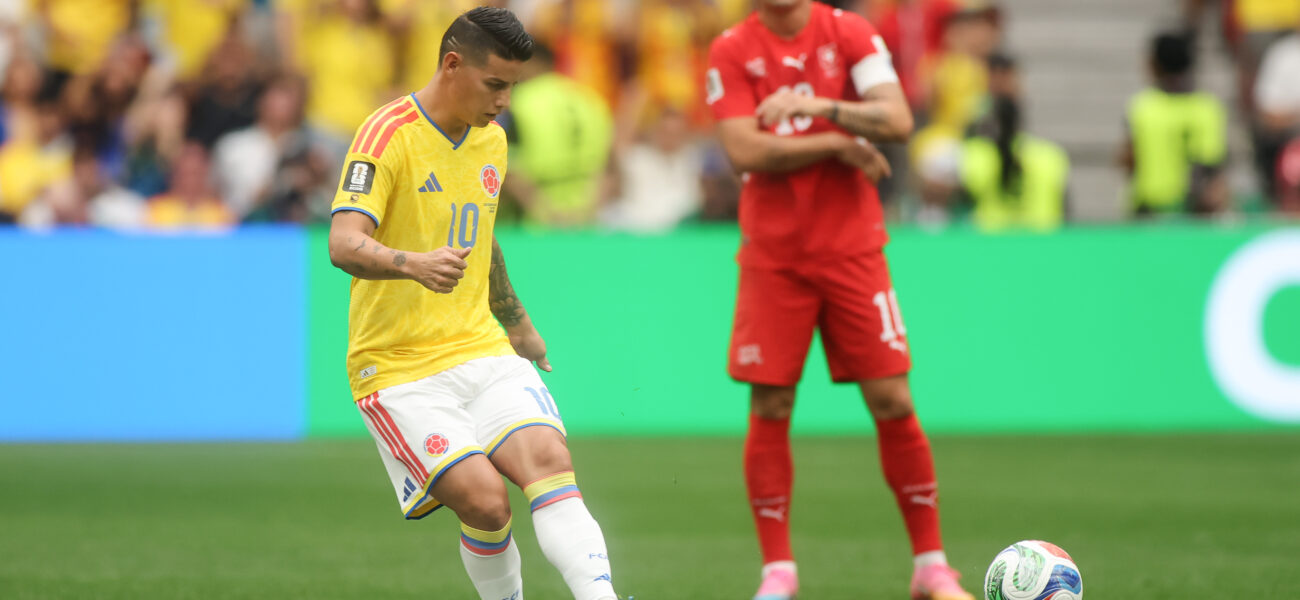
The Weight of Gold: James Rodríguez’s Quiet Conquest of Colombian Football History
POLICY WIRE — Doha, Qatar — There’s a particular kind of alchemy that happens when a nation’s hopes, dreams, and anxieties funnel themselves into 90 minutes on a football pitch. On a...

POLICY WIRE — Doha, Qatar — There’s a particular kind of alchemy that happens when a nation’s hopes, dreams, and anxieties funnel themselves into 90 minutes on a football pitch. On a tension-fraught afternoon, with Colombia’s World Cup fate hanging precariously in the balance against Switzerland, midfielder James Rodríguez didn’t just play; he solidified his own legend. He walked onto the field not as a youthful prodigy (he’s 35 next week, after all), but as a grizzled veteran, quietly etching his name atop a very exclusive list.
It wasn’t a sudden, explosive triumph, not like that unforgettable volley against Uruguay in ’14. No, this was a steady, almost imperceptible grind of commitment and perseverance—131 appearances in the canary-yellow jersey, making him the most capped player in Colombian history. He pushed past former goalkeeper David Ospina, whose own formidable career seemed insurmountable until now. It’s a numerical achievement that, in its stark simplicity, belies a career spanning over a decade, loaded with goals, assists, and the kind of pressure that would buckle lesser men. FIFA records show him having racked up 31 goals and 43 assists for his country during that time, a quiet storm of offensive production.
But how do you measure the sheer weight of such a milestone? Does it register during a fierce World Cup Round of 16 clash, a match deadlocked at halftime, the air thick with anticipation? Maybe it’s not about the instant gratification. Maybe it’s about the legacy. Rodríguez has been to three World Cups now (2014, 2018, and this current 2026 iteration), each outing a chapter in a sprawling national epic.
“James isn’t just a player; he’s an ambassador, a symbol of our resilience and creativity on the world stage,” said Maria Camila Osorio, Colombia’s Minister for Sport, speaking remotely from Bogotá. “He’s proven that with dedication, you can indeed write your own history—and in the process, inspire millions.” She isn’t wrong; the impact of athletes on national psyche is often underestimated by those outside the fervent global sports machine.
And that psyche, it’s something truly powerful. Think about the way entire nations – from Medellín to Multan – unite around a single sporting event. Just as Pakistan holds its breath for cricket’s champions, Colombia invests its soul in the beautiful game. These heroes provide a sense of unity, a shared narrative in often fractured political landscapes. It’s an escape, sure, but it’s also a powerful affirmation of collective identity. Policy Wire has often observed this phenomenon, from Messi’s soft power plays to local heroes.
But the numbers only tell part of the story. The first half against Switzerland, for example, saw Colombia looking for that moment of magic Rodríguez is known for. He’s no stranger to the grand stage; remember 2014? Golden Boot winner. Goal of the tournament. The whole shebang. Today, at 35, he’s still searching for that spark—and his nation along with him.
📄 POLICY WIRE WHITEPAPER PUBLISHED: PAKISTAN'S NATIONAL SECURITY POLICY PRIORITIES
👉 READ BY CLICKING HERE“His experience, that deep understanding of the game, it’s something you can’t coach,” explained Ricardo Quevedo, the Colombian national team’s head coach, his voice tight with game-day intensity during a post-match press conference. “We count on him, not just for individual brilliance, but for guiding the younger players through these pressure cookers. He’s been there, done that, survived it all.” It’s true. He’s seen triumphs — and heartbreaks in equal measure.
Because ultimately, these records, these moments, they don’t just happen. They’re forged through endless hours, brutal training, and the kind of relentless public scrutiny few professions endure. For James Rodríguez, the 131st cap is more than a number; it’s a living document of unwavering national service.
What This Means
The achievement by James Rodríguez transcends simple sports statistics; it speaks volumes about Colombia’s evolving identity on the international stage. In a geopolitical climate where ‘soft power’ is currency, a universally recognized sports hero amplifies a nation’s brand, fostering global recognition and—yes—pride. Economically, such high-profile figures can drive sports tourism, merchandise sales, and even attract foreign investment through heightened visibility. It’s not just about one man’s record, then, is it? It’s about national self-image, its perceived prestige. When a nation finds itself united behind a single individual on a football pitch, it’s not just a distraction from domestic challenges; it’s a profound, if temporary, balm for collective wounds, offering a sense of shared purpose that can, however briefly, transcend political divides. From Karachi’s street cricket to Cartagena’s football academies, the hero remains a vital national construct. Perhaps the true policy lesson here isn’t about tactics, but about the profound societal impact of fostering figures who can carry a nation’s aspirations on their shoulders, however weighty that burden may become.