


Futsal’s Future: Brazil’s U-17 Squad Bears Weight of National Hopes and Regional Bragging Rights
POLICY WIRE — RIO DE JANEIRO, BRAZIL — The concrete hums a particular rhythm in Brazil, a constant percussion that underscores the nation’s passion. And it’s not just for the grand, sprawling...

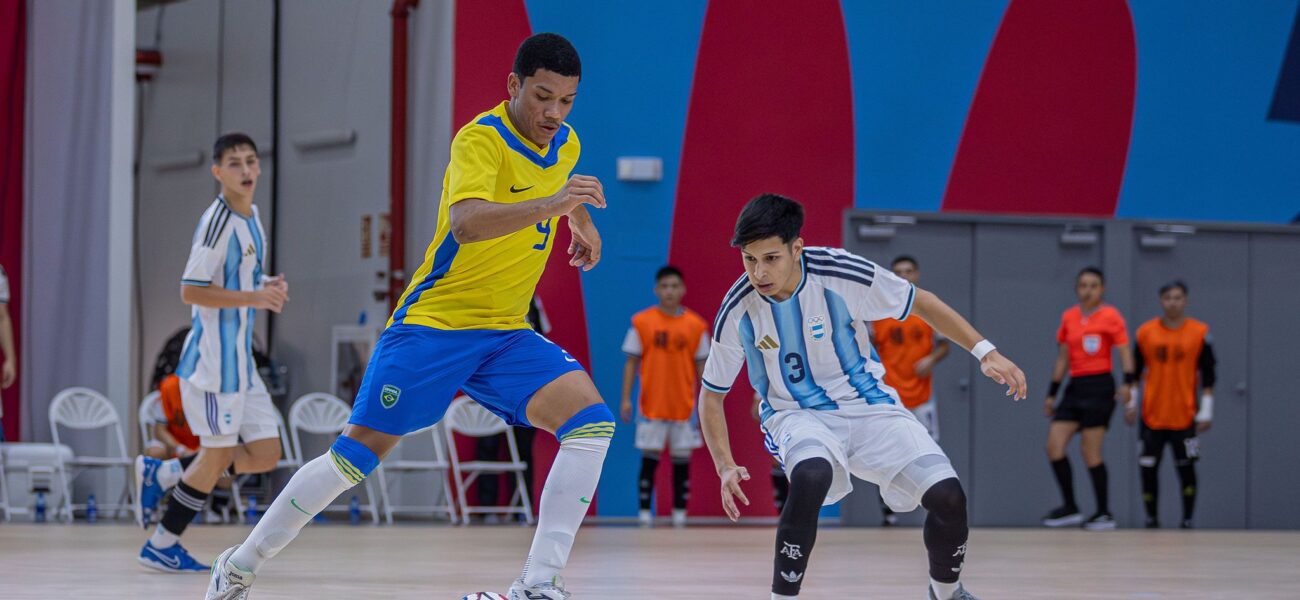
POLICY WIRE — RIO DE JANEIRO, BRAZIL — The concrete hums a particular rhythm in Brazil, a constant percussion that underscores the nation’s passion. And it’s not just for the grand, sprawling fields of soccer. No, it’s also for the tight, often ruthless, five-a-side intensity of futsal. This isn’t just about kids chasing a ball; it’s about reclaiming regional dominance, one swift, precise kick at a time. This week, the U-17 national futsal squad, a cohort of mostly unheralded prodigies, was formally unveiled, not to thunderous applause, but to the quiet, simmering expectation that hangs heavy over any Brazilian team donning the famed yellow jersey—even the under-17s, even in futsal.
You see, this championship, the CONMEBOL South American U-17 Futsal Championship set for Luque, Paraguay, isn’t just another tournament entry on a crowded sporting calendar. For a nation whose sporting identity is deeply entwined with victory, and after being beaten by fierce rivals Argentina 2-0 in the 2024 final—a sore point, you bet—redemption feels less like an ambition and more like a mandate. This young brigade isn’t just representing a sports federation; they’re carrying the dreams of a football-obsessed populace, eager to assert Brazil’s birthright on the continental stage.
Coach Diogo Barros isn’t playing coy about the pressure, or the strategy. He’s been working with many of these players for a while, fostering an almost uncanny synergy. “We’re coming into this competition with a very well-prepared group. We have the advantage of maintaining continuity in our work with a large part of these players,” Barros stated, his voice likely resonating with that particular blend of confidence and caution only seasoned coaches possess. “This strengthens team chemistry — and allows us to improve important aspects of our game in every training session. That gives us confidence to have a great tournament.” He knows what’s at stake—beyond the immediate win, it’s about nurturing the next generation, maintaining Brazil’s conveyor belt of talent.
From August 2 to 5, the Philippe Coutinho Institute in Jacarepaguá, Rio, transforms into a pressure cooker, a temporary sanctuary where raw talent is refined. Then, on August 6, it’s off to Paraguay. They’ve landed in Group B, a competitive pool featuring old foes Argentina, Bolivia, Ecuador, — and Peru. Their first challenge? Ecuador, on August 9. But everyone knows the real test, the one etched onto every player’s mind, is Argentina. They’ll close the first phase against their bitter rivals on August 13. Imagine that drama, right?
But this narrative of youthful aspiration — and sporting rivalry stretches far beyond South America. It’s a mirror reflecting how nations channel national energy, often politically, into sport. Just look at the broader landscape of youth sports development across the globe. In some regions—parts of South Asia, for instance—youth sport often competes with dire socio-economic realities and even security concerns for funding and infrastructure. Consider a country like Pakistan: while cricket holds an almost religious sway, efforts to build competitive teams in other international sports, from football to futsal, face hurdles of systemic investment and exposure that Brazilians, by contrast, often take for granted, despite their own significant social challenges.
📄 POLICY WIRE WHITEPAPER PUBLISHED: PAKISTAN'S NATIONAL SECURITY POLICY PRIORITIES
👉 READ BY CLICKING HEREFor the leadership of CONMEBOL and Brazil’s sports ministry, these tournaments aren’t just about gold medals; they’re about demonstrating continental strength and soft power. “These championships serve as vital proving grounds, not just for the athletes but for our collective identity on the global sporting stage,” explained Alejandra Gomez, CONMEBOL’s Director of Youth Development, in an earlier statement Policy Wire obtained. “They reinforce the importance of athletic endeavors in fostering regional unity and inspiring our youth across diverse backgrounds.” And that inspiration is quite palpable. Brazil’s U-17 squad, for example, has been on a tear lately, clinching the Dakar en Jeux Festival, the South American Youth Games, and the Nations League titles. This run has given them a positive, almost intimidating, swagger going into this championship.
What This Means
This championship, ostensibly about teenagers and a ball, carries significant political and economic undertones for Brazil and the wider CONMEBOL region. Economically, a successful national team, even at youth levels, acts as a powerful marketing tool for the sport itself, potentially attracting greater corporate sponsorships, driving merchandise sales, and boosting sports tourism. Think of the ripple effect; local clubs get more visibility, young players gain international experience, and that whole talent pipeline keeps flowing, strengthening Brazil’s dominance—and economic clout—in global football. Statistically speaking, with futsal played by over 30 million people worldwide, according to FIFA, mastering the smaller game means capturing a growing global audience. From a policy standpoint, the consistent success underscores Brazil’s commitment to youth sports development, even when broader social investments face criticism. It becomes a national point of pride, distracting, perhaps, from other political headwinds. But, importantly, it’s a tangible output for public investment in sports infrastructure, justifying the existence of institutions like the Philippe Coutinho Institute. For South American diplomacy, these tournaments—with their inherent rivalries—also serve as forums for dialogue and exchange, fostering connections that extend beyond the pitch, building regional cohesion. Because, frankly, shared passion, even in intense competition, often proves a stronger unifier than any formal treaty. It always does.
The squad itself reads like a future hall-of-fame roster in the making, featuring names like Cauã Gamba and Pietro Martins from giants like Corinthians and Palmeiras. They’re more than just names on a list, aren’t they? They’re emblems of Brazil’s unyielding ambition. And for now, their sole mission is to bring that U-17 continental crown back to where many believe it truly belongs.