


The Price of Legacy: $73 Million Star’s Fate Unpacks NBA’s Ruthless Economics
POLICY WIRE — New York, USA — When a nine-figure contract unravels, it’s rarely just about the game. DeMar DeRozan, a fixture on NBA hardwood for nearly two decades, now finds himself in the...

POLICY WIRE — New York, USA — When a nine-figure contract unravels, it’s rarely just about the game. DeMar DeRozan, a fixture on NBA hardwood for nearly two decades, now finds himself in the unenviable, yet utterly predictable, position of a seasoned commodity in a youth-obsessed market. His recent waiving by the Sacramento Kings, shedding a reported portion of that original $73 million, isn’t a mere roster adjustment; it’s a stark policy statement on asset management in hyper-capitalist professional sports.
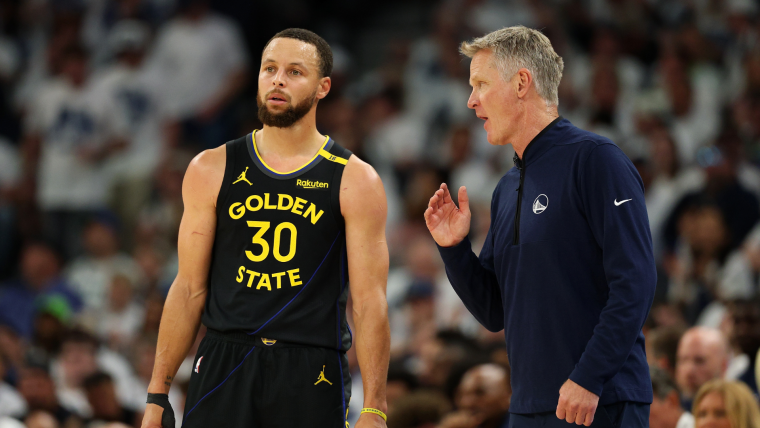
It signals the hard arithmetic at play: past glory means little against cap space — and future flexibility. And while the sporting press might gush about potential ‘landing spots’ – the Golden State Warriors, New York Knicks, and Miami Heat being bandied about – the reality is more transactional, more corporate than charismatic. This isn’t a narrative about loyalty; it’s about liquidity, performance metrics, and finding the last drops of value from a declining stock.
“We don’t just sign players; we induct them,” declared Pat Riley, President of the Miami Heat, renowned for his unyielding ‘Heat Culture.’ “This organization isn’t for everyone. It’s about grit, a relentless commitment to something bigger than oneself. If you’re willing to conform, to put in the work—even a player of DeMar’s pedigree, even at his age—can find a home, provided they still crave that challenge.” His words, steeped in the mystique he’s built around his franchise, serve as both a siren call and a warning.
But how much grit can one man summon when his career average from beyond the arc hovers at a career-long meager 30.2%, a data point meticulously logged by statisticians at Basketball-Reference.com? That figure, almost a relic in today’s long-range obsessed league, throws a wrench into easy integration, especially for teams like the Warriors. It forces a strategic calculus, a trade-off between veteran scoring acumen — and modern offensive geometry.
Mike Dunleavy Jr., general manager for the Golden State Warriors, put it pragmatically: “Navigating the cap is always a high-stakes chess match, particularly now. You’re balancing championship windows with long-term financial health. A player like DeMar, at this juncture, offers a unique opportunity to thread that needle without mortgaging the future.” His analysis cuts to the core: this is about leveraging perceived value against contractual obligations, a delicate dance of finance and potential. It’s not just about a player; it’s about what he frees up, what strategic doors he might open.
And so, DeRozan, a perennial All-Star, becomes a free agent — a symbol of market correction, perhaps. His talent isn’t in doubt; his adaptability is the question mark. He’s a throwback, a mid-range assassin in an era of three-point bombardiers. For franchises battling for supremacy, taking on such a player involves not just financial maneuvering, but also a bold philosophical stand against the prevailing winds of analytics.
📄 POLICY WIRE WHITEPAPER PUBLISHED: PAKISTAN'S NATIONAL SECURITY POLICY PRIORITIES
👉 READ BY CLICKING HEREBut the story doesn’t end on American courts. For a global audience, especially in emerging sports markets like those in South Asia — where NBA viewership is growing, and leagues like the Pakistan Super League are increasingly looking to attract international talent — these narratives resonate differently. They speak to the fragility of even colossal professional careers. They illustrate the relentless churn of talent markets, a familiar tale in regions where individuals often emigrate seeking more stable professional horizons, making the choice between known skills and required adaptation.
What This Means
DeMar DeRozan’s free agency isn’t just a sports footnote; it’s a potent parable for how talent, even superlative talent, is evaluated and commodified at the elite level. Economically, it showcases the inelasticity of aging assets in a performance-driven league. Teams, especially those at the competitive apex, prioritize flexibility — and long-term synergy over past laurels. His situation exposes the illusion of guaranteed longevity; no contract, however hefty, truly buys infinite security in a league that re-invents itself every few seasons.
Politically (within the confines of sports organizational politics, that’s), this maneuver empowers the coaching staff and general managers. They’re making a tough, analytical call that often trumps sentimental attachment. This transaction will inevitably shape front-office strategies across the league, prompting others to consider their own ‘aging star’ investments. Will it pay dividends in championships, or prove a distraction? The answers will reverberate far beyond basketball courts, influencing talent recruitment and economic policies in every corner of the global sports entertainment machine.
The immediate policy implication is a tightening of financial belts around older, high-earning players who don’t perfectly fit modern schemes. It means general managers aren’t afraid to cut losses, reshaping rosters with clinical precision. This creates a fascinating — and frankly, rather brutal — secondary market where experience becomes a luxury, and a perfect tactical fit trumps sheer individual firepower. For players themselves, it’s a stark reminder: evolve or become history.
📖 GET YOUR FREE COPY NOW OF POLICY WIRE DIGITAL MAGAZINE JULY 2026 EDITION
👉 READ & DOWNLOAD FREE MAGAZINE