


Silent Fuses: India, Indonesia Ignite a Quiet Strategic Realignment in Asia
POLICY WIRE — Jakarta, Indonesia — It wasn’t the usual fanfare. No bluster. No grandstanding proclamations that tend to accompany major defense agreements, especially when powers like China are...

POLICY WIRE — Jakarta, Indonesia — It wasn’t the usual fanfare. No bluster. No grandstanding proclamations that tend to accompany major defense agreements, especially when powers like China are circling. Instead, India and Indonesia — two heavyweights of the Indo-Pacific, each guarding their independence with practiced diplomacy — quietly formalized a missile deal this week that might just redefine who’s playing what role in a perpetually twitchy region.
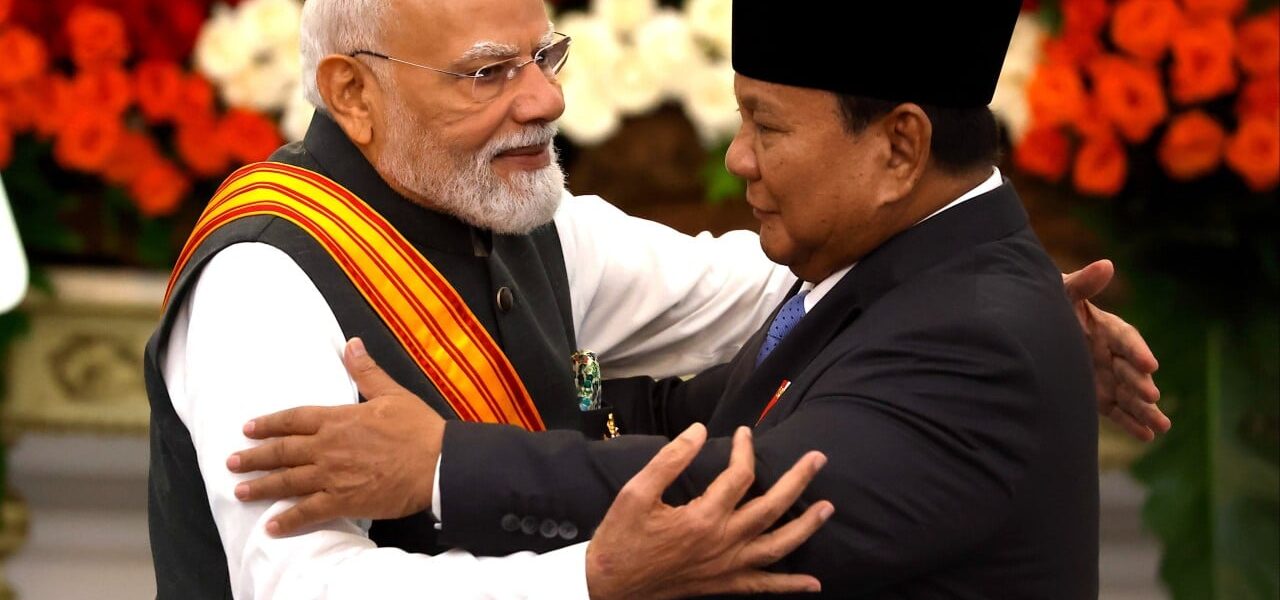
President Prabowo Subianto played host to Indian Prime Minister Narendra Modi in Jakarta for a three-day state visit. But the real talk? It wasn’t just about tropical hardwoods or tech startups. It was about hard power. A “cooperation on BrahMos system” agreement, an Indian official murmured, slipped into the official docket, courtesy of Randhir Jaiswal, Delhi’s foreign ministry spokesperson. A missile system — that’s what it boils down to, after all.
This BrahMos isn’t some back-alley popgun, mind you. It’s a supersonic cruise missile, jointly developed by Russia — and India. Capable of hitting land or sea targets, — and fast. Its inclusion in Jakarta’s arsenal marks a decisive move for Indonesia, a nation of islands with an eye fixed firmly on maritime security—and arguably, its colossal neighbor to the north. Jakarta isn’t naive; they’ve watched China’s increasingly assertive claims in the South China Sea, areas Indonesia considers its own. So, a capable deterrent? Makes sense.
And for India, this represents another strategic success story. “This isn’t merely a transaction; it’s a strategic embrace of shared democratic values and a commitment to a stable, multi-polar Indo-Pacific,” Prime Minister Modi reportedly stated to his inner circle, articulating Delhi’s growing confidence in its defense export ambitions. “India stands ready to bolster the capabilities of its partners, ensuring regional security without hegemony.” They’re not just selling hardware; they’re selling an alternative.
Because frankly, everyone’s hedging their bets now. Regional powers aren’t keen on picking absolute sides in the great global chessboard. They want options. And India, with its expanding industrial base—see Delhi’s Industrial Gambit—is proving to be a compelling one. Indonesia, as the world’s most populous Muslim-majority nation, presents a particular dynamic. It’s a country of immense strategic and cultural significance, carefully navigating alliances and trade relationships across the globe.
President Subianto, ever the pragmatist, was quoted observing: “Our security posture demands diversification, and India represents a dependable partner with advanced capabilities. It’s about self-reliance, not provocation. Jakarta is securing its future.” This speaks volumes. Diversification, in this context, translates to keeping options open, avoiding over-reliance on any single provider, be it the U.S. or China. They’re building a big stick, — and they’re not shy about who they’re buying it from anymore.
📄 POLICY WIRE WHITEPAPER PUBLISHED: PAKISTAN'S NATIONAL SECURITY POLICY PRIORITIES
👉 READ BY CLICKING HEREThe deal encompasses more than just defense, with talks extending to critical minerals — and other economic sectors. That’s how it always goes, doesn’t it? Swords and plowshares, side by side. India’s defense exports, according to the Stockholm International Peace Research Institute (SIPRI), surged by 334% between 2013–17 and 2018–22, making it one of the top emerging exporters globally. That’s serious business. They’ve found their niche, providing a counter-narrative to traditional suppliers, even selling to partners like the Philippines, who are also grappling with South China Sea issues.
And where does this leave Pakistan, or the broader Muslim world, in all of this? Well, it’s not a direct challenge, not overtly. But India’s rising influence in Southeast Asia and its capability as an arms exporter means a realignment of power across Asia, period. Pakistan, which relies heavily on Chinese military hardware, will be watching closely as India strengthens its bonds with other regional players. The regional security calculus is shifting, brick by expensive brick.
What This Means
This BrahMos agreement—a low-key transaction with colossal implications—signals Jakarta’s firm commitment to bolstering its maritime defense, opting for cutting-edge technology that directly addresses immediate territorial anxieties. Economically, it shows India’s determined push into the lucrative global arms market, leveraging its strategic partnerships and indigenous defense capabilities to secure foreign policy wins and vital hard currency. Delhi isn’t just seeking to be a regional economic power; it wants to be a security guarantor, a credible alternative to traditional suppliers.
Politically, it underscores the intensifying geopolitical competition in the Indo-Pacific. Both nations, historically non-aligned, are now explicitly seeking stronger strategic convergences, pushing back against singular dominance. Indonesia gets enhanced deterrence, avoiding deep dependence on Western or Chinese systems. India gains a high-profile customer for its advanced defense tech, cementing its ‘Act East’ policy with tangible outcomes. Expect more such deals. This isn’t just about missiles; it’s about drawing lines in the water, defining new spheres of influence without firing a shot.