


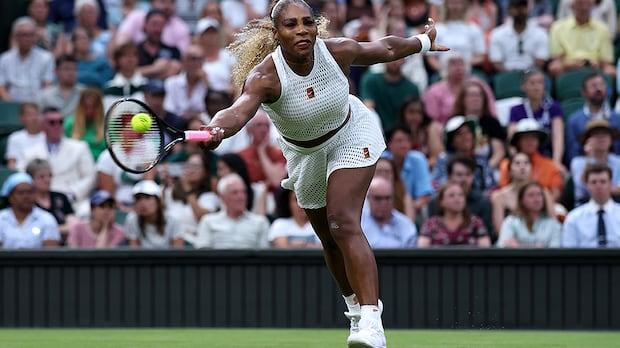
Serena Williams: Wimbledon Comeback Ends
Serena Williams' Wimbledon comeback ends as the 44-year-old falls to a 20-year-old rival. Explore her legacy and the future of tennis.

POLICY WIRE — The grass courts of Wimbledon, often the stage for Serena Williams’ triumphs, witnessed her return — and her swift departure — on Tuesday. The 44-year-old tennis icon, making a much-anticipated singles comeback at a Grand Slam, was defeated in three sets by an opponent less than half her age, 20-year-old Australian Maya Joint.
Williams, whose illustrious career has redefined women’s tennis, found herself in a challenging first-round match, ultimately falling 6-3, 6-7 (6), 6-3. Her appearance at SW19 was her first Grand Slam singles match since her farewell to professional tennis at the 2022 U.S. Open, sparking considerable attention despite the outcome.
The matchup served as a stark reminder of the sport’s generational shift, pitting one of its most dominant figures against a rising talent. Joint, who would have been just a toddler when Williams won her first Wimbledon title in 2002, held her nerve to secure a significant victory over a player whose presence alone still commands immense respect.
(Reporting based on wire service dispatches) Serena Williams, known for a career spanning four decades, has collected 23 Grand Slam singles titles — a record in the Open Era. Her decision to return to the pinnacle of competitive play, more than two years after her last major singles appearance, was met with a mixture of excitement and speculation about her enduring capabilities. The demands of top-tier tennis, however, proved a formidable challenge for a player who has already cemented her legacy multiple times over. Her powerful serve and groundstrokes, hallmarks of her game, were present in flashes, but the consistent intensity required over a full match seemed just beyond her reach this time.
This Wimbledon entry wasn’t an isolated event. Williams has intermittently hinted at a possible return since her ‘retirement,’ participating in various exhibitions and social media teasing, keeping the tennis world on alert. Each time, the question lingered: could she add one more chapter to an already historic narrative? Her last significant run saw her reach the U.S. Open semifinals in 2022, demonstrating that even at the twilight of her initial career, her competitive fire burned brightly.
The All England Club has been the site of many of Williams’ most memorable moments, including seven singles titles. The reverence for her career was palpable from the crowd, a mix of ardent fans and curious onlookers eager to witness perhaps one last flicker of the unparalleled athleticism and fierce determination that defined her era. For Maya Joint, the victory is a career highlight, propelling her into the spotlight by virtue of overcoming one of the sport’s all-time greats. For such a young player, it’s not merely a win but a statement – a moment to show she belongs on the grand stage, just as Williams once did.
What This Means
Serena Williams’ Wimbledon comeback, despite the first-round exit, underscores a broader dynamic in sports: the magnetic pull of legendary athletes. Her participation alone generated immense viewership and discourse, validating her enduring star power far beyond her active competitive years. This kind of high-profile return, even when brief, serves as a significant commercial and cultural boost for tournaments like Wimbledon, attracting eyeballs and maintaining the sport’s connection to its iconic past.
From a competitive standpoint, the outcome reaffirms the brutal efficiency of modern professional tennis. The physical demands of the sport, especially on grass, are immense, and even the most skilled veterans face an uphill battle against younger players who have the benefit of consistent, high-level match play. While Williams may have enjoyed the moment — an element often discussed regarding such veteran returns — her performance was ultimately insufficient to overcome the sheer athleticism and sustained focus of a player decades her junior.
It raises the question of whether this marks a definitive end to her flirtation with professional singles tennis, or if the competitive urge will, once again, lead to another unexpected entry somewhere down the line. History suggests that some legends find it incredibly difficult to completely sever ties with the arena where they built their legacy. For Maya Joint, this match could be a springboard, a testament to the fact that new generations are indeed ready to claim their space in the hierarchy of the sport.