


Parisian Peril: Le Pen’s Judicial Dance Sets Stage for Electoral Thunder
POLICY WIRE — Paris, France — The grand theatrical spectacle of French politics often finds its most compelling drama not in parliament, but within the somber, hushed halls of its courthouses. For...

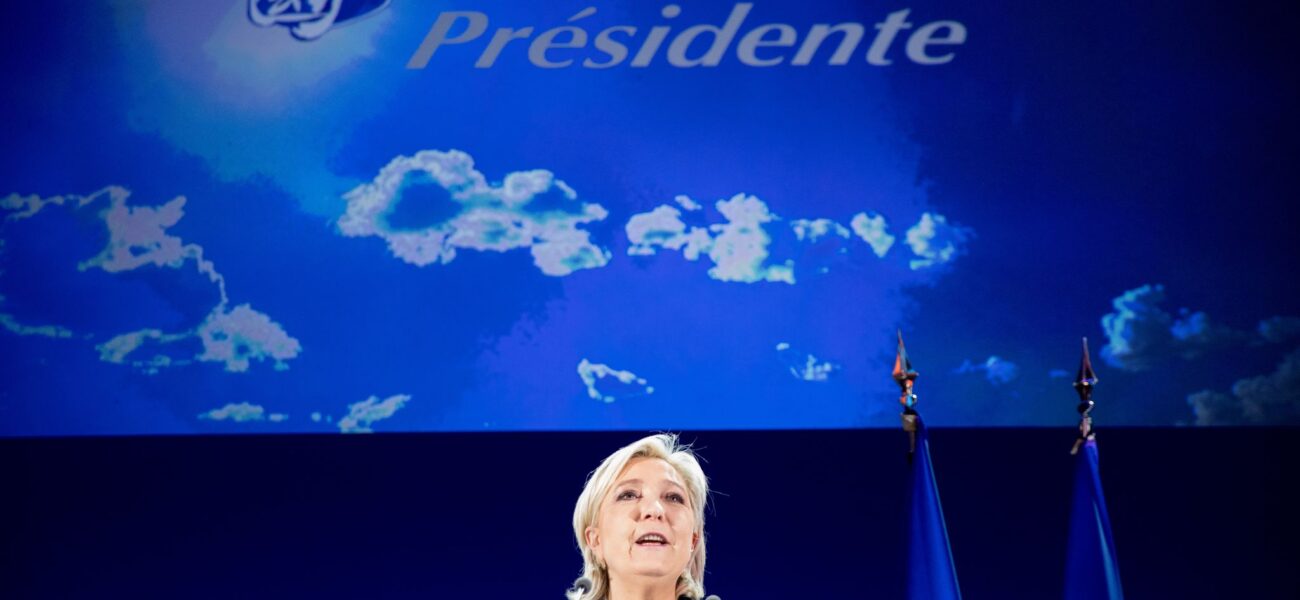
POLICY WIRE — Paris, France — The grand theatrical spectacle of French politics often finds its most compelling drama not in parliament, but within the somber, hushed halls of its courthouses. For Marine Le Pen, that familiar stage is now set once more, an unwelcome rerun. Her presidential aspirations, honed through years of electoral skirmishes and shifting political tides, hang precariously on an upcoming judicial verdict.
It’s a classic French paradox, really: the relentless pursuit of political power intersecting — colliding, even — with the equally tenacious arm of the law. This time, it’s Le Pen’s appeal against an earlier ruling involving alleged misuse of European Parliament funds that takes center stage. But make no mistake, this isn’t merely about an accounting mishap; it’s about legitimacy. It’s about a very public test of whether her populist narrative—that she’s a victim of a deep-state conspiracy—holds any water with the courts, and by extension, the electorate.
The situation isn’t new territory for the firebrand leader of the National Rally (formerly the National Front). Her political life, in many ways, has been a defiant tightrope walk between electoral ambition — and legal scrutiny. They’ve pursued her, it seems, for just about everything: inciting hatred, distributing violent images, defamation. Each time, she emerges, often wounded, but rarely defeated. This current case, however, carries an undeniable weight, a Sword of Damocles dangling over her electoral prospects.
The implications are substantial. A conviction upheld could bar her from public office, a catastrophic blow for a politician who managed to secure a formidable 41.45% of the vote in the 2022 presidential election’s second round, a figure sourced from the French Ministry of Interior. Because if you can’t run, you can’t win. And that would, without doubt, trigger a mad scramble within France’s far-right. A brutal inheritance struggle, perhaps. But don’t count her out just yet. She’s resilient; she knows how to play the long game.
“They’ve tried everything to silence us. This—this latest farce—won’t stop the will of the French people,” Le Pen reportedly stated, her voice likely carrying that familiar blend of defiance and victimhood that has galvanized her base for years. “Our fight for sovereignty continues, regardless of political agendas hidden in judicial robes.” It’s a message that resonates deeply with those who feel ignored, marginalized by the Parisian elite. And frankly, it’s a message designed to bypass legal minutiae — and speak directly to emotion. Because for Le Pen, politics isn’t always about facts.
Her ongoing battles also reflect a broader narrative playing out across the globe: the tension between established institutions and anti-establishment figures. Consider the reverberations of her rhetoric in the Muslim world, where French secularism and immigration policies are often viewed with deep suspicion. Her proposals, ranging from stricter immigration controls to a ban on religious symbols in public spaces, hit differently in societies where religion and public life are intricately linked. It paints a picture of a nation grappling with its identity, a battle that transcends national borders, and whose judicial dramas are watched far beyond the Hexagon, even in nations like Pakistan, keen observers of European political stability.
📄 POLICY WIRE WHITEPAPER PUBLISHED: PAKISTAN'S NATIONAL SECURITY POLICY PRIORITIES
👉 READ BY CLICKING HEREYet, the French judicial system, for all its bureaucratic quirks, prides itself on its independence. “France operates on the rule of law. Nobody, not even the most ambitious politician, stands above accountability,” commented Dr. Sylvie Dubois, a constitutional law expert at Sciences Po. “The courts will render their decision, — and the democratic process will adapt. That’s how it’s always worked here.” A statement designed to soothe, perhaps, but one that also underscores the institutional heft pushing back against populist challenges. But how will it all shake out?
What This Means
The impending decision carries considerable weight for the future trajectory of French politics. If Le Pen’s appeal is rejected, confirming her guilt and potentially removing her from eligibility for office, it doesn’t just cripple her personal ambition. It throws the entire French far-right into a maelstrom. Who inherits her mantle? Her niece, Marion Maréchal? Eric Zemmour? The succession would be bloody, fraught with ideological infighting. Such disarray could give President Macron’s centrist alliance breathing room, or it could simply shift extremist votes to a different, perhaps even more radical, populist figure. It’s a game of political whack-a-mole, really.
Economically, persistent political instability – particularly the kind that throws presidential elections into question – breeds uncertainty. Investors get twitchy. Businesses pause. It’s a subtle but continuous drag on confidence. Think of the chill that runs through financial markets every time a critical legal challenge emerges for a prominent political figure. Ultimately, it’s not just Le Pen on trial; it’s the resilience of France’s democratic framework and its ability to reconcile the rule of law with the volatile currents of public sentiment. This decision won’t just impact a politician; it could easily redefine the course of a nation, influencing its standing within the European Union and on the global stage. It’s all very delicate. It always is.