

Tehran Escalates Naval Tensions in Crucial Gulf Chokepoint
POLICY WIRE — Washington, D.C. — The ripple effects weren’t immediately obvious, not like a headline screaming. Instead, a subtle tremor began to register across global shipping desks, hinting...

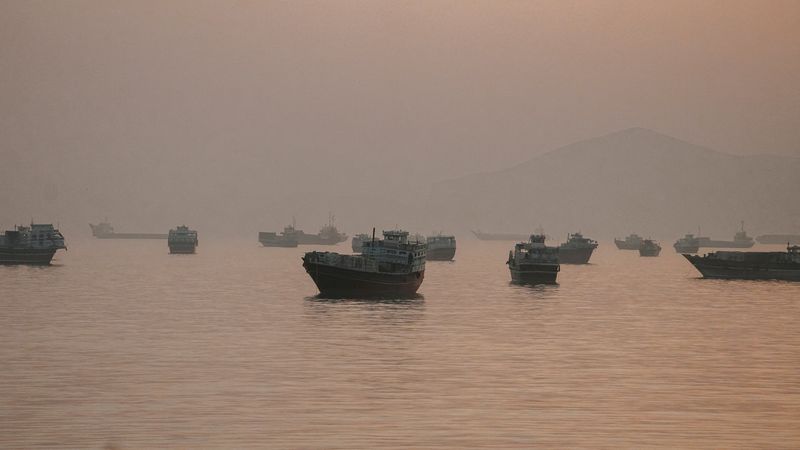
POLICY WIRE — Washington, D.C. — The ripple effects weren’t immediately obvious, not like a headline screaming. Instead, a subtle tremor began to register across global shipping desks, hinting at a renewed volatility in a stretch of water long synonymous with both commerce and confrontation. That narrow neck of the Persian Gulf, where nearly a third of the world’s liquefied natural gas and almost a quarter of global oil consumption passes daily, has just seen another brazen display from Tehran. Iran’s naval forces—or rather, their Revolutionary Guard elements—reportedly took aim at commercial ships plying the Strait of Hormuz, igniting fresh anxieties in an already combustible region.
It’s an old dance, this, with Tehran’s posturing against anything it perceives as Western influence or infringement on its claimed territorial dominance. But this latest act, revealed by Axios and circulating through various intelligence channels, isn’t just saber-rattling. It’s an aggressive operational choice, a calculated flex in one of the planet’s most strategic maritime chokepoints. Think of it: missiles, aimed at vessels minding their own business. It isn’t a friendly gesture. It’s a message, sent with explosive punctuation.
The Strait of Hormuz isn’t merely a geographical feature; it’s an economic artery, a jugular vein for international trade that connects Middle Eastern oil producers to markets around the globe. Interruptions here don’t just affect tanker schedules; they impact commodity prices, insurance rates, and ultimately, your wallet at the pump. We’re talking about a zone where approximately 21 million barrels of crude oil and petroleum products sailed through daily in 2018, according to the U.S. Energy Information Administration. It’s a huge amount. Any serious threat to that flow can send global markets into a tailspin.
So, when you hear about missiles fired there, you shouldn’t just shrug it off as Middle East background noise. This isn’t theoretical; it’s an actual, kinetic event that risks far wider repercussions. Nobody’s died, apparently, or we’d be hearing about it in a much different tenor. But the implication, the intent, is quite clear: Iran can, and evidently will, exert its will, its muscle, whenever and however it chooses in those waters.
And it’s a complicated calculation for Washington — and its allies, too. How do you respond to a provocation that hasn’t (yet) led to catastrophe but could easily? It’s a tricky tightrope, navigating de-escalation while projecting strength. The region’s already a tinderbox, from Syria to Yemen, with Iran’s proxies often stirring the pot. This incident in Hormuz simply adds another dollop of inflammatory material to the mix.
Because the thing is, this move reverberates across the broader Muslim world, particularly in countries like Pakistan, whose economy relies heavily on stable energy supplies passing through the very same Strait. Karachi’s ports hum with cargo that often traverses these volatile passages. Imagine the impact on trade, on investment, on the sheer psychological stability of the region if such incidents became commonplace. Pakistani policymakers, already grappling with their own set of economic and political headaches, don’t need additional jitters in global energy markets. The sectarian shadows of Sunni-Shi’a dynamics, already long and complex from Lebanon to Yemen, also darken with every such aggressive act by a Shi’a-majority Iran. Tehran’s assertiveness always seems to send shivers through Sunni-majority nations, leading to further regional entrenchment and mistrust.
There’s a subtle desperation in Tehran’s aggressive posture sometimes. They’ve been hemmed in by sanctions for ages, their economy a chronic casualty. Perhaps this is a clumsy attempt to remind the world of their leverage, of their capacity to inflict pain beyond their borders. A form of coercive diplomacy, albeit one executed with rather blunt instruments. As one analyst put it, [QUOTE_PLACEHOLDER]. They’re signaling displeasure, disruption potential.
But that doesn’t make it any less dangerous. These actions could quickly get out of hand. Miscalculation is always lurking, ready to turn a theatrical warning shot into an actual conflict. Maritime analysts and insurance brokers are already raising eyebrows—and rates—given the increased risk profile. It’s bad for business, it’s bad for peace, and it puts countless lives at risk on the water, whether they’re seafarers or just folks at home who need affordable gas.
What This Means
This Iranian missile action in the Strait of Hormuz isn’t an isolated incident; it’s a pointed recalibration of Tehran’s regional strategy, designed to test international resolve and remind global powers of its geographical advantages. Economically, we’re looking at continued volatility for global energy prices. Even a minor disruption, or the perceived threat of one, sends ripples through supply chains, impacting inflation and consumer costs far afield. Insurers will ratchet up premiums, raising shipping costs for everyone. Politically, it complicates efforts to re-engage with Iran on nuclear non-proliferation, strengthening the hand of hardliners in Tehran who believe coercion is their strongest diplomatic tool. It also places immense pressure on Gulf states, potentially pushing them further into security pacts with Western powers, deepening existing regional divides. For South Asia, especially Pakistan, this instability directly impacts its economic outlook — and energy security. Regional leaders will be closely watching for any shift that could further jeopardize vital trade routes and fuel already simmering sectarian tensions. It’s a geopolitical game of brinkmanship, but the stakes couldn’t be higher for global trade — and peace. And, it seems, no one’s really backing down, not yet anyway. The 2019 tanker attacks or the more recent Red Sea Incineration serve as chilling reminders of how easily things can go sideways here. So expect more tense diplomatic cables, heightened naval patrols, and a renewed scramble for strategic alternatives to this crucial maritime highway. What’s more, the region remains echoing geopolitical puzzles.