


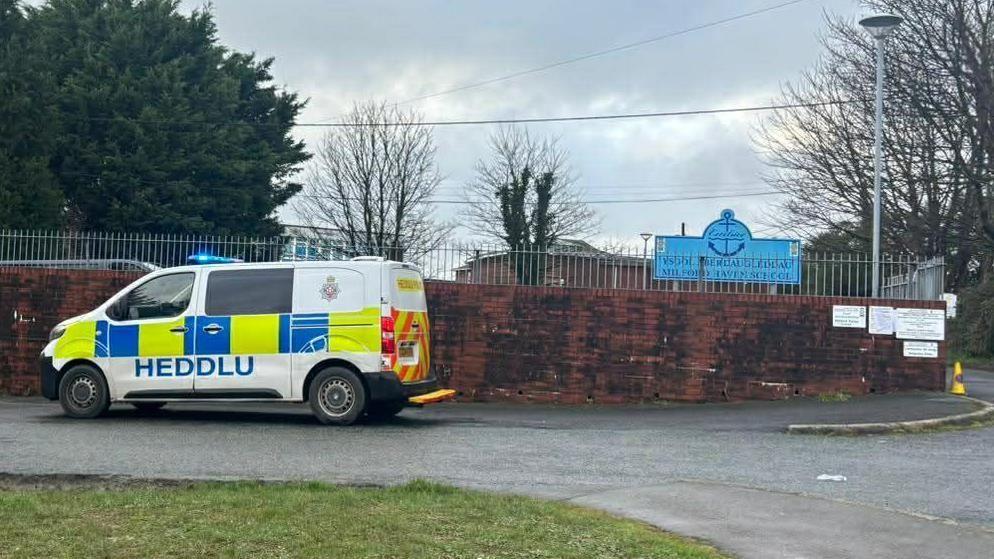
Courthouse Chill: Child’s Gaze of ‘Pure Hatred’ Jolts Societal Fault Lines
POLICY WIRE — Undisclosed Location, Global Arena — It wasn’t the stark details of the assault that echoed loudest through the usually stolid chambers. Not even the visceral image of a knife....

POLICY WIRE — Undisclosed Location, Global Arena — It wasn’t the stark details of the assault that echoed loudest through the usually stolid chambers. Not even the visceral image of a knife. Instead, it was the raw, discomfiting testimony regarding a particular expression: the assertion that a boy’s face showed [QUOTE_PLACEHOLDER] as he lunged at a teacher. That detail—that psychological chasm — it cuts deeper than any blade, slicing through assumptions about childhood innocence and the supposed sanctity of our educational institutions.
This courtroom drama, unspooling quietly but with devastating implications, feels less like a singular criminal proceeding and more like a grim parable for an increasingly disoriented world. Jurors, along with anyone else paying a lick of attention, were confronted not just with an act of violence but with the apparent depth of its premeditation, its dark emotional core. The prosecutor didn’t mince words, painting a picture of deliberate malevolence; an act described as a sustained attack with a large knife that occurred during class. They outlined how the teacher, who sustained multiple injuries, fought back and eventually disarmed the student, preventing further harm. [QUOTE_PLACEHOLDER], they underscored, suggesting an ingrained fury that many adults struggle to comprehend, let alone attribute to a child.
And what about the breakdown this signifies? What happens when the nurturing environment of a school becomes a theater of aggression? When those entrusted with shaping young minds face primal, unchecked rage? It’s not a comfortable question. This incident, for all its local specificity (which is intentionally left ambiguous, you know, for wider resonance), highlights a pervasive malaise infecting our collective societal health—a kind of spiritual recession. But this isn’t just about one child or one school. It’s about a generation coming of age in unprecedented times, battling mental health crises often unseen, unheard, or flat-out ignored.
Consider the data. A study from the U.S. Centers for Disease Control and Prevention revealed that in 2021, approximately 9.3% of high school students nationwide reported being in a physical fight on school property during the 12 months before the survey. That’s nearly one in ten kids—a sobering statistic by any measure, painting a picture of school hallways as far more hostile than idyllic. It forces us to ask: What pressures are accumulating to manifest such raw aggression?
In many parts of the globe, including countries across South Asia like Pakistan, such educational pressures are compounded by myriad other challenges. Young people there, navigating complex social shifts, economic precarity, and sometimes even the echoes of radical narratives, also contend with immense psychological burdens. Their systems, often strained for resources, grapple with finding adequate mental health support or alternative pathways for disaffected youth. It’s not a direct comparison, granted, but a resonance. The frustration of unmet expectations, the struggle for identity amidst rapid change—it isn’t exclusive to one postcode. But it surely helps fuel incidents like this.
The defense, for its part, tried to humanize the boy, arguing mitigating circumstances, hinting at unseen burdens he carried. [QUOTE_PLACEHOLDER] was heard in court, suggesting a fragile home environment or perhaps the influence of external factors—a desperate attempt to parse the pathology. They highlighted the boy’s young age — and suggested a lack of maturity. But is mere immaturity sufficient to explain a stare so utterly devoid of empathy, so filled with enmity, as allegedly seen?
📄 POLICY WIRE WHITEPAPER PUBLISHED: PAKISTAN'S NATIONAL SECURITY POLICY PRIORITIES
👉 READ BY CLICKING HEREBecause ultimately, when we talk about a child’s face reflecting pure hatred, we’re staring into a mirror. It’s a reflection not just of an individual gone astray, but perhaps of collective failures. Failures to foster resilience, to build robust support networks, or to simply listen before it’s too late. The system, it seems, only really listens after the damage is done.
And don’t mistake this for an isolated anomaly. You don’t have to look far to see societies worldwide grappling with youth disenchantment, a trend Policy Wire has chronicled in its ongoing examinations of social fracture. From urban centers battling gang violence to communities struggling with cyberbullying’s insidious creep, the signs are all there. It’s an inconvenient truth, you know?
What This Means
This unsettling incident isn’t merely a grim crime blotter entry; it’s a stark indicator of deeper societal fractures with wide-reaching implications. Politically, governments are under renewed pressure to justify investment in social services, particularly child psychology and preventative mental health programs. The long-term costs of neglecting youth mental health, after all, aren’t just human; they’re economic, manifesting in reduced productivity, increased crime, and higher demands on an already overstretched justice system. Lawmakers will certainly be feeling the heat to respond, perhaps with knee-jerk punitive measures rather than nuanced, root-cause solutions. We’ve seen that song — and dance before, haven’t we? Economically, the erosion of safety in schools can devalue communities, making them less attractive for families and businesses. There’s a direct correlation between a community’s perceived safety and its economic vibrancy—and violent incidents involving minors within school walls can quickly shatter that perception. it accelerates a brain drain, as affluent families — or any family with means, really — opt for private education or relocate to areas deemed safer, exacerbating inequality within the public system. It suggests a policy vacuum, where quick fixes trump lasting stability.
This kind of event forces policy wonks to confront the elephant in the classroom: a growing disaffection among segments of the youth, who often lack the vocabulary, or the outlet, to articulate their frustrations effectively, leading to potentially explosive consequences. Academic battlegrounds aren’t just for deans anymore; they’re increasingly for everyone within those walls.