

USMNT Faces Dangerous Bosnia: World Cup Upset Alert
The USMNT faces a true test against Bosnia-Herzegovina in the World Cup knockout. Learn why this resilient underdog, driven by national pride, could cause a major upset.

POLICY WIRE — Santa Clara, CA — You’d think by now, with all the data, all the projections, and the endless talking heads, we’d have figured out that World Cup knockouts aren’t ever truly ‘comfortable.’ But here we’re again, staring down a Round of 32 clash where one side seems, on paper anyway, far more preoccupied with future glories than the gritty business at hand. And that’s the American team, flush off a relatively breezy group stage, now facing a Bosnian side many have already dismissed. Big mistake, if you ask some of the game’s more seasoned observers. You see, soccer—football, for most of the world—it’s not just numbers on a spreadsheet; it’s defiance, it’s heart, and sometimes, it’s a whole lot of spite.
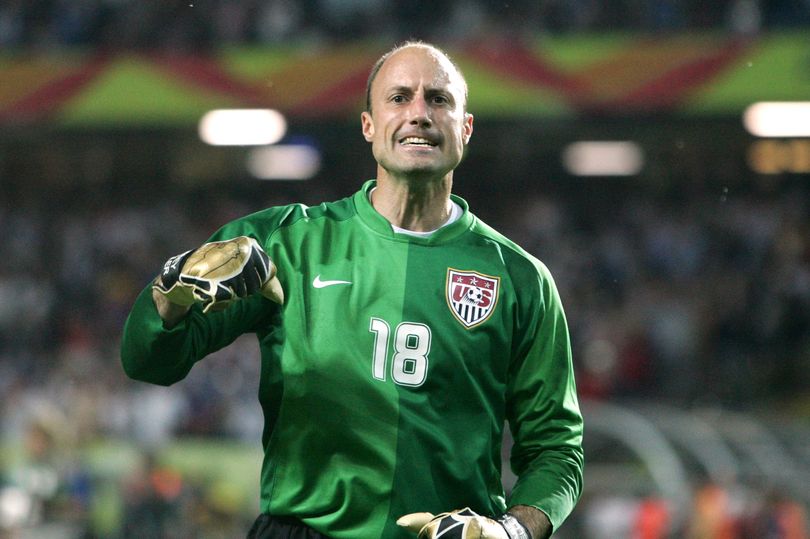
Mauricio Pochettino’s U.S. Men’s National Team, after their group stage swagger, now stands on the precipice of a knockout challenge against a Bosnia and Herzegovina outfit that truly, emphatically, fought its way here. They didn’t just qualify; they clawed their way past European heavyweights like Wales and Italy in playoff purgatories, then navigated their group to become one of the best third-placed teams. Their journey screams ‘underdog’ louder than a foghorn in a quiet harbor, which is precisely why they’re dangerous. Long-time USMNT goalkeeper Kasey Keller didn’t mince words speaking on SportsCenter this week, laying it out plain for everyone: “The last thing you want to do against a side that knows how to grind, that knows how to defend, that knows how to frustrate your opponent, is to get stuck letting them do that to you.” He’s right, you know. They’re a wrench in the USMNT’s meticulously crafted machine. Their football isn’t always pretty; sometimes it’s downright ugly. But it’s effective.
Pochettino, for his part, tried to temper the growing American expectation. After making nine changes for the meaningless final group match against Türkiye—a game they lost, but didn’t matter as they’d already topped their group—he acknowledged the impending clash wasn’t just another game. “Every single match at this level presents its own unique story,” Pochettino told reporters, with a practiced, measured tone. “We don’t underestimate anyone. They’ve proven their grit, their resilience, and we must match that — and then surpass it, tactically and with intensity.” Sounds like textbook coach-speak, sure. But there’s a kernel of truth in there he probably wants his young squad to absorb: arrogance loses you games.
Bosnia-Herzegovina might not parade superstars, but they’ve got pedigree. Take Edin Džeko, their 40-year-old warhorse of a striker. He’s his nation’s all-time top scorer with an astonishing 65 goals from 116 caps, according to official FIFA records. A legend who’s bagged titles in the Premier League — and Bundesliga. He hasn’t found the net yet in this tournament, but you just know he’s desperate. They’ve also got 12 players plying their trade in Europe’s top-flight leagues (England, Italy, Germany, Spain, Portugal, Netherlands). That’s not a bunch of amateurs; that’s genuine, hardened professionalism. And their path here, especially battling through Europe’s gauntlet, isn’t something you just shrug off.
It’s an interesting juxtaposition, isn’t it? The heavily favored USMNT, brimming with young talent and significant investment in its domestic league, versus Bosnia—a nation of roughly 3.3 million souls, still healing from its not-so-distant past, finding unity and pride on the global stage through football. For them, it’s not just a game; it’s a loud, proud statement. And because of their post-conflict identity as a predominantly Muslim nation nestled in the Balkans, their journey resonates well beyond their borders. You can draw parallels to other nations where sports provides a unique forum for national identity and recognition – it’s certainly been a unifying force. It puts their participation in a fascinating light, certainly more meaningful than just points on a scoreboard. Consider the broader region, too; for people in places like Pakistan or elsewhere in the Muslim world, Bosnia’s improbable run offers a rare symbol of overcoming, of defying the odds. You might not see a similar surge of national pride through sports in every nation (see: the Yankees’ recent woes), but for Bosnia, it’s palpable.
📄 POLICY WIRE WHITEPAPER PUBLISHED: PAKISTAN'S NATIONAL SECURITY POLICY PRIORITIES
👉 READ BY CLICKING HEREKeller’s formula for the US is straightforward: pressure them, keep them defending, — and frustrate them back. That means controlling possession, dictating play. Don’t let Bosnia suck them into a scrappy, physical affair, as Keller warns. That’s how Wales and Italy — proper footballing nations — got bounced from their World Cup dreams, mind you.
What This Means
The stakes here aren’t merely sporting. For the U.S., a slip-up against Bosnia would deliver a harsh reality check, potentially cooling the surging enthusiasm for soccer in America and raising uncomfortable questions about their tactical approach and readiness for prime time. It could derail momentum that’s been years in the making. Economically, a deeper run translates to more viewership, merchandising, and brand deals — basically, cold hard cash for U.S. Soccer. But for Bosnia, it’s about much more. It’s a reaffirmation of their place on the world stage, a potent soft-power tool, and a narrative of resilience that echoes their complex history. Their presence alone serves as a diplomatic nudge, highlighting a European nation that defied ethnic strife to find a common, compelling cause. Their success strengthens a narrative of hope and collective identity, particularly important for a country whose historical challenges (like those often faced in zones of ongoing geopolitical conflict) still linger in the collective memory. Advancing wouldn’t just be an upset; it would be a defiant cheer heard ’round the world.