


USMNT’s ‘Captain America’ Legacy Fades Amid World Cup Fizzle and Global Aspirations
POLICY WIRE — Washington D.C., United States — For an athlete once christened the very face of American soccer, the stark reality must feel less like a coronation and more like a cruel practical...

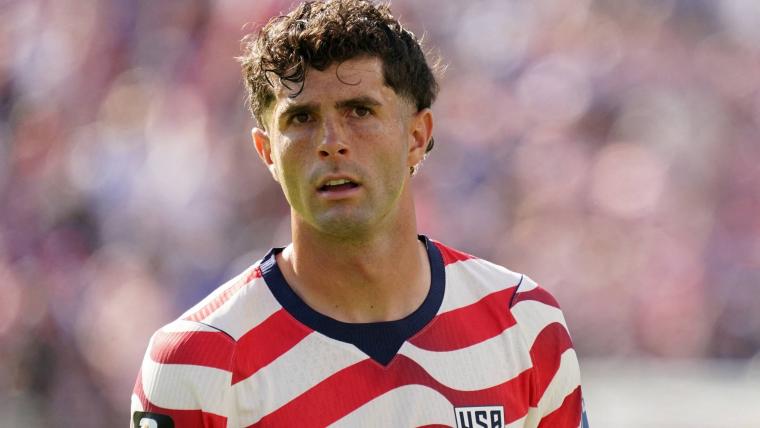
POLICY WIRE — Washington D.C., United States — For an athlete once christened the very face of American soccer, the stark reality must feel less like a coronation and more like a cruel practical joke. The narrative surrounding Christian Pulisic, perpetually hailed as the ‘Captain America’ of the pitch, has, by many accounts, frayed at the edges—tattered, not by an opponent’s studs, but by the relentless weight of expectation. His most recent World Cup outing left a trail of questions longer than his goal tally, especially following the USMNT’s unceremonious exit in 2026.
It wasn’t supposed to unravel quite like this. Not for the prodigy, not for the nation eagerly awaiting its ascendancy in the global game. Instead, the USMNT’s exit in the 2026 FIFA World Cup was harsh. Belgium, they say, simply dominated the United States 4-1 on Monday night. And when the final whistle blew on that ill-fated match, the collective gaze—an often unforgiving spotlight, isn’t it?—swung inevitably towards Pulisic. A superstar, they called him, yet a campaign cut short by injury, devoid of any signature moments, became the epitaph for his tournament performance. [QUOTE_PLACEHOLDER]
The murmurs of discontent weren’t whispers; they were audible declarations. Christian Pulisic will receive the brunt of the criticism. This is a tough pill to swallow, particularly for someone who was once the future of soccer in the United States. But as any grizzled observer will tell you, the future arrives quickly, often bringing inconvenient truths. And the inconvenient truth here is that Pulisic’s performances in international competition have slowly declined while he’s entered his prime. It’s a stark contrast to the meteoric rise promised years ago.
His tenure as the USMNT’s central figure spans two World Cups now. In both, the team got bounced in the Round of 16. Just consider the metrics: across 8 World Cup matches, he’s managed just 1 goal — and 3 assists. A single goal. This solitary strike against Iran in the 2022 group stage carried significant weight—it sealed a crucial 1-0 victory for the US, a politically charged encounter against a nation from the Muslim world, making the moment far more than just sporting. Such victories, however singular, often become ingrained in the broader narrative of international relations, lending sporting events a geopolitical dimension.
This drought, they tell us, is rather significant. Prior to a recent friendly goal against Senegal, Pulisic had been goal-less for the USMNT for an extended stretch, reportedly playing over 1,100 minutes for the team between those two scores. It’s a testament, perhaps, to the sheer grueling nature of elite-level international soccer, where the demands can swallow even the most promising talents whole. His only other competitive international goal since the 2022 World Cup came against Bolivia in the Copa America tournament in June of 2024. All his other six goals were in friendlies, on U.S. soil. As The Sporting News reported, he’s only notched 1 goal in 8 career tournament appearances.
You can’t really fault a professional for navigating the murky waters of club vs. country. Pulisic didn’t participate in last year’s Gold Cup, citing injury concerns—a perennial headache for managers and fans alike, balancing player welfare with national aspirations. Currently, at 27 years-old, he’s theoretically right in the thick of his prime. For AC Milan, in Italy’s demanding Serie A, he’s shown more output—8 goals and 4 assists in 30 matches, 18 of them starts over the past season. A respectable tally, undoubtedly. But for the national team, the luster, for now anyway, seems dimmer. This might just be the last World Cup where he’s undeniably the USMNT’s best player, with younger talents possibly overshadowing him by 2030, when he’ll be 31. Time, it doesn’t wait, not even for phenoms.
📄 POLICY WIRE WHITEPAPER PUBLISHED: PAKISTAN'S NATIONAL SECURITY POLICY PRIORITIES
👉 READ BY CLICKING HEREWhat This Means
The saga of Christian Pulisic isn’t merely a football story; it’s a telling commentary on national sporting policy and the economics of expectation. America, a sporting behemoth in many respects, struggles to establish true global dominance in ‘the beautiful game.’ Investing in a singular ‘face’ like Pulisic carries inherent risks. While it certainly galvanized marketing efforts and captured attention domestically, it also placed an almost impossible burden on one individual.
From an economic standpoint, the perceived underperformance impacts more than just fan morale. It influences youth participation, broadcast rights, — and sponsorship deals for the USMNT. The promise of a soccer superstar elevates the brand, but sustained periods of unfulfilled potential can erode it, perhaps signaling that a more holistic, grassroots approach to talent development across the nation might yield more resilient results. We’re seeing a pattern where US sporting success hinges precariously on individual brilliance rather than systemic strength—a stark contrast to established footballing powers where depth is king.
Politically, sporting success, especially on a global stage like the World Cup, can be a potent soft-power tool. A successful American team isn’t just about athletic prowess; it projects a particular image globally, subtly influencing perceptions and bolstering national pride. The failure to progress deep into the tournament, despite significant investment and media hype, means a lost opportunity on this front. For burgeoning soccer nations, say, like those in parts of South Asia or even nations bordering the Muslim world where soccer has rapidly growing passionate fan bases, observing the struggles of a nation like the US—with its immense resources—might prompt different strategic approaches to their own sporting infrastructure. They’re surely watching; these global sporting contests are never just about the scoreline, are they? They’re always about something bigger.