


Silent Fangs: New Mexico Grapples With Ninth Rabies Case Amid Broader Public Health Questions
POLICY WIRE — Rio Rancho, USA — It wasn’t the roaring thunder of an approaching storm, nor the flashing lights of an emergency convoy that disturbed the late summer calm in Sandoval County....

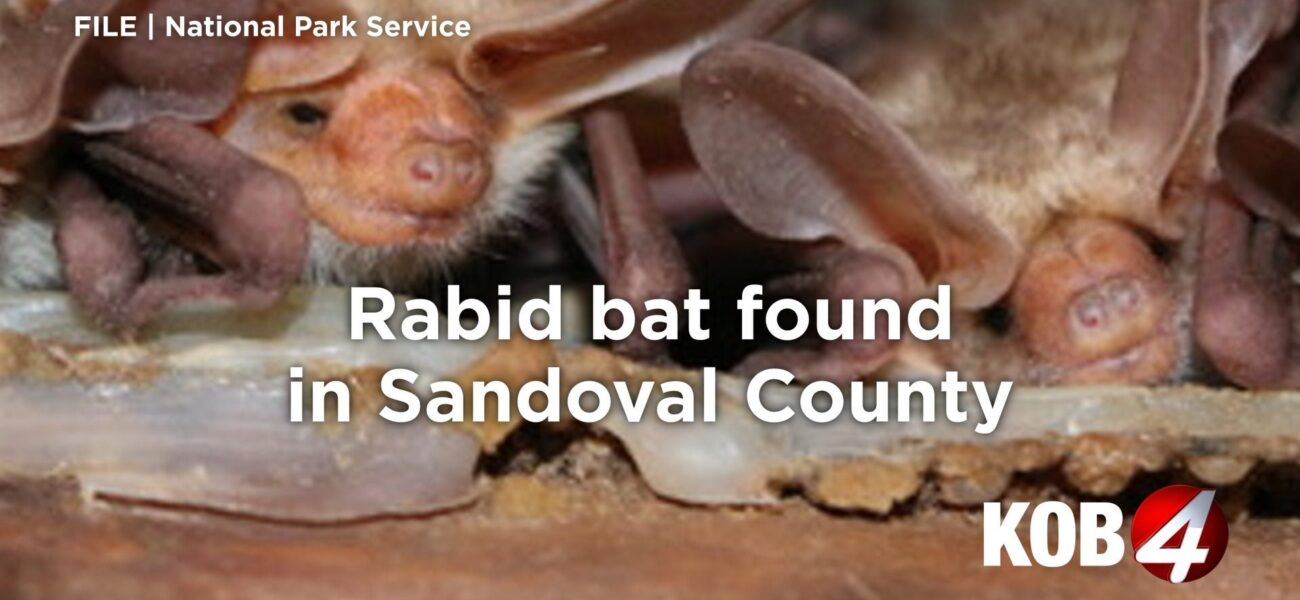
POLICY WIRE — Rio Rancho, USA — It wasn’t the roaring thunder of an approaching storm, nor the flashing lights of an emergency convoy that disturbed the late summer calm in Sandoval County. Instead, it was the chilling, almost whispersome confirmation of a positive rabies test in a lone bat—a harbinger, some might argue, of the quiet, persistent threats lurking just beyond our carefully curated human spaces. This discovery didn’t just mark the state’s ninth animal rabies case for 2026; it stirred the seldom-seen gears of a public health apparatus designed to protect, often unnoticed, against a fatal, yet preventable, foe.
The creature, a small, unremarkable bat, wasn’t discovered swooping under a desert moon, but rather within the mundane confines of a private residence. Its eventual, almost ritualistic journey from a New Mexico home to euthanasia and then the NMDOH Scientific Laboratory Division for testing reflects a standard protocol. It’s a precise, if grim, procedure. Think about it: a seemingly minor incident triggers a full-blown epidemiological response. Why? Because the stakes are just that high. And you don’t mess around with rabies, folks; it’s a silent killer, truly terrifying in its efficacy. [QUOTE_PLACEHOLDER]
Health officials acted swiftly. All individuals and their companion animals potentially exposed to the infected mammal were immediately placed on a regimen of post-exposure vaccines. Dr. Erin Phipps, the state public health veterinarian for NMDOH, minced no words on the gravity of the situation, stating, Rabies is nearly 100% fatal, but 100% preventable. A stark juxtaposition, wouldn’t you agree? This isn’t just about a single animal, or even a single person; it’s about the intricate dance between human settlement, encroaching wildlife, and the ever-present specter of zoonotic diseases.
But the problem runs deeper than isolated incidents. Phipps emphasized the long-standing mandate for responsible pet ownership, reminding us that State law requires all dogs and cats be vaccinated against rabies. Unvaccinated pets exposed to rabies must be euthanized or isolated for four months to prevent human exposure. This isn’t some whimsical suggestion; it’s a non-negotiable legal requirement. You see, the law’s pretty clear on what happens when folks don’t follow through—tough choices have to be made, not just for the animal’s sake, but for community safety. And honestly, it often comes down to this kind of personal vigilance. What good is a mandate if it’s ignored?
New Mexico’s battle with rabies is, by state accounts, a perennial skirmish. While bats might seem like the obvious culprits here (the New Mexico Department of Health (NMDOH) reports they’re the animal most commonly found with rabies in New Mexico), the pathogen also finds its way into foxes, skunks, and even bobcats. Just consider the numbers: 13 rabid animals confirmed in 2025, and 12 in 2024, a statistical reality cited by the NMDOH that paints a picture of an ongoing, low-level conflict that rarely makes front-page news, until, well, it does.
This relentless quiet struggle echoes across the globe, from the suburban sprawls of Rio Rancho to densely populated cities like Lahore or Karachi. For many nations across South Asia, particularly Pakistan, rabies is far from a rare headline; it’s a tragically common and often fatal public health crisis, primarily transmitted by unvaccinated stray dogs. While New Mexico scrambles to inoculate humans against bat exposure, countries with different public health infrastructures contend with far greater burdens, battling a disease that still claims tens of thousands of lives globally each year. The underlying challenges — effective animal control, widespread public education, and accessible preventative medicine — are universal, just differing in scale and available resources. It makes you think about how easily a crisis in one place could metastasize.
📄 POLICY WIRE WHITEPAPER PUBLISHED: PAKISTAN'S NATIONAL SECURITY POLICY PRIORITIES
👉 READ BY CLICKING HEREThis incident also highlighted a particular strain of human folly that health officials frequently contend with: ignorance, or perhaps a reckless curiosity. A separate, rather baffling alert from White Sands National Park mentioned officials seeking a teenage visitor who handled a dead bat with bare hands, out of concern the teen may have been exposed to rabies. Good lord, folks. You’d think common sense wouldn’t need a departmental memo. This wasn’t some exotic research opportunity; it was a potentially fatal lapse in judgment that put a young person directly in harm’s way, a real-life cautionary tale about leaving wild animals well enough alone. Because really, some lessons are best learned from a distance, or not at all, when a disease like this is involved. For broader perspectives on how policy challenges play out globally, sometimes in unexpected ways, check out how other bureaucracies deal with their own systemic problems in places like Beijing.
What This Means
This seemingly localized incident in Sandoval County, on its face, looks like a routine public health response. But peel back a layer, — and it’s a granular illustration of several larger systemic pressures. Economically, while immediate costs might seem minimal – a few vaccinations here, some lab tests there – the aggregate expenditure of constant surveillance, animal control, and prophylactic treatments constitutes a steady drain on public health budgets, diverting resources from other pressing issues. If rabies cases spiked, it could induce local panic, affecting everything from tourism to property values as perceived safety diminishes. There’s a subtle but real policy question brewing here too: how much is enough investment in preventing a ‘low probability, high impact’ event? And can you ever truly regulate human stupidity, especially when teenagers are involved?
Politically, incidents like these also become miniature stress tests for state agencies. The smooth coordination between various departments, public information dissemination, and the efficient allocation of medical resources reflect directly on gubernatorial performance and overall governmental competency. It’s a dry run for much larger emergencies. Beyond that, the casual handling of wildlife—exemplified by that White Sands teenager—speaks to a broader deficit in public environmental education, especially amongst younger demographics. You can preach about conservation all day, but if kids don’t know to avoid handling potentially dangerous dead animals, well, what’s the point? It’s not just a medical emergency; it’s a small failure in societal education, a crack in the collective understanding of natural risks that policymakers really ought to be thinking about. These aren’t just bats; they’re tiny, winged reminders that nature doesn’t negotiate, and human responsibility is our best, often only, defense.