


Albuquerque: Route 66 Icon Demolished, Lawsuits Erupt
The demolition of Albuquerque's historic Lindy's Diner on Route 66 ignites lawsuits against the city and State Farm. Explore the clash of heritage, property rights, and policy.

POLICY WIRE — Albuquerque, N.M. — A chapter closed on Route 66, not with fanfare, but with the mournful creak of heavy machinery and the ignominious crash of an erstwhile diner. The Bliss Building, home to the storied Lindy’s Diner for decades, hasn’t just come down; it’s dragged the city of Albuquerque and a monolithic insurance giant, State Farm, into a bruising legal tangle.
It’s a story told repeatedly, everywhere from Main Street, U.S.A., to the congested lanes of Lahore: the agonizing demise of an old building, once brimming with life, reduced to a heap of memory and rebar. This particular plot twist commenced when crews, acting on the city’s behest, went to work. But instead of quiet compliance, what emerged is a fiery dispute. Owners say this whole debacle didn’t have to be, calling foul on the authorities’ heavy-handed intervention and the insurance company’s stonewalling.
Dawn Vatoseow, co-owner of Lindy’s Diner, isn’t pulling any punches. To her, the entire scene felt less like urban renewal — and more like a public execution. “Watching this is like watching a funeral. This has been our life for 35 years and to have it come down like this and under these circumstances is just gut wrenching,” she said, articulating a grief that’s often dismissed as mere sentimentality in the cold calculus of civic planning. But it isn’t just emotion, you know. It’s also decades of sweat equity, family legacy—and a lifetime’s worth of customers who came for the milkshakes and stayed for the history.
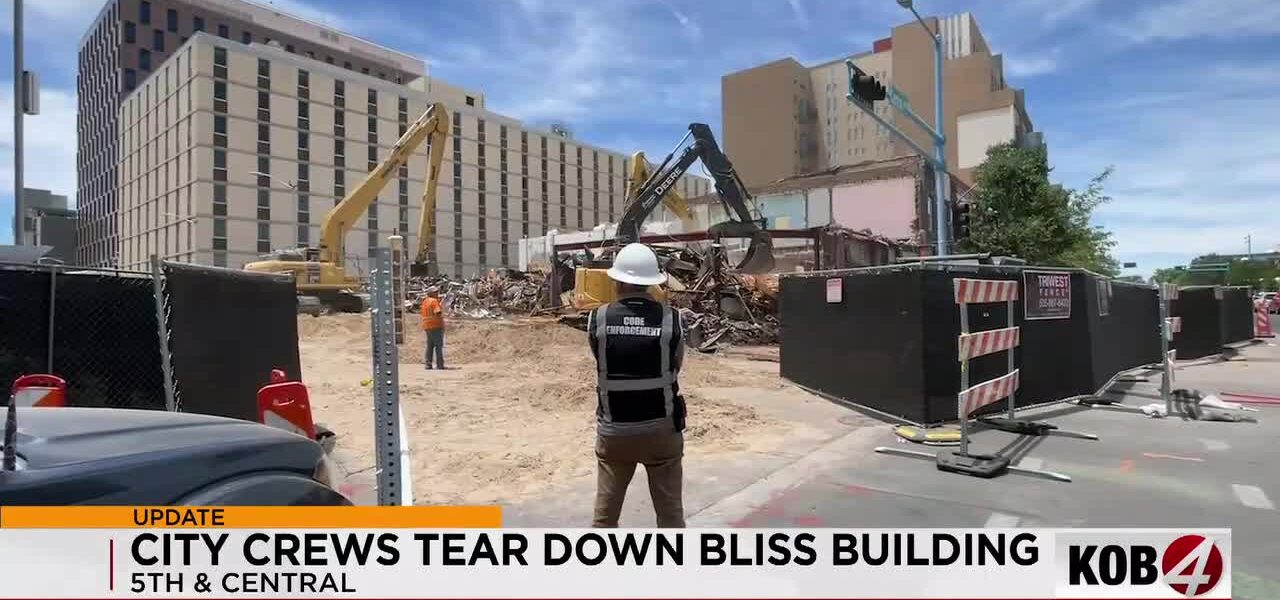
The sequence of events sounds like a Kafkaesque short story. After a facade incident, city officials swooped in, arguing that the owners’ remedial plans simply didn’t pan out. And so, demolition has started on the Route 66 Bliss Building, and crews tore down the first and most of the second floor of the former Lindy’s Diner. Video from that day showed the teardown after the facade fell. By that night, much of the building was gone. A shocking pace, wouldn’t you say? Especially for a process deemed so critical it necessitated overriding private property rights. The Vatoseows contend the structure could have seen new life, a claim their lawyer stands by. [QUOTE_PLACEHOLDER] Vatoseow affirmed. It’s a statement that hangs heavy, implying missed opportunities — and perhaps, a degree of bureaucratic haste.
Then there’s State Farm, which isn’t escaping the owners’ wrath either. They’re also suing the insurance powerhouse, citing a denial of their claim. State Farm’s rationale? [QUOTE_PLACEHOLDER] they knew about potentially dangerous damage, which the family denies. This, dear readers, isn’t just about brick and mortar; it’s about culpability, communication—or the utter lack thereof—and whose narrative ultimately prevails when a historic building stands at a crossroads, especially when an insurer smells blood in the water. We’ve seen these narratives play out in developing economies, too. In burgeoning cities like Karachi or Jakarta, urban expansion often bulldozes over historical districts or working-class enterprises with little recourse for individual owners when local authorities or larger corporations decide a different vision is in order.
Meanwhile, the immediate aftermath creates practical headaches for everyday citizens. Closures at Fifth — and Central remain in place because of safety concerns. Traffic snarls, rerouted pedestrians—it’s all part of the urban symphony of progress and loss. The city expects to reopen Central by July 15. A definitive date, one hopes, to mark the return to some semblance of normal amidst the fresh wounds of demolition.
📄 POLICY WIRE WHITEPAPER PUBLISHED: PAKISTAN'S NATIONAL SECURITY POLICY PRIORITIES
👉 READ BY CLICKING HEREWhat This Means
This Albuquerque demolition isn’t just a local spat; it’s a microcosm of broader, uncomfortable tensions within urban policy, insurance regulation, and the fragile notion of property rights. Firstly, it underscores the often-uneasy dance between civic authorities and private citizens regarding historic preservation versus perceived safety risks. Cities frequently face pressure to revitalize older areas, sometimes at the expense of structures that don’t quite fit the new blueprint or pose maintenance challenges. Here, the city effectively used its power to deem a property a public hazard, then swiftly moved to demolish it. But that power isn’t without its checks, particularly when owners allege bypass of due process.
Secondly, the insurance claim denial by State Farm paints a familiar picture. Insurance companies are businesses, beholden to shareholders, and their default position often trends towards denial, especially on complex or large-scale claims. The allegation that the owners knew of ‘dangerous damage’ is a common, though legally contentious, defense strategy. Such disputes don’t just drain pockets; they often devastate the emotional well-being of those who’ve poured their lives into a property. In nations like Pakistan, where informal property markets and varied construction standards complicate ownership claims, similar struggles erupt over structural integrity, and it’s typically the individual who bears the brunt. It’s estimated that litigation stemming from property disputes costs American cities an average of $200 million annually, according to a recent Urban Policy Institute report. That’s a lot of money to resolve who’s right when a building falls down. This saga highlights a critical public policy gap: clear, transparent mechanisms for balancing rapid urban development with the safeguarding of community heritage and the protection of private property from abrupt municipal intervention.
Finally, there’s the economic ripple. Lindy’s was an institution. Its forced removal doesn’t just erase a landmark; it disrupts the local economy, however small. Its former employees, its suppliers—everyone takes a hit. When heritage becomes rubble, it’s rarely just about the bricks and mortar; it’s about jobs, identity, and the trust between a community and its administrators. These fights are never clean; they always leave scars. And the Bliss Building isn’t just gone—it’s now a very expensive, very public, very concrete lesson in what happens when the gears of bureaucracy meet the grind of human loss.