Shadow Games: Why El-Obeid Becomes Sudan’s Next Bloody Checkpoint
POLICY WIRE — Khartoum, Sudan — For months now, the global press has mostly fixated on Khartoum, watching buildings crumble, lives dissolve. That was the headline, wasn’t it? The...

POLICY WIRE — Khartoum, Sudan — For months now, the global press has mostly fixated on Khartoum, watching buildings crumble, lives dissolve. That was the headline, wasn’t it? The grand, disastrous capital becoming a pulverized memory. But as ever in conflict, the real, gritty struggle often shifts its ground, finds its terrible purpose in forgotten corners. Right now, that corner—that bloody, consequential patch of Sudanese earth—is el-Obeid.
It’s not flashy, this city, not like Khartoum with its diplomatic enclaves — and shattered prestige. El-Obeid, the capital of North Kordofan, is a workhorse, always has been. It’s an intersection, a hub, a vital artery for pretty much everything that moves across western — and central Sudan. You’ve got to control it if you want to control anything beyond your immediate foxhole. And believe me, both the Sudanese Armed Forces (SAF) and the Rapid Support Forces (RSF) know it. They absolutely know it. [QUOTE_PLACEHOLDER]
Because El-Obeid? It’s not just a city. It’s the lynchpin for logistical operations — imagine trying to supply troops in Darfur without a secure passage through here. You can’t. Its strategic heft goes back forever; a critical railway junction, major roads fanning out like a spider’s web to distant parts of Sudan and beyond. Losing it for either side, it’s not merely a setback. It’s a structural fracture. The kind that reshapes the map of power. For the RSF, capturing El-Obeid means severing a primary supply line for the SAF to its western command. For the SAF, holding it off isn’t just defense; it’s a desperate assertion of any remaining national authority. They’ve been hunkered down, that’s clear, besieged for quite some time, but it’s still holding. But the RSF’s renewed pressure indicates they aren’t content with just a siege anymore. They want to finish it, — and they probably think they can.
The stakes here aren’t just military, though they’re certainly brutal. Human cost? We’re talking millions displaced. The United Nations reports that since the conflict began, more than 8.2 million people have fled their homes within Sudan or crossed borders as refugees. That’s a staggering figure, an almost unfathomable uprooting of an entire society, making Sudan one of the world’s most acute displacement crises.
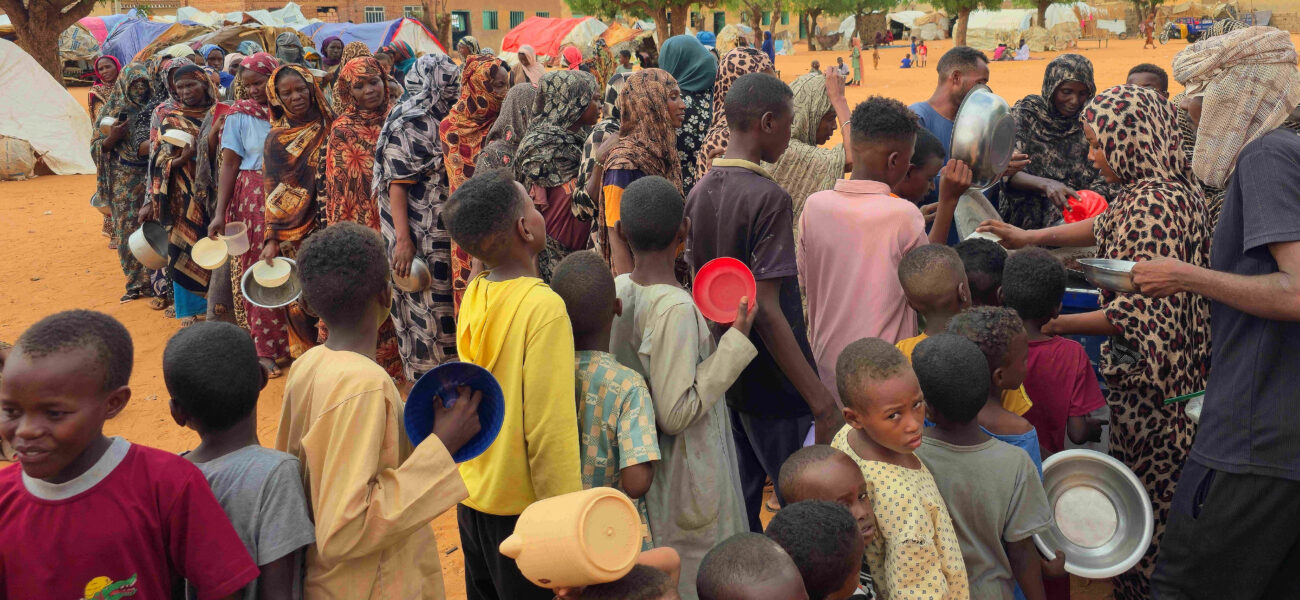
And El-Obeid, this relatively mundane-looking junction, sits at the heart of this human tragedy. It’s not only a pathway for weapons but for aid, for commerce, for people just trying to run. Blocking it, holding it under siege, has implications far beyond what the generals seem to consider when they draw their lines on maps. Ordinary Sudanese citizens, stuck between the competing ambitions of these two forces, face shortages of food, medicine, and water. Essential services have evaporated — gone, like a bad dream. Children? They’re often starving, losing any chance at an education, sometimes recruited into the fight. It’s a dark reality, you see it replicated wherever power turns a blind eye to its own people.
📄 POLICY WIRE WHITEPAPER PUBLISHED: PAKISTAN'S NATIONAL SECURITY POLICY PRIORITIES
👉 READ BY CLICKING HEREWhat makes this renewed focus on el-Obeid a "new phase"? It’s about consolidation. The RSF, having carved out considerable territory in Darfur and parts of Khartoum, now looks east, towards the SAF’s remaining bastions, like Port Sudan, the temporary capital. El-Obeid is the geographic choke point. Control it, — and you’ve got an iron grip on west-east movements. And the implications, let me tell you, are felt far beyond Sudan’s borders. We’re talking Chad, the Central African Republic, South Sudan—all of whom rely on these routes for trade and stability. These conflicts don’t stay neatly within lines; they bleed, always, like a spreading ink stain.
But there’s also the subtle, yet potent, undercurrent of identity and shared struggles that resonates in the broader Muslim world, a region often grappling with similar patterns of internal strife, external interference, and humanitarian crises. Pakistan, for example, a nation with its own experience of internal conflict and regional complexities, might not be directly involved, but the displacement and the existential threats facing Sudan echo themes common across parts of the Middle East and South Asia. The plight of civilians, the struggle for national cohesion against fracturing forces, these aren’t new stories in our part of the world. Just another reminder that while names and places change, the core elements of human conflict and endurance remain stubbornly the same.
And so, as the dust literally settles in Khartoum—or what’s left of it—the future of Sudan might just be written in the sands and sparse settlements around El-Obeid. The world watches, sort of. But the people living it? They’re just trying to survive another day.
What This Means
This intensified push for El-Obeid isn’t just about tactical gains; it signals a brutal acceleration in the RSF’s long-term strategy to establish dominance across Sudan’s commercial heartland. If they seize it, it wouldn’t just cut SAF supply lines; it’d grant them unparalleled access to trade routes linking crucial agricultural areas and even gold-rich regions. This is about establishing economic as much as military control, turning the city into a central node for future resource exploitation, essentially allowing them to bankroll continued operations. The SAF, on the other hand, risks being confined to its eastern strongholds, morphing from a national army into more of a regional force, perhaps centered on Port Sudan. This could effectively formalize Sudan’s de facto partition and create a fertile ground for enduring instability across the Horn of Africa, further impacting an already volatile neighborhood. Neighboring states, including those in the Arab Gulf and Egypt, who’ve played a murky role in funding various factions, will face renewed pressure to pick sides, or suffer the wider blowback of mass migration and potential radicalization as the vacuum of legitimate authority expands. It’s regional strain writ large, but with even bigger boots on the ground.
📖 GET YOUR FREE COPY NOW OF POLICY WIRE DIGITAL MAGAZINE JULY 2026 EDITION
👉 READ & DOWNLOAD FREE MAGAZINE