


Wimbledon Echoes: Filipina Teenager’s Run Sparks Geopolitical Rumbles, Redefining Global Sport Narratives
POLICY WIRE — LONDON, UK — Forget the scoresheet for a moment; the real story unfolding across Wimbledon’s hallowed lawns isn’t just about who won or lost a tennis match. It’s about the...

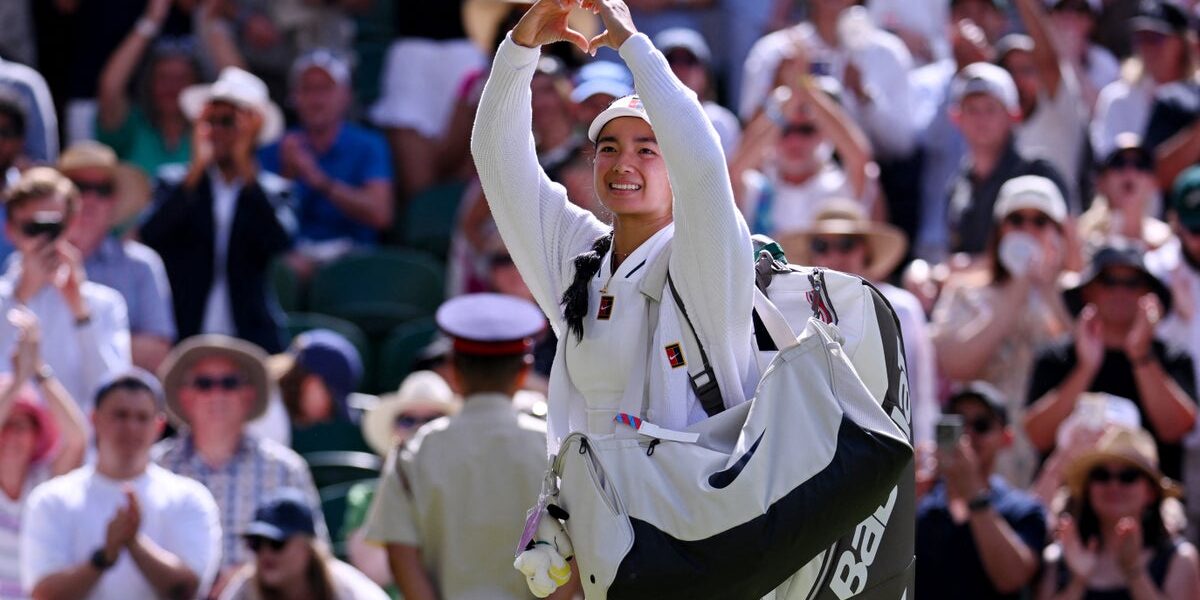
POLICY WIRE — LONDON, UK — Forget the scoresheet for a moment; the real story unfolding across Wimbledon’s hallowed lawns isn’t just about who won or lost a tennis match. It’s about the earth-shaking rumble emanating from a small archipelago nation, 6,700 miles away. What Alexandra Eala accomplished on court—reaching the fourth round of a Grand Slam at just 21—sent tremors that transcended sport, becoming a geopolitical marker for emerging global talent. Her hard-fought defeat to seasoned Italian Jasmine Paolini in a two-hour, 22-minute tussle on Centre Court wasn’t the end of a fairy tale; it was a thunderclap. And it signaled the shifting sands of where the next sporting heroes will emerge from.
Because Eala’s run, however brief in the larger arc of the Championships, electrified the Philippines, a nation of 112 million people starved for a tennis idol. Suddenly, local basketball courts and public squares back home turned into makeshift ‘watch parties,’ crowds hanging on every volley. It wasn’t merely cheering; it was a profound surge of national pride. But this wasn’t an isolated phenomenon, rather, it’s a telling snapshot of a broader dynamic at play in the so-called Global South.
“This isn’t just about tennis; it’s about what Alexandra represents for our youth,” asserted Carlos ‘Chuck’ Fernandez, the Philippine Undersecretary for Sports Development, in an exclusive conversation with Policy Wire. “It’s tangible proof that with unwavering grit and equitable opportunity, a Filipino can stand tall on any global stage, challenging every preconceived notion about where talent resides. This impacts our soft power, our global identity—it’s immense.” His words cut through the usual bureaucratic cant, hinting at something far weightier than just athletic achievement.
Eala’s rise isn’t simply a feel-good narrative, it’s also a significant commercial and strategic win for institutions looking to broaden tennis’s reach. “Eala’s surge exemplifies the WTA’s long-term vision for diversification,” remarked Anya Sharma, the WTA’s Global Development Director, discussing the implications from Miami. “We’re seeing untapped talent, — and more importantly, untapped fan engagement, blossom in these vibrant new markets. It challenges us to look beyond traditional strongholds.” It’s plain to see why. Eala’s match highlights against defending champion Iga Swiatek garnered over 1.2 million views on Wimbledon’s official YouTube channel—an unprecedented figure for a fourth-round encounter—surpassing even highlights featuring a returning Serena Williams, as meticulously documented by the All England Lawn Tennis Club.
Back on court, Eala pushed Paolini—a former French Open finalist and world No. 29—to her limits. She’d showcased a game built on crisp groundstrokes, a crafty lefty slice, and surprising variation, holding her own despite growing up on a hybrid court that forced her to adapt to an encroaching basketball hoop. But the Italian, with her experience and brute force, particularly targeting Eala’s often-fragile second serve, finally broke through. The 4-6, 6-4, 3-6 scoreline reads like any other defeat, but it obscures the drama of a young player refusing to buckle until the very last gasp.
“I think it’s important that every match I play, I go in with self-esteem and the thought that I’m able to win,” Eala herself told press after the loss, her words tinged with a maturity that belied her age. “If I’m able to approach them with bravery, with a steady mind, and with intensity, then I’m able to look back and feel no regret.” But while her mental fortitude is undeniable, the brutal reality of professional tennis dictates that the gaps in her game, especially that second serve, will need tightening. That’s just how it’s. Because you can’t survive on moxie alone forever.
📄 POLICY WIRE WHITEPAPER PUBLISHED: PAKISTAN'S NATIONAL SECURITY POLICY PRIORITIES
👉 READ BY CLICKING HEREAnd yet, this isn’t solely about technique. The reverberations from Eala’s Cinderella run are already shaping a narrative across other burgeoning sports regions, including Pakistan and wider South Asia, where the collective aspirations for national sporting heroes often outstrip resources. Think about the passion for cricket in Pakistan, Bangladesh, or Sri Lanka; when an individual athlete breaks through, it doesn’t just create a fan base, it ignites national fervor, becoming a potent symbol of global relevance and soft power. This shared dynamic, driven by individuals from historically overlooked sporting nations, represents a significant cultural challenge to the traditional hegemony of Western athletic powerhouses. For many, this isn’t just about tennis, it’s about finally getting a seat at the global table, and having the strength—and the skill—to earn it.
What This Means
Eala’s Wimbledon saga extends far beyond a tennis tournament, signaling a seismic shift in the global sports landscape. Her breakthrough performance illuminates the immense, often untapped, potential residing in developing nations. For the Philippines, this means more than mere sporting glory; it translates into enhanced national visibility and significant soft power currency. Success on such a visible platform creates aspirational figures for younger generations, potentially diverting talent into sports and away from less constructive pathways—a direct social dividend.
Economically, her impact can be multifaceted: increased tourism interest, brand endorsements boosting local economies, and renewed investment in sports infrastructure, both public and private. It highlights that the narrative of sporting dominance is diversifying, forcing global federations and sponsors to recalibrate their strategies, focusing more keenly on these new markets. The digital engagement around her matches also demonstrates how accessible and democratized sports viewership has become, untethered from traditional media hubs. Politically, such breakthroughs empower national identity, creating a collective sense of pride and demonstrating capabilities that defy stereotypes often associated with developing economies. It’s a quiet but persistent declaration that talent knows no geographical bounds, — and it’s a powerful one.