


World Cup’s Late-Night Racket: Mexico’s Fan Fervor Rattles More Than Sleep
POLICY WIRE — MEXICO CITY, MEXICO — Not every late-night serenade in the heart of Santa Fe features strumming guitars and heartfelt ballads. Sometimes, it involves a cacophony of air horns and...

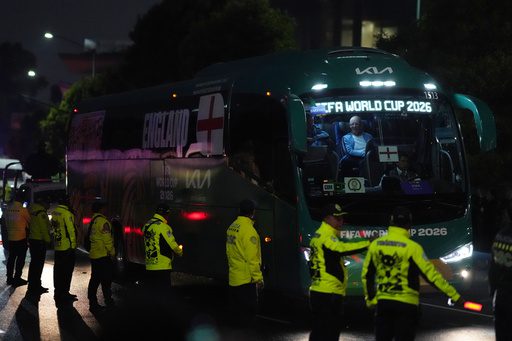
POLICY WIRE — MEXICO CITY, MEXICO — Not every late-night serenade in the heart of Santa Fe features strumming guitars and heartfelt ballads. Sometimes, it involves a cacophony of air horns and fireworks—all aimed squarely at unsettling a group of millionaire athletes trying to catch a few hours of sleep. This was the scene recently outside the JW Marriott, where Mexico’s “El Tri” faithful engineered a sleepless preamble for England’s national squad before their critical World Cup round-of-16 clash. It’s a curious spectacle, this calculated campaign of noise, almost theatrical in its bluntness.
It seems police blockades were barely a deterrent, just minor inconveniences. Dozens of fans, apparently well-equipped with loudspeakers and pyrotechnics, turned the early morning into a sonic assault. You can’t help but wonder about the hotel security, or for that matter, the municipal noise ordinances. One imagines weary hotel guests, unrelated to the England squad, weren’t thrilled about this particularly local custom either. But, hey, sports rivalries, right? [QUOTE_PLACEHOLDER]
This wasn’t a one-off, either; it’s a pattern. The same noisy routine had been trotted out just days prior for a match against Ecuador. Mexico actually won that one, 2–0, which probably reinforces the fans’ belief in their methods. The Ecuadorian football federation wasn’t amused, lodging a formal complaint. But complaining to organizers about an unsanctioned pre-dawn rave just feels a bit… beside the point, doesn’t it? It’s hardly FIFA’s jurisdiction to police the sleep schedules of grown men, even if they’re top-tier footballers.
England manager Thomas Tuchel seemed to treat the whole thing with the practiced weariness of someone who’s seen it all before. “We have a 6 p.m. (Sunday) kickoff, so if we miss some hours of sleep, we’ll make them up in the late morning,” Tuchel said on Saturday. His casual dismissal probably irked the noise brigade more than the noise itself irked his players. And he’s got a point. Professional athletes often travel across time zones, adapting to bizarre schedules. Losing a few hours to honking horns is hardly the most brutal form of jet lag. They’re resilient. Mostly. One could even argue that a strategic psychological challenge adds a certain flavor to these contests, even if it skirts the edges of fair play.
These late-night hotel serenades aren’t some spontaneous outburst. They’re an “entrenched and polarizing tradition in Latin American football.” What began, we’re told, as a passionate display of local team support, has morphing into a deliberate “psychological weapon designed to deprive opponents of sleep.” It’s an evolution, certainly—from heartwarming communal solidarity to deliberate nocturnal aggression. What’s next? Coordinated ransomware attacks on opposing team analysts? Probably not. Yet, the intent is clear: gain any edge, by any means, short of direct violence. This brand of fan enthusiasm isn’t restricted to Latin America; similar zealotry, often tinged with nationalist fervor, exists globally. In some parts of South Asia, for instance, cricketing rivalries—particularly those involving India and Pakistan—can escalate fan passions to boiling points where actual public disruptions and even property damage aren’t unheard of. The methods differ, but the underlying drive to destabilize an opponent through extra-sporting tactics? It’s a universally recognized, albeit often frowned-upon, phenomenon.
Consider the raw statistics on sleep deprivation and performance: a 2017 study published in Sleep Science found that athletes experiencing even partial sleep restriction (missing 2-3 hours of typical sleep) showed measurable decreases in sprint performance, reaction time, and decision-making capabilities. It’s not just about feeling groggy; it has tangible impacts. So, while Tuchel played it cool, there’s genuine science suggesting a sleep-deprived squad isn’t playing at peak capacity. And that’s what makes the fan action more than just a silly stunt.
And yes, the whole incident begs the question of where sportsmanship ends — and outright belligerence begins. Is the spirit of competition meant to extend beyond the pitch to invading the personal space and rest of the competitors? Some would say it’s “all fair in love and war,” but most sporting bodies tend to have, you know, rules about fair play. Then again, if local authorities can’t, or won’t, enforce noise violations against fervent fans, what’s an international sports federation to do? Short of assigning players noise-canceling headsets or moving the team to a hermetically sealed bunker, options seem limited.
📄 POLICY WIRE WHITEPAPER PUBLISHED: PAKISTAN'S NATIONAL SECURITY POLICY PRIORITIES
👉 READ BY CLICKING HEREWhat This Means
This “serenade” isn’t merely about lost sleep; it’s a symptom of sport’s broader geopolitical and socio-cultural role. From a political economy perspective, these events represent a grey zone where passionate fandom crosses into—perhaps even weaponizes—local regulatory lacunas. For a host city like Mexico City, balancing exuberant national pride with the perception of a professional, hospitable host can get complicated. Too much leniency here, and you risk a global reputation hit, suggesting a lack of control over public order, or worse, tacit approval of disruptive tactics that detract from the sport itself. Just imagine if a similar incident involved, say, Pakistan’s cricket team staying in London; the local police response would likely be far swifter and less forgiving. It’s a stark reminder that even in sports, the global North — and South can face different regulatory landscapes.
For players, such psychological skirmishes can contribute to an overarching sense of siege, adding a layer of mental fatigue to physical demands. While it might forge camaraderie within a targeted team, it simultaneously degrades the idea of a purely sporting contest. The incident highlights the growing importance of not just physical conditioning, but also mental resilience in elite sports. Such shadow games illustrate how elements external to the immediate contest can significantly—and strategically—influence outcomes, making “fair play” an increasingly complex, if not quaint, notion.
Ultimately, this isn’t just some amusing anecdote; it’s a microcosm of the intense pressures and often ethically dubious lengths teams, and their passionate supporters, will go to for victory. It makes you wonder how long until a drone equipped with flashing lights and custom loudspeakers becomes the next iteration of the late-night hotel serenade. A terrifying thought, isn’t it? Just imagine trying to catch forty winks through *that* racket.