


Shadow of ‘The Wall’ Looms: Anvay Dravid’s Heroics Echo Across Fractured U19 Landscape
POLICY WIRE — Hambantota, Sri Lanka — For most seventeen-year-olds, an international debut — even at the U19 level — represents the apex of ambition. For Anvay Dravid, the quieter, younger progeny of...

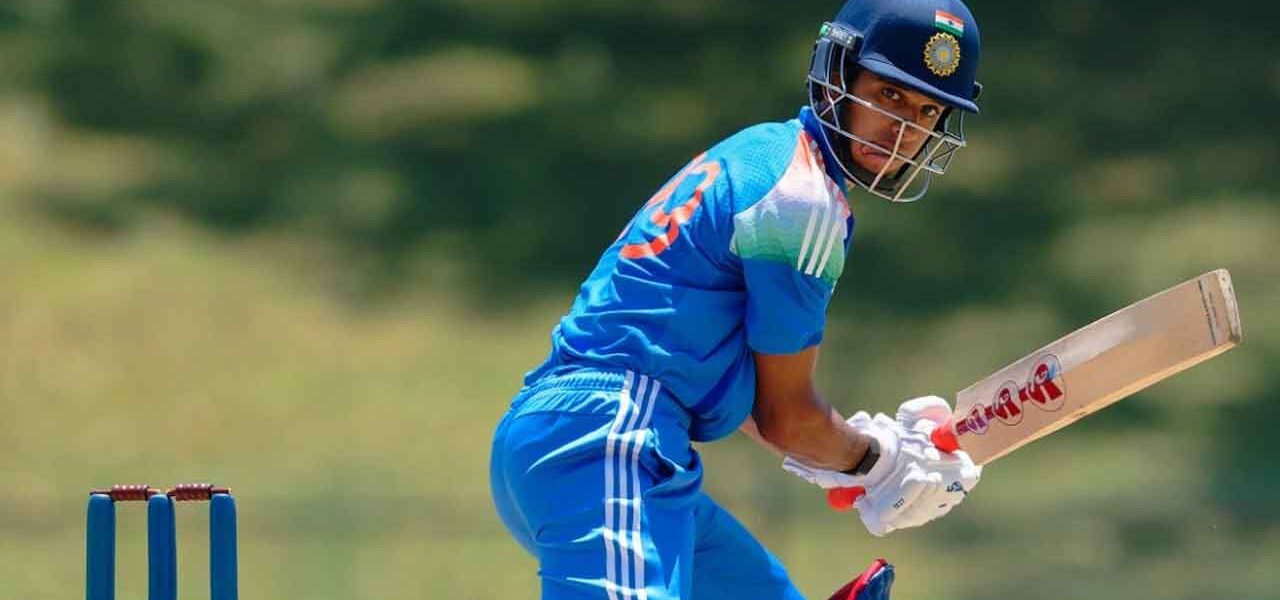
POLICY WIRE — Hambantota, Sri Lanka — For most seventeen-year-olds, an international debut — even at the U19 level — represents the apex of ambition. For Anvay Dravid, the quieter, younger progeny of cricketing royalty Rahul Dravid, it’s just another Tuesday under an invisible microscope. The immense burden of that lineage often crushes nascent talent. But yesterday, on a sweltering pitch in Hambantota, young Anvay wasn’t just performing; he was fighting off specters, silencing murmurs, and – quite literally – rescuing a floundering Indian U19 squad.
His 87 runs, hammered off a mere 67 balls against Sri Lanka A in the second Youth ODI, wasn’t just a statistical entry. It was an exercise in controlled aggression. His team, batting first after winning the toss, had crumpled. They were gasping for air at 81 for four in the 19th over, top order looking rather brittle—skipper Yashbardhan Chauhan gone for a paltry 6, Sagar Virk for 4. The kind of start that screams ‘early flight home.’ Then Anvay, a wicketkeeper-batter by trade, strode to the crease at number five.
And what followed wasn’t merely a rescue act; it was a defiant declaration. With Arjun Rajput (who played his part, too, with 76 runs), Dravid Jr. engineered a 145-run stand for the fifth wicket, all done — and dusted in a blistering 126 balls. Think about that for a second. An entire partnership, carved out of desperation, that transformed a potential washout into a formidable target of 285. He struck the ball cleanly, piercing fields, accumulating boundaries (nine fours, one six)—showing the sort of temperament the name Dravid often conjures. But this wasn’t the slow, attritional ‘Wall’ many remember; this was a wall-builder, sure, but one armed with a wrecking ball.
“Young Anvay—he carries quite the burden, doesn’t he?” quipped Rohan Khanna, a long-serving official with the Board of Control for Cricket in India (BCCI), speaking to Policy Wire from Mumbai. “But talent finds a way. Rahul’s quiet confidence, you see it reflected, maybe with a dash more modern flair. We’re certainly watching closely, as are all the scouts. The future of Indian cricket, it always starts here, with these U19 tours.”
It’s a scenario that plays out across South Asia, actually. Sons of legends, inheriting expectations sometimes heavier than the bat they wield. Anvay’s elder brother, Samit, also made headlines recently, delivering with both bat and ball in a domestic T20 match back home. Because talent, in this region, is often seen as a birthright—and a nation’s sporting hope. It’s a relentless, generational proving ground.
For the Sri Lankan contingent, there were some bright spots, despite the hammering. Left-arm seamer Gimhan Mendis snared five wickets for just 41 runs, a solitary flicker against India’s resurgent innings. “Gimhan’s spell was fantastic, a masterclass in challenging conditions,” noted Dr. Premalatha Dias, a spokesperson for Sri Lanka Cricket (SLC). “He shows the kind of raw skill we know we have, especially after everything our nation has been through. We always nurture our young ones, even as we face daunting economic challenges. This tour—it’s incredibly important for our boys, for their experience against such high-caliber talent.”
📄 POLICY WIRE WHITEPAPER PUBLISHED: PAKISTAN'S NATIONAL SECURITY POLICY PRIORITIES
👉 READ BY CLICKING HEREAnvay himself, after getting dismissed for a meek 14 in the first ODI, averaged a staggering 55.00 across six innings in the recent Vinoo Mankad Trophy—leading his state, Karnataka, to the quarterfinals. That’s a verifiable statistic, proving it’s not just a flash in the pan. He knows how to get it done.
What This Means
Beyond the scorecard, this U19 series in Sri Lanka offers a subtle yet potent microcosm of South Asian sporting geopolitics and its socioeconomic undercurrents. For India, it’s a factory for future global cricketing dominance, fuelled by an insatiable domestic ecosystem that can weather almost any storm. Young talents like Dravid, irrespective of their famous surnames, represent a constant, flowing pipeline of world-class performers. And it helps, of course, that India possesses the economic might to heavily invest in such development, from grassroots to these U19 tours—tours that themselves generate considerable commercial interest for local host nations, albeit often for little tangible, long-term gain for the hosts.
For a nation like Sri Lanka, however, these encounters carry far more profound weight. While still passionate about the sport, its national cricketing body and the broader nation itself are navigating a delicate dance with severe economic turbulence. Every successful local youth prospect, like Mendis, isn’t just a potential cricketer; they’re a symbol of resilience, a sliver of hope. A potential future income stream. But the disparity in resources, training, — and exposure is vast. Indian U19 players might view these tours as stepping stones; for their Sri Lankan counterparts, they’re often make-or-break auditions for limited opportunities. The brutal economics of talent, it manifests differently everywhere, doesn’t it?
The stakes couldn’t be higher, not just for the players—who might one day represent their nations—but for what their success or failure says about the larger systems they hail from. That economic equation, it’s always present, bubbling just beneath the surface of the cricketing narrative. And in this particular drama, Anvay Dravid didn’t just save an innings. He affirmed a system.