
Whispers of Peace, Echoes of War: US-Iran Diplomacy’s Stark Reality in Qatar
POLICY WIRE — Doha, Qatar — The coffee, presumably, was excellent. But you couldn’t miss the smell of cordite in the diplomatic air this week, as U.S. envoys landed in Qatar for talks with...

POLICY WIRE — Doha, Qatar — The coffee, presumably, was excellent. But you couldn’t miss the smell of cordite in the diplomatic air this week, as U.S. envoys landed in Qatar for talks with Iranian officials. It’s not a summit, mind you. It’s more of a bizarre theater of the absurd: high-stakes indirect negotiations unfolding mere days after a new round of actual, honest-to-goodness hostilities erupted across the Persian Gulf.
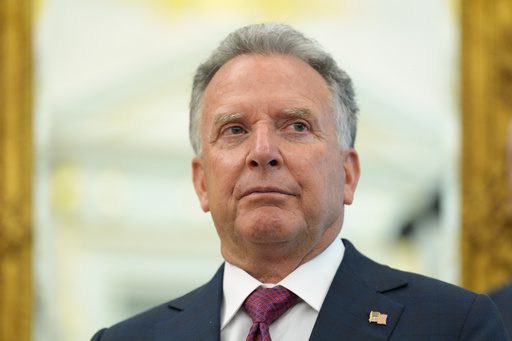
It’s an ugly, uncomfortable juxtaposition. On one hand, Steve Witkoff, U.S. President Donald Trump’s Mideast envoy, — and Jared Kushner, his son-in-law, touching down. On the other, news of Iranian missile and drone strikes hitting Bahrain and Kuwait—and, oh, a tanker too. One wonders if they even bother to pretend these events are unrelated. They certainly don’t feel unconnected, not to anyone watching this region.
No, Washington’s diplomats weren’t clinking tea cups directly with Tehran’s delegation here in Doha. That’d be too simple, too straightforward for this decades-old entanglement. Instead, Qatari mediators are doing the shuttle dance, ferrying messages between rooms, trying to breathe life into an interim deal that feels less like a pact and more like a fever dream.
The Qataris are trying their level best, bless their hearts. Majed al-Ansari, a spokesman for Qatar’s Foreign Ministry, confirmed the technical-level chats. “We’re not expecting any high-level Iranian officials at the moment, but as I said, the technical meetings are ongoing… and they haven’t stopped since then,” he informed journalists. That’s a careful way of saying: we’re keeping a very dim candle lit in a very dark room.
Because Tehran, naturally, presented its own narrative. Esmail Baghaei, Iran’s Foreign Ministry spokesman, was quick to temper expectations from his end. “What will take place in Doha tomorrow is a discussion with the Qatari side about implementing parts of the memorandum of understanding, including the release of Iran’s blocked assets,” Baghaei stated. See? Nothing about the Americans directly. Just a ‘discussion with the Qatari side.’ It’s a classic move in this delicate, often duplicitous, diplomatic minuet.
But whether direct or indirect, the underlying objective is to salvage something from the wreck of what was an interim agreement forged earlier this month. This fragile understanding was supposed to get Tehran to dilute its enriched uranium stockpiles, see the lifting of some U.S.-backed oil sanctions, and, crucially, reopen the Strait of Hormuz for free maritime traffic. Everyone’s got 60 days to hammer out something broader. Time’s ticking, — and the hammer keeps missing the nail.
That 60-day clock, however, feels profoundly detached from the real-world chaos currently roiling the Gulf. Last week’s efforts to open Oman’s territorial waters in the Strait saw the predictable — though no less alarming — response. Iran launched attacks. And by ‘attacks,’ we’re talking about hitting vessels, including a tanker carrying Qatari crude, provoking U.S. retaliatory airstrikes. It’s a vicious, accelerating cycle, a grotesque sort of geopolitical chess game where the pawns keep exploding.
What This Means
This entire spectacle is more than just frustrating; it’s a grim preview of how intractable this conflict has become. The presence of envoys, particularly a figure like Kushner whose previous diplomatic forays have had mixed results, suggests a high-level buy-in from Washington. Yet, the simultaneous kinetic action paints a picture of two powers utterly unwilling to genuinely de-escalate. It’s diplomacy through clenched teeth. For Pakistan and other South Asian nations, this ongoing instability in the Gulf—especially the intermittent choking of the Strait of Hormuz—isn’t merely headline news. It’s an existential economic threat. Before the war commenced on February 28, a staggering fifth of the planet’s oil shipments – some 20% of global supply – transited these narrow waters annually, according to maritime analytics firms like Lloyd’s List. Any sustained disruption sends crude prices skyrocketing, directly impacting energy-dependent economies already struggling with inflation and external debt. Because even an illusion of peace provides a measure of stability. Without it, you’re just inviting a cascade of crises, extending far beyond the immediate theatre of operations. This isn’t just about enriching uranium or unblocking assets; it’s about the very plumbing of global commerce.
The ‘technical meetings’ Qatar hosts are less about breakthrough — and more about preventing complete rupture. They’re a political firebreak, a tacit admission that neither side wants all-out war but can’t quite commit to real peace either. This makes any long-term stability highly questionable. Expect more theatrical indirect engagements punctuated by flashes of real violence. That’s the pattern. And frankly, it’s exhausting.