


Digital Ghosts in the Courtroom: AI’s Disorienting Play in Pakistan’s Political Theater
POLICY WIRE — Islamabad, Pakistan — Forget blurred live streams or dodgy cell phone videos. This isn’t your garden-variety media blackout. We’re staring at something far more insidious...

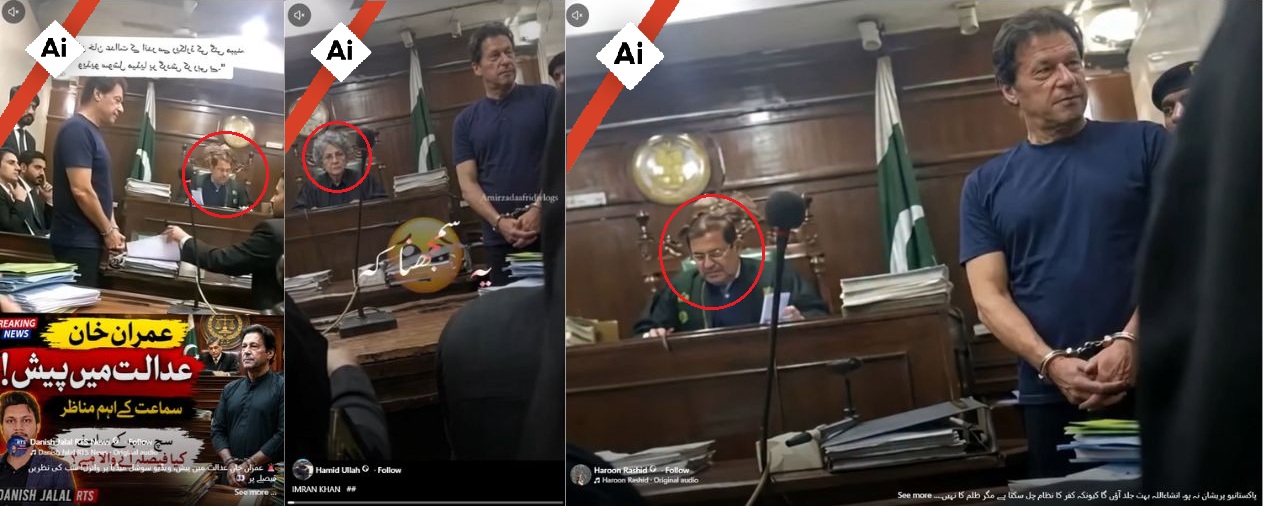
POLICY WIRE — Islamabad, Pakistan — Forget blurred live streams or dodgy cell phone videos. This isn’t your garden-variety media blackout. We’re staring at something far more insidious now—a flicker of pixels, a slight misalignment in the eyes, and suddenly, the man on screen isn’t real. It’s a synthetic ghost, ostensibly the imprisoned former former former Prime Minister Imran Khan, beamed from a courthouse and then almost immediately, undeniably, exposed as an artificial intelligence creation. Pakistan, already teetering on a political precipice, just found its ground further dissolving beneath the weight of manufactured reality.
It was never a secret Khan’s public image was carefully managed, both by his zealous supporters and by authorities determined to mute his narrative. But this? This takes the game to a whole new level. Because, when clips began circulating widely across social media—purporting to show Khan, ever the defiant showman, despite his current predicament—digital forensics experts and tech-savvy activists were quick to pounce. They didn’t see an embattled leader; they saw a puppet, digitally rendered, a hollow facsimile in a digital courtroom that existed only in the realm of algorithms.
And, naturally, the timing is—shall we say—impeccable. With Khan largely inaccessible, locked away and his political party, the Pakistan Tehreek-e-Insaf (PTI), facing an unyielding crackdown, the information vacuum has been vast. That’s a perfect petri dish for misinformation to breed, whether it’s genuine footage strategically leaked or, as appears to be the case here, something spun from thin air. Pakistan’s government, it’s widely understood, doesn’t want Khan to be seen, certainly not as a sympathetic figure.
“They’ve locked him up, banned his image, and now they’re parading digital specters,” bristled PTI spokesperson, Raoof Hasan, a seasoned operative long close to Khan. “This isn’t justice; it’s a desperate play to control the narrative when they can’t control the people. It’s truly pathetic. We don’t know who generated this deepfake, but it only reinforces how desperate the opposition is to erase our leader.” Hasan’s exasperation didn’t hide the genuine fear gripping Khan’s base.
But who’s really behind it? The plot thickens with every glitch. Was it an audacious attempt by Khan’s own supporters, a defiant act of digital resurrection to remind the populace he still exists? Or, and this is the more chilling prospect, was it a dark psy-op from shadowy elements trying to discredit him, perhaps setting the stage for future, more damaging fakes? A government official, speaking off the record (as they often do in Islamabad’s high-stakes games), scoffed, “The former Prime Minister’s camp is a hive of disinformation. If anyone is manufacturing realities, it’s them, seeking to sow chaos — and garner sympathy. We’re simply focused on the rule of law.” A denial, sure, but not one dripping with conviction, you know?
📄 POLICY WIRE WHITEPAPER PUBLISHED: PAKISTAN'S NATIONAL SECURITY POLICY PRIORITIES
👉 READ BY CLICKING HEREThis episode doesn’t just register as a blip on Pakistan’s already tumultuous political radar; it’s a stark indicator of how rapidly the information wars are escalating. It confirms that the fight for public opinion has fundamentally shifted from control over traditional airwaves to a frantic, often murky, battle for control over digital perception. For a country with over over 85 million active social media users, as reported by DataReportal in January 2024, the implications are staggering. One fabricated clip can literally reshape sentiment overnight. It doesn’t take much, particularly when trust in established media is already incredibly low.
What This Means
The sudden appearance and rapid debunking of AI-generated footage of Imran Khan aren’t just an amusing technological novelty; they rip at the very fabric of credibility within Pakistan’s already fragile information ecosystem. Politically, it complicates matters immensely. For the government, it becomes harder to simply dismiss Khan as a spent force when his very image can be resurrected, even artificially, sparking public debate and rallying supporters who feel disenfranchised. Economically, this erosion of truth poisons the investment climate. Businesses, domestic and international, rely on stability and clear communication—something utterly absent when reality itself becomes fungible. Foreign powers, watching this geopolitical dance, are likely recalibrating their understanding of stability in South Asia, realizing that narratives can now be created or destroyed at the whim of an algorithm. And regionally, specifically within the broader Muslim world where similar autocratic tendencies exist, this serves as a chilling precedent. If Pakistan, a nuclear-armed nation with a youthful, digitally native population, can be swayed by such tactics, who’s next? It’s a disquieting question that lingers like a bad omen, making the challenges for maintaining even a semblance of democratic process—or honest discourse—far, far harder. And, let’s be honest, that’s precisely the point. When citizens don’t know what’s real, control gets a whole lot easier for those who benefit from the confusion. Just look at the challenges faced globally, even as close as Ukraine, where information warfare rages alongside physical conflict, blurring the lines of reality for populations under duress.
Because ultimately, this isn’t about one specific piece of footage. This is about a dawning era where image is not just everything; it’s often nothing. It’s about a political class—or perhaps a state—grappling with technologies it barely understands, deploying them clumsily at first, but undoubtedly learning with every iteration. Expect more of these digital ghosts. They’re only getting started.