


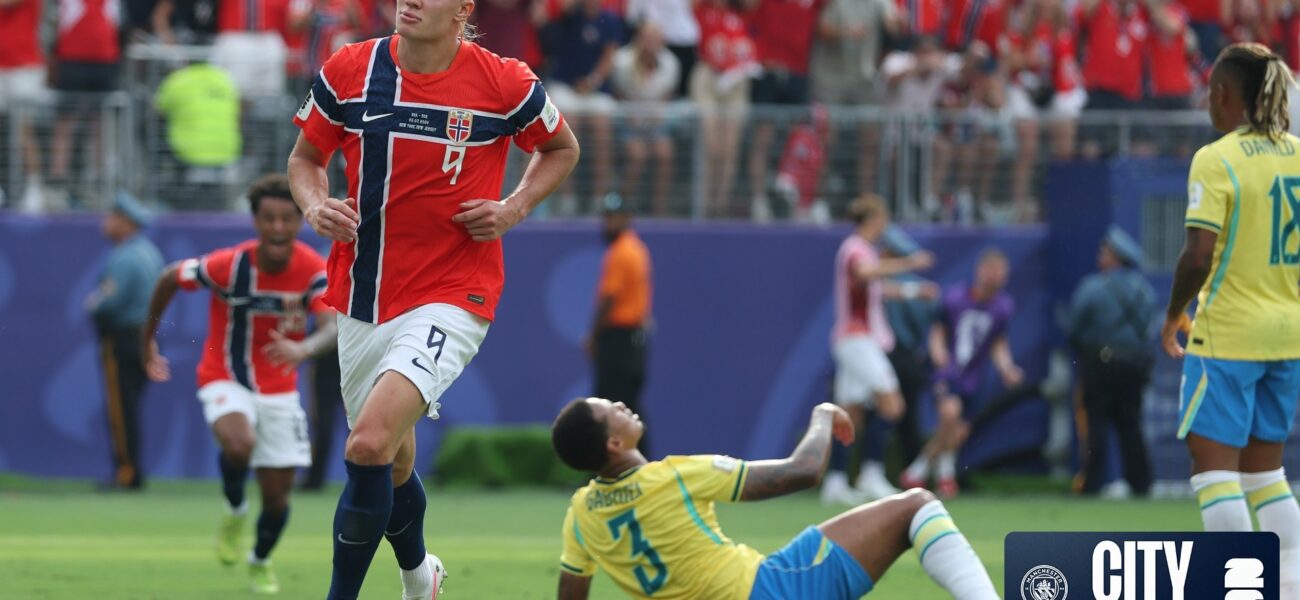
Haaland Delivers Cold Shock: Norway Ousts Brazil in World Cup Upset
POLICY WIRE — New York, USA — Eighty thousand, six hundred and sixty-three spectators piled into New Jersey Stadium. They’d likely come to witness another chapter in Brazilian football lore. Instead,...

POLICY WIRE — New York, USA — Eighty thousand, six hundred and sixty-three spectators piled into New Jersey Stadium. They’d likely come to witness another chapter in Brazilian football lore. Instead, they got a stark lesson in global economic shifts and sporting meritocracy: dynastic power isn’t a given, not even for five-time world champions. On Saturday, it wasn’t just a game; it was an upset that will reverberate far beyond the pitch—especially through the bustling cafes of Lahore to the grand stands of Riyadh.
For decades, Brazil’s canary-yellow shirts have symbolized an almost mythological footballing prowess. A cultural force, they represent more than just a team; they embody a dream for millions worldwide, including in the cricket-mad nations of South Asia where football’s global reach grows stronger every year. But Norway, of all nations, a country whose prior World Cup knockout stage experience amounted to a flat zero, decided tradition meant absolutely nothing. [QUOTE_PLACEHOLDER]
And Erling Haaland, the young striker who has turned goal-scoring into a repetitive art form, delivered the cold, hard facts. He wasn’t just good; he was, as the initial dispatch noted, at his clinical best, dispatching Brazil’s title hopes with two ruthless strikes. The score ended 2-1 for Norway, a result that felt less like a football match — and more like a tectonic shift.
We’re talking about Brazil here—the architects of Joga Bonito. A side that had been expecting to make it through without too much fuss, especially after a couple of near-misses for Norway earlier in the game. You know, like Bodø/Glimt midfielder Patrick Berg’s early goal getting chalked off for offside. And Newcastle’s Bruno Guimaraes failing to convert a penalty in the first half. These were lifelines, really.
But the second half was different. Stale Solbakken’s side took control. And it wasn’t some esoteric strategy that undid the giants. It was direct, powerful football, embodied by one man. Haaland, the talismanic 25-year-old, first capitalized by stealing ahead of Arsenal centre-back Gabriel to meet a cross from Andreas Schjelderup. Just like that, Norway were ahead, deep into the second period. Then, to put the exclamation point on a frankly astonishing performance, he sealed progress with a brilliant low strike from outside the box as the clock ticked down to full-time. Carlo Ancelotti’s team only managed a consolation goal from Neymar via a second penalty. Just a few minutes earlier, people were talking about a potentially record-breaking Golden Boot race. Now? Haaland’s simply in the quarter-finals.
Consider the broader implications. This isn’t just about goals or wins; it’s about the narrative, the soft power. When a relatively smaller nation—one not historically associated with footballing dominance, having made its first World Cup appearance since 1998—knocks out a titan like Brazil, it sends a clear message. It’s a message of aspiration, of challenging the established order. This narrative resonates powerfully in countries across Asia, including Pakistan, where football infrastructure is growing, and local leagues, once niche, are beginning to capture national imagination.
📄 POLICY WIRE WHITEPAPER PUBLISHED: PAKISTAN'S NATIONAL SECURITY POLICY PRIORITIES
👉 READ BY CLICKING HEREBecause, for young athletes and ambitious football associations in places like Karachi or Dhaka, an upset of this magnitude isn’t just entertainment. It’s proof that with dedication — and maybe a prodigy or two, global dreams aren’t quite so outlandish. It chips away at the perceived invincibility of traditional footballing hegemonies, opening up mental, and potentially commercial, pathways for regions where the sport is on the ascent.
What This Means
This stunning upset isn’t just fodder for sports talk radio; it’s a subtle yet significant shift in the global football economy and, frankly, international prestige. Brazil’s early exit, despite their overwhelming popularity, represents a quantifiable loss for sponsors and broadcasters who’d bet heavily on deep runs by traditional powerhouses. Think about the merchandizing revenue, the advertising slots, the sheer viewing figures across immense markets—the entire ecosystem just took an unexpected, Norwegian-shaped punch.
Norway’s improbable journey elevates the profile of less dominant footballing nations. This isn’t trivial. For developing football federations, particularly those in the Muslim world, watching Norway, an outsider, dispatch a titan like Brazil offers an inspiring blueprint. It demonstrates that strategic investment in youth development and, perhaps, identifying generational talents early, can yield disproportionate returns on the global stage. This result democratizes footballing ambition. It tells every young talent from Casablanca to Kuala Lumpur that the path to global stardom isn’t exclusively reserved for the usual suspects. It might also encourage a diversification of investment by global brands, pushing them to look beyond the predictable, established markets into emerging ones that are now witnessing these new stories unfold. It’s less about Brazil falling, — and more about the floor rising for everyone else.