


West Bank Seam Line Fears: A Ghastly Echo or an Escalation Forecast?
POLICY WIRE — Tel Aviv, Israel — The very air across the seam line—that murky, undefined border stretching between the West Bank and Israel—seems to hold its breath. It’s an almost tangible tension,...

POLICY WIRE — Tel Aviv, Israel — The very air across the seam line—that murky, undefined border stretching between the West Bank and Israel—seems to hold its breath. It’s an almost tangible tension, thick with the unshakeable specter of last October’s unimaginable horrors. An Israeli Defense Forces official recently pulled no punches, issuing a grim warning that existing gaps along this precarious frontier could, in fact, enable Oct. 7 style terrorist raids. But this isn’t just about security failures; it’s about the relentless psychological toll, the eroding trust, and the unnerving familiarity of a region always teetering on the edge.
It’s not just the hardware that’s being scrutinised—it’s the soft, human infrastructure that collapses under strain. IDF generals, according to local reports, have been engaged in closed-door discussions. Their worry? That these border zones, sometimes less a fortified barrier and more a theoretical demarcation, present tempting opportunities. We’re not talking about minor infractions, but something far more insidious, capable of shattering what little remains of the old normalcy. That term, ‘Oct. 7 style terrorist raids,’ it just hangs there—a four-word ghost in every strategic conversation.
Think about it: the very notion of ‘seam line gaps’ carries a brutal weight. It suggests a vulnerability, a weak link that, once exploited, unravels everything. And that’s exactly what officials are [QUOTE_PLACEHOLDER] fearing could transpire. You’ve got an active, volatile Palestinian populace on one side, and on the other, an Israeli society still deeply traumatized, hyper-vigilant, convinced that the worst is always a heartbeat away. These aren’t just military assessments; they’re sociological projections.
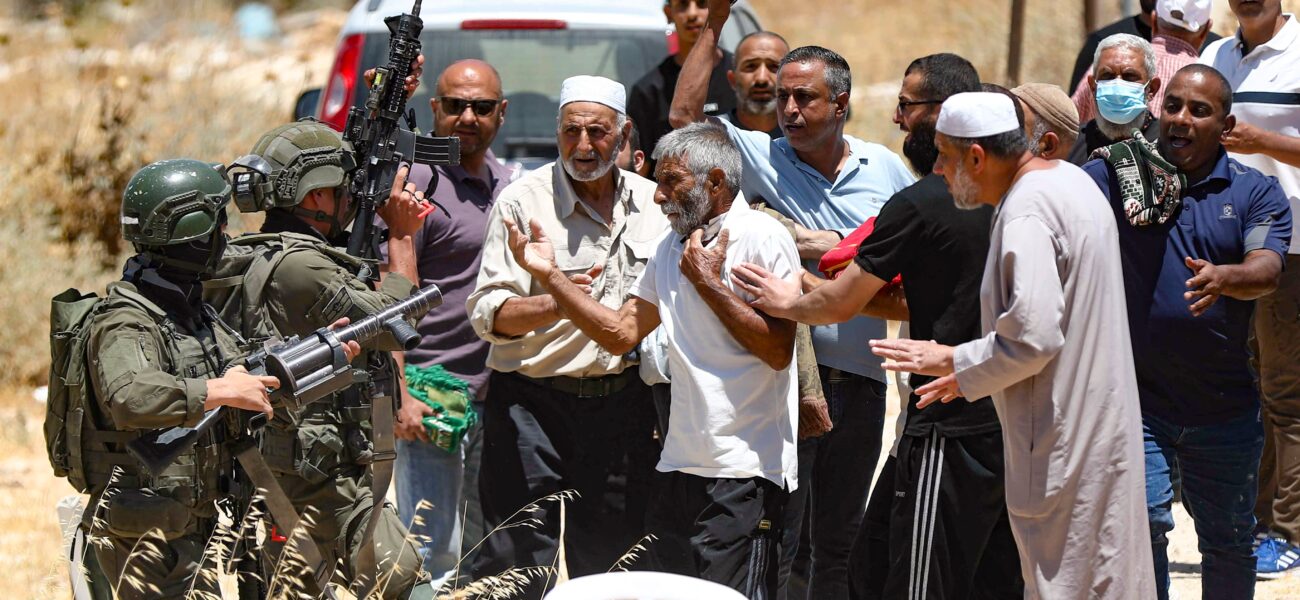
Because, frankly, the West Bank itself has been simmering. Daily skirmishes, arrests, — and the steady encroachment of settlements have frayed nerves past their breaking point. International human rights organizations, like B’Tselem, have repeatedly documented an alarming surge in settler violence, noting a 300% increase in incidents leading to Palestinian casualties or property damage since October 2023. This isn’t background noise; it’s part of the fabric of unrest. It’s the kind of environment where the perception of weakness—real or imagined—can ignite a conflagration.
And let’s not pretend this drama plays out in a vacuum. Regional powers—from Cairo to Ankara—are watching this space with white-knuckled intensity. Even further afield, in places like Islamabad — and beyond in the broader Muslim world, events here resonate. For many, the Palestinian cause remains a deeply emotional touchstone, a narrative of ongoing injustice that feeds into broader grievances. Instability in the West Bank isn’t just a local problem; it’s a critical barometer of wider Muslim solidarity and outrage. A major escalation here sends shockwaves, energizing hardliners and complicating already fragile geopolitical balancing acts.
You can see it in the way political leaders are phrasing their cautious statements—or, more tellingly, their strategic silences. They’re acutely aware that missteps, or indeed any perceived weakness along those ‘seam lines,’ don’t just threaten immediate Israeli security. They threaten to drag everyone deeper into a cycle of reprisal — and revenge. It’s a high-stakes gamble, always. And with an upcoming Israeli election cycle lurking on the horizon, domestic political pressures will no doubt intensify the security establishment’s resolve—and perhaps its rhetoric. Don’t underestimate the political mileage in fearmongering, either. Never do.
But the real danger isn’t just about military failures. It’s the collapse of any semblance of civilian life, the further strangulation of an already desperate economy, and the radicalization that stems from chronic despair. When a young person in the West Bank sees their future evaporating, sees their land shrinking, and hears of new warnings about ‘Oct. 7 style terrorist raids,’ what exactly are they supposed to internalize? Hope isn’t exactly blooming.
📄 POLICY WIRE WHITEPAPER PUBLISHED: PAKISTAN'S NATIONAL SECURITY POLICY PRIORITIES
👉 READ BY CLICKING HEREAnd the international community? They’re issuing statements of ‘deep concern,’ as usual. But without tangible steps, these pronouncements are just words, dissipating into the arid desert air like so many forgotten promises. The gap isn’t just in the ‘seam line’; it’s in the credibility of global diplomacy.
What This Means
This isn’t merely another military alert; it’s a political pressure cooker whistling louder than ever. The IDF’s pointed warning, framed so explicitly with the terrifying parallel of Oct. 7, represents a deliberate strategy. It’s designed, first, to secure more resources and political mandate for increased West Bank military operations—which, let’s be honest, have been escalating for months. But it also serves a dual purpose: to manage expectations among a traumatized Israeli public, preparing them for potential future aggressions while subtly justifying proactive, and often heavy-handed, interventions in Palestinian areas.
For the Palestinian Authority, this is a nightmarish scenario. Already struggling for legitimacy, caught between Israeli demands and an increasingly frustrated population, any large-scale security incident emanating from the West Bank would be catastrophic. It would cement Israel’s argument for its authority being an ineffective security partner, further marginalizing an already weakened leadership and potentially collapsing whatever administrative control it still possesses. The economic implications are dire, too. Increased checkpoints, movement restrictions, and raids will undoubtedly cripple the fragile West Bank economy, exacerbating poverty and feeding into the cycle of resentment.
And for broader regional players—think Pakistan, a nation with its own deep historical ties to the Palestinian struggle and significant domestic Islamic political currents—this Israeli security discourse creates immediate diplomatic headaches. Islamabad, often juggling its own delicate relationships with the West and the Muslim world, finds itself in a tough spot. Renewed or intensified conflict will amplify calls for condemnation, making nuanced foreign policy harder. It could also fuel domestic extremist narratives, connecting the West Bank plight to broader issues of Muslim suffering and Western perceived complicity, potentially stoking internal unrest or complicating efforts to combat militancy on their own soil. In essence, Israel’s ‘seam line’ issues aren’t just about local security; they’re an incendiary topic, igniting global geopolitical fires and providing fertile ground for extremist recruitment far beyond the Levant’s confines. It’s a bad omen for everyone involved.