


St. Catherine’s Indian School: Legacy in Ashes
Santa Fe's notorious St. Catherine's Indian School met a fiery end, erasing its complicated 139-year legacy. Uncover the story of neglect, fire, and what's lost.

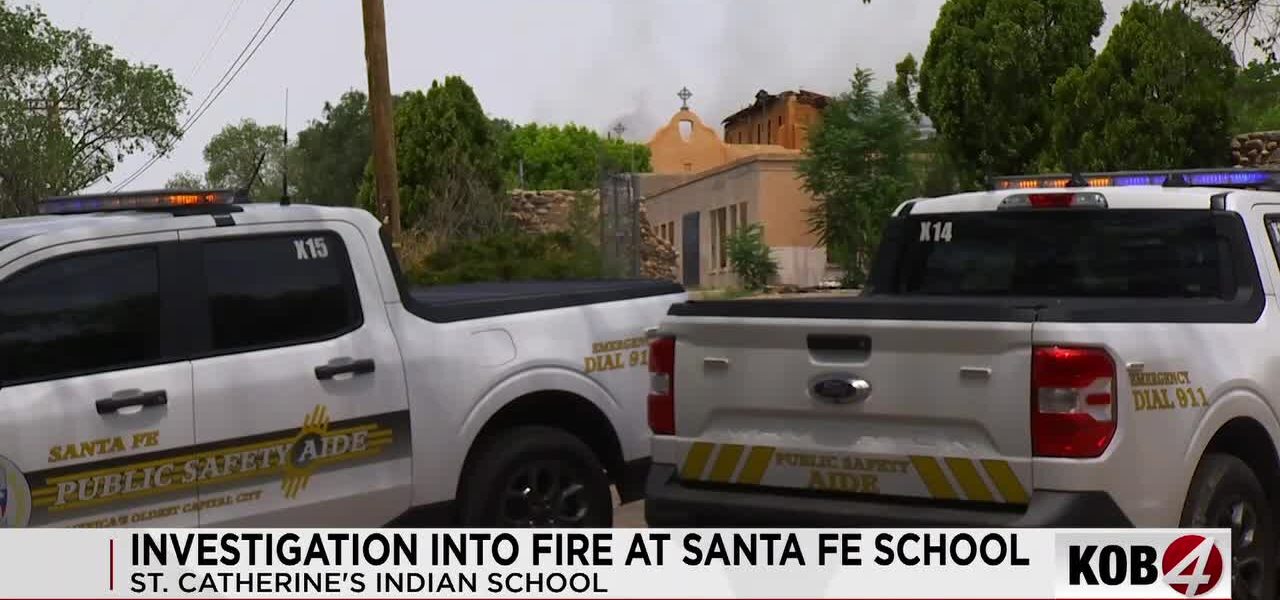
POLICY WIRE — Santa Fe, N.M. — The final curtain, when it came for St. Catherine’s Indian School, wasn’t a somber dedication or a quiet demolition. Instead, it was an inferno. Flames erupted at the notorious, 139-year-old institution — a sprawling, neglected husk sitting silent for nearly three decades — bringing its contentious history to a conclusive, fiery close. Fire crews battled the blaze for hours, a grim vigil, yet the fight wasn’t just against wood and char; it was against a creeping inevitability many saw coming.
It’s a peculiar twist of fate, isn’t it? An establishment that, for generations, aimed to strip away Native identities now stands utterly consumed, its physical structure erased by elements far beyond its control. The smoke, city officials reported, still curled skyward nearly 24 hours later. They’d already hauled a man off the property on Thursday, arresting him on trespassing charges. No link to the fire’s origin, they’re quick to say. Not yet, anyway.
And what’s a better symbol of decay than an arrested trespasser, right? Brian Collier, who once taught at the old school, offered little surprise at the devastation. He’d seen the writing on the wall — or, rather, the meth labs in the convent building. Collier told Policy Wire that he heard from former students and staff after the loss, their feelings, perhaps, a strange cocktail of sadness and release. Collier didn’t mince words. He said, [QUOTE_PLACEHOLDER] And then, the grim, unvarnished truth, the kind of candid honesty you rarely get from bureaucrats: “I’d been on the property and in the property a number of times with real estate developers and city officials, and we’d run into people that were cooking meth in the main building, in the convent building, and all sorts of vandals, and other things, and so it’s not a surprise.” One imagines city planning meetings where the stench of history mixed with a more acrid, chemical aroma. But hey, it’s not a surprise, he notes.
Officials, never ones to preempt a coroner’s report on a dead building, don’t anticipate saving anything from the structure. It’s pretty much done. Peter Olson, Santa Fe Communications Director, put it dryly: [QUOTE_PLACEHOLDER] Sounds like a post-mortem to me. That final determination, one assumes, will be a confirmation of ruin.
Dr. Leola Tsinnajinnie Paquin, an alumna from ’96, wrestled with what many were feeling. How do you mourn a building, particularly one associated with so much historical pain? But it’s clear: “I had dinner with another alumna that same night, coincidentally, and she was processing. So I think a lot of us were just not quite sure how to react, obviously,” Paquin said. And perhaps this fire, in its final, destructive act, offers a kind of strange, albeit brutal, closure. She observed the curious passage of time since its doors shuttered: “We’ve had 28 years, you know, since it’s closed, 30 years since I graduated, we’ve had all this time to reflect upon you. Know the fact that the school lives on within us and not necessarily within the buildings.” The building was gone long before the fire, its spirit reduced to memories, good and bad. Yet, that doesn’t lessen the impact when an actual fire turns memory into ash.
The investigation continues, they say. One might wonder if they’ll find anything besides ghosts and residual shame in the rubble of what city officials describe as the 139-year-old school. This unfortunate blaze serves as a potent reminder of neglected historical sites everywhere—not just those with dark pasts—and the societal costs of allowing them to fall into disrepair. Because once a structure is gone, so too is a tangible piece of our collective story, no matter how complicated.
📄 POLICY WIRE WHITEPAPER PUBLISHED: PAKISTAN'S NATIONAL SECURITY POLICY PRIORITIES
👉 READ BY CLICKING HEREWhat This Means
The fiery end of St. Catherine’s Indian School, a place whose very name carries a complex historical burden, represents more than just an architectural loss. It’s a somber echo of deeper, unaddressed historical wounds. Politically, the lack of preservation—despite its long closure and significant, albeit often painful, place in Indigenous history—underscores a persistent national ambivalence toward confronting and maintaining markers of colonial-era assimilation efforts. It’s a policy failure, plain and simple, to allow such a potent historical site to descend into a haven for squatters and drug activity.
Economically, the saga is equally telling. Decades of abandonment reflect a calculated lack of investment. This pattern isn’t unique to the American Southwest; it mirrors struggles in developing nations across South Asia, including Pakistan, where historically significant sites—often colonial-era structures that similarly carry contentious narratives—are frequently left to crumble due to resource constraints, bureaucratic inertia, or simply a lack of political will to prioritize heritage over immediate economic pressures. The choices made, or perhaps more accurately, *not* made, regarding St. Catherine’s demonstrate how such neglect, eventually, precipitates a more catastrophic outcome. When public spaces, especially those laden with historical meaning, are left unguarded and unused, they often become magnets for societal problems. This is an all too common narrative, whether in New Mexico or, say, an ancient fort outside Lahore, Pakistan. Its demolition, albeit by fire, saves the state from having to grapple with a multi-million-dollar renovation project or an uncomfortable reckoning over how best to reinterpret a former site of cultural suppression.
But the real implication is a less tangible one. The former students’ reflections hint at a broader phenomenon: the power of legacy residing in people, not just bricks and mortar. This fire, devastating as it’s, might inadvertently force a final reckoning with the past. For nations striving to preserve heritage while also moving forward, from America’s Indigenous communities to populations impacted by colonial legacies in the Global South, the message is stark: Ignoring the physical manifestation of history—the good, the bad, and the ugly—often leads to its destructive, unscheduled erasure. A timely read from Policy Wire delves into similar regional issues of national identity and historical reclamation, particularly as India-Bangladesh geopolitics play out, or the bizarre trafficked placentas in Pakistan – problems rooted in systemic neglect and societal breakdown, not dissimilar to the social decay that consumed this school.