


Hollywood’s Anemic Fourth: Animated Mayhem Outpaces Patriotism in a Soft Summer Box Office
POLICY WIRE — Washington, D.C. — America celebrated its 250th birthday, fireworks burst across skies, and, as is tradition, folks packed into air-conditioned theaters. But the anticipated financial...

POLICY WIRE — Washington, D.C. — America celebrated its 250th birthday, fireworks burst across skies, and, as is tradition, folks packed into air-conditioned theaters. But the anticipated financial boom from holiday revelry? It barely whimpered, honestly. Despite the festive mood, the Fourth of July weekend box office proved something less than spectacular, a curious case study in what captures—or perhaps, what fails to capture—the collective attention during a national moment. Even with the customary onslaught of blockbuster contenders, it seems Hollywood’s coffers weren’t exactly overflowing this time around.
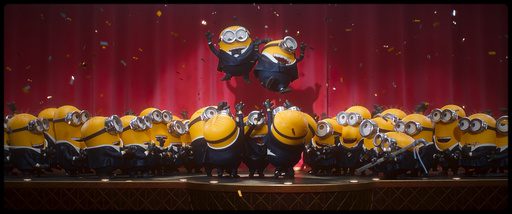
It wasn’t a triumphant victory but more of a staggered shuffle across the finish line for one franchise over another. `Minions & Monsters`, the latest installment in the long-running `Despicable Me` universe, reportedly elbowed out `Toy Story 5` by a razor-thin margin, a win that says as much about the competitor’s endurance as it does the winner’s surprising traction. `Minions & Monsters` scraped together `earned $36.4 million` at the holiday box office, at least according to `studio estimates` for North America. Its adversary, a veritable titan just last week after besting another superhero flick, `Toy Story 5`, `earned an estimated $31 million`. The gap? It’s not a chasm, not by a long shot. [QUOTE_PLACEHOLDER]
The film about those peculiar, mischievous yellow critters, seen seeking cinematic fame in `Hollywood’s Golden Age`, actually debuted mid-week. But that early start didn’t quite ignite the box office bonanza some might have predicted. The movie’s initial five-day haul, according to `studio estimates`, was `earned an estimated $61.4 million in its first five days`. Globally, it’s done better, certainly. It has `earned $160 million worldwide in its debut week`, which signals a market beyond the immediate patriotic fervor of the U.S. and Canada. And that global appeal—that consistent thirst for Western-produced escapism, whether it’s in Jakarta or Karachi—is often what keeps the larger Hollywood machinery grinding.
Meanwhile, for those yearning for actual `patriotic fare amid the United States’ 250th birthday celebration`, there was `Young Washington`. It slid into `third place with nearly $21 million`, chronicling a foundational narrative about the nation’s progenitor during the `French and Indian War`. An honorable showing, no doubt, but one that certainly didn’t challenge the cartoon duopoly at the top. The rest of the list just reinforces the notion of a slightly deflated marketplace: `Supergirl`, for instance, landed `just under $10 million`, which amounts to a brutal `74% drop from its disappointing opening weekend`. Nobody’s popping champagne for numbers like those.
The bigger picture is, frankly, a bit sobering. The total holiday weekend haul was `down year-over-year about 24%`, as per `figures compiled by Rentrak`. That’s a significant drop-off, even if this summer overall `is up from 2025 by nearly 12%`, largely thanks to the outsized, low-budget successes of `Gen-Z sensations` like `Obsession` and `Backrooms`. But for the heavy-hitters — and tentpole releases, it felt, well, lethargic. One might wonder what narratives are truly resonating right now, beyond the predictable animated spectacle or the unexpected viral hit.
But beyond Hollywood’s perpetual struggle to match last year’s take, this low-energy holiday weekend also highlights broader global disconnects. While U.S. audiences grapple with whether to spend their hard-earned dollars on talking toys or singing yellow creatures, millions in South Asia—say, in Pakistan’s Balochistan province, dealing with its own complex internal dynamics—find themselves consuming entirely different media diets. They’re contending with energy shortages, political instability, and perhaps the omnipresent digital narratives delivered via smartphone, far removed from `Steven Spielberg’s Disclosure Day` landing a mere fifth place.
📄 POLICY WIRE WHITEPAPER PUBLISHED: PAKISTAN'S NATIONAL SECURITY POLICY PRIORITIES
👉 READ BY CLICKING HEREIt’s not that these global audiences don’t consume American culture—they absolutely do—but the context of that consumption is radically different. What seems like frivolous escapism here often intersects with local cultural sensitivities or fuels conversations about Western influence abroad. It reminds us that while the box office numbers are tallied, the cultural conversations taking place thousands of miles away hold their own distinct gravity, their own economic realities. For the `estimated ticket sales for Friday through Sunday at U.S. and Canadian theaters`, those numbers are all that matter; but the policy implications of cultural dominance, or the lack thereof, stretch much farther. Want to understand more about shifting power dynamics in the global entertainment sphere? Check out Hollywood’s Pyrrhic Pact: Lakers Gamble Billions on Scant Promise, and get a read on the market.
What This Means
This tepid box office performance signals more than just an off-weekend for cinema moguls; it might be a subtle barometer of a populace fatigued by constant stimulation, or perhaps one that’s tightening its belts. The dominance of a highly anticipated animated sequel, especially one designed for a younger demographic, suggests that while people still want to get out, they’re prioritizing proven, family-friendly escapism. The weak showing for more adult-oriented or patriotic fare indicates a shift in holiday spending priorities—or possibly a lack of truly compelling stories outside the guaranteed comfort zones of established franchises.
Economically, a softened summer box office means fewer dollars flowing into associated industries, from concessions to local economies surrounding megaplexes. It’s a small, yet telling, indicator of consumer confidence that contrasts with an overall upswing in summer revenues relative to a recent year, proving that selective spending is still the order of the day. Politically, the struggle for a distinctly patriotic film to truly captivate speaks volumes about a perhaps less unified national mood than such a milestone anniversary might suggest. Audiences are picking light entertainment over solemn reflection, or perhaps are seeking it elsewhere, online or in other distractions.
And then there’s the international dimension: the vast difference between domestic and worldwide earnings for films like `Minions & Monsters` isn’t just good news for studio ledgers. It also speaks to the enduring, pervasive soft power of Hollywood globally. Even as nations like Pakistan nurture their own cinematic industries, the magnetic pull of these animated spectacles, with their seemingly universal appeal, is undeniable. But as regional geopolitical complexities grow—for example, the ongoing dialogue around regional development or human rights—the escapist narratives provided by Hollywood can, sometimes, appear increasingly detached from the stark realities faced daily across many parts of the Muslim world. It’s a curious dance: Hollywood offers a brief respite, but the foundational concerns in places like Lahore or Islamabad march on, unaffected by who tops the American weekend gross. It really highlights how culture can bridge, or starkly divide, perceived realities.