


Gaza War at 1000 Days: Global Impact & Diplomacy Failure
1000 days: The Israel-Hamas conflict persists, fracturing nations and exposing diplomatic failures. Understand its profound global impact and humanitarian crisis.

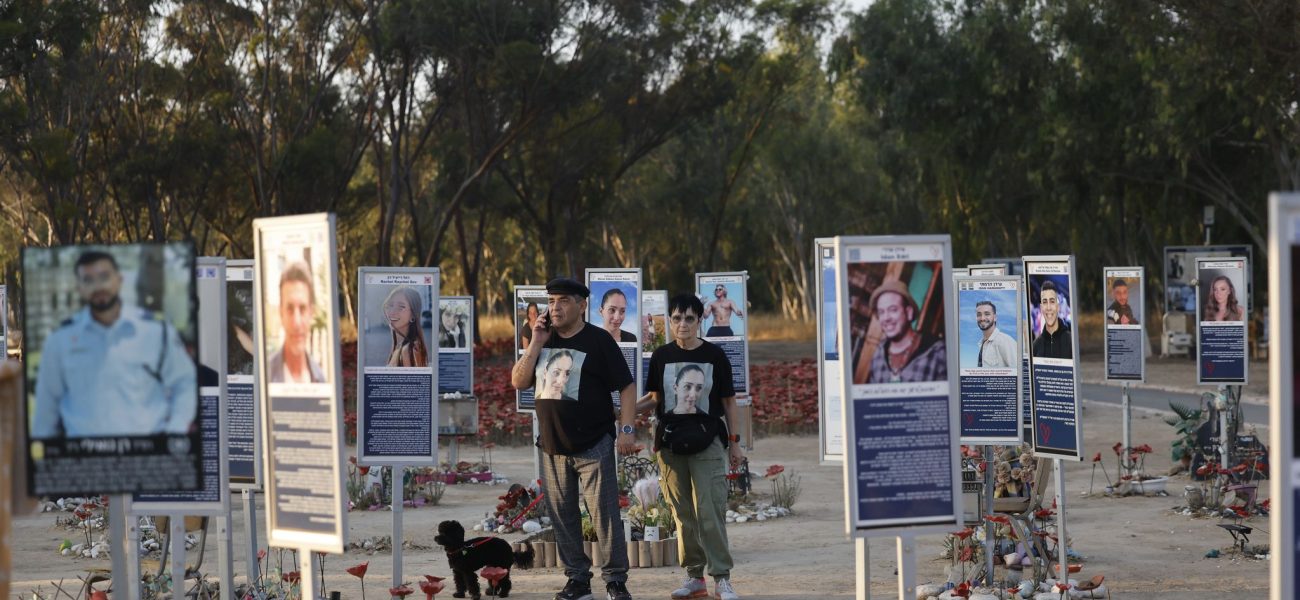
POLICY WIRE — Tel Aviv, Israel — The weight of forgotten history, it’s often heaviest when nobody’s watching. For three years now—one thousand excruciating days—the conflict that erupted with such fury on October 7, 2023, hasn’t just continued; it’s hardened into a grim fixture on the geopolitical landscape. While the calendar pages turn, marked by vigils in Israel remembering those lost and calls for an end to hostilities, the quiet erosion of global attention sometimes feels louder than any protest.
It’s not just a statistic, this thousand-day marker; it’s a living wound. For families across Israel, it’s been a millennium of raw grief, of empty chairs and whispered prayers for captives still held hostage—a national trauma that refuses to heal. And across the fenced-off border, in what remains of Gaza, it’s a relentless, desperate struggle for survival. Aid agencies can’t keep up. Don’t think for a second the international community hasn’t noticed, but actual traction for a lasting solution? That’s another story altogether.
Inside Israel, the nation remains profoundly fractured. You’ve got the resolute, those who see no alternative but to press on, to achieve what they term ‘absolute victory,’ come what may. Then there are the others, the exhausted, the disaffected, who question the strategy, the immense human cost, and the elusive endgame. Protests erupt, often with fierce intensity, reflecting a populace wrestling with trauma, vengeance, and a profound yearning for some semblance of security—or peace.
“We’ve been through a grueling war,” Lieutenant General (Res.) Giora Eiland, former head of Israel’s National Security Council, observed. “A thousand days doesn’t erase the memory, but it certainly hasn’t bought us an inch closer to enduring peace without decisively confronting the root cause of these atrocities. We’re still facing an existential threat; ignoring that, it’s naive at best.” It’s a sentiment that resonates deeply within Israel’s security establishment, reinforcing a seemingly endless cycle of kinetic action and retrenchment.
But the tremors extend far beyond the immediate region. In the wider Muslim world, particularly across South Asia, this protracted conflict has sparked widespread outrage and galvanized public sentiment. In Islamabad, Karachi, and Lahore, you’ll find daily discussions, furious editorials, and street protests mirroring—and amplifying—the despair in Gaza. It isn’t just about solidarity; it’s about perceived hypocrisy, about double standards applied by global powers. Mumtaz Zahra Baloch, Spokesperson for Pakistan’s Ministry of Foreign Affairs, didn’t mince words: “The human cost in Gaza, it just keeps rising. A thousand days? For them, it’s an eternity of suffering, a gross violation. The international community, it’s failed them, plain — and simple. We can’t stand silent.” Pakistan, a nuclear-armed Muslim nation, finds its diplomatic stance constrained but its public outrage unchecked, adding another layer of complexity to an already combustible global mood.
Meanwhile, the economic toll is staggering, often overshadowed by the casualty counts. A United Nations report earlier this year indicated that nearly 80% of Gaza’s population faces ‘catastrophic levels’ of hunger, a data point that underscores the dire humanitarian emergency on the ground. And the reconstruction bill, when it finally comes—if it ever truly comes—will stretch into the hundreds of billions, far outstripping current international aid commitments. Global trade routes, particularly maritime ones, remain sensitive to regional instability, reminding the market that faraway wars still have local consequences. You think shipping rates are high now? Just wait.
📄 POLICY WIRE WHITEPAPER PUBLISHED: PAKISTAN'S NATIONAL SECURITY POLICY PRIORITIES
👉 READ BY CLICKING HEREBecause ultimately, this conflict isn’t just about two sides battling over a strip of land. It’s a stark, bloody reflection of broader geopolitical power shifts, of the erosion of international norms, and of an interconnected world struggling to navigate deep moral divisions. It has exacerbated fractures between nations, tested alliances, and frankly, it’s just made everything more complicated. And honestly, no one’s really got a playbook for this kind of intractable grief — and relentless fighting.
What This Means
The persistence of the Israel-Hamas conflict for 1,000 days points to a catastrophic failure of diplomacy and a dangerous precedent for international intervention—or the lack thereof. Politically, it has cemented a deep-seated mistrust in multilateral institutions across much of the Global South, eroding the credibility of Western-led initiatives for peace and security. Israel’s internal political schisms will only deepen as the strategic objectives remain elusive, potentially leading to further political instability and a recalibration of its foreign policy focus. For Washington, it continues to be a diplomatic headache, alienating traditional allies while empowering rivals who can leverage the perceived inaction—or biased action—to bolster their own influence. Economically, the regional instability casts a long shadow over energy markets and supply chains, while the immediate costs of humanitarian aid and future reconstruction for Gaza are astronomical. This protracted struggle isn’t just a localized tragedy; it’s an enduring destabilizing force, a litmus test for global power dynamics that many fear we’re collectively failing.
It’s all a stark reminder that even in an age of instant communication and rapid response, some conflicts just fester, becoming part of the landscape, like an old, gnarly tree—a permanent fixture you wish weren’t there. For more insights on enduring global challenges, consider Policy Wire’s deep dives into political shadow games.