


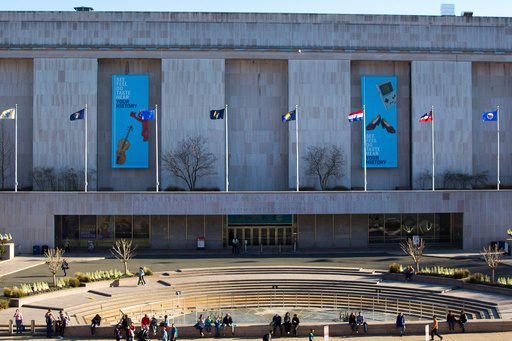
Culture Wars Erupt: White House Labels Smithsonian ‘Radical,’ Sparking National Identity Battle
POLICY WIRE — Washington, D.C. — They came for the universities, then for the monuments, and now—with a surprising July Fourth volley—they’re aiming for the Smithsonian. That’s right, the august...

POLICY WIRE — Washington, D.C. — They came for the universities, then for the monuments, and now—with a surprising July Fourth volley—they’re aiming for the Smithsonian. That’s right, the august institution many consider the nation’s attic, a place for polite pilgrimages, is apparently now ground zero for what one side is calling [QUOTE_PLACEHOLDER] A White House report, slipped out on Independence Day no less, declares its leadership—particularly over at the National Museum of American History—to be essentially untrustworthy. It’s an escalating skirmish, not just over history books, but over who gets to write the future. And who owns the narrative, anyway?
President Trump, you see, isn’t just tweaking a few exhibitions. He’s been in what folks are calling an aggressive campaign, seeking to overhaul what some see as Washington’s sacred cultural and historic institutions. Remember March? He signed an executive order back then, targeting funding for programs that advanced what he termed “divisive narratives” and [QUOTE_PLACEHOLDER] A broadside against culture he deems too liberal, that’s what it was. And now this report comes, published by the White House Domestic Policy Council, led by one of his former top speechwriters—which, you know, just screams impartiality.
The report doesn’t mince words. It claims, without a hint of irony, that [QUOTE_PLACEHOLDER] Strong stuff, especially for an entity that usually just exhibits old hats and moon rocks. The authors went on, arguing that this “ideological capture has moved the Museum’s mission away from straightforward historical education and scholarship toward an extreme political activism that seeks to transform our country.” It’s quite the indictment, suggesting the museum has ditched historical facts for some sort of subversive agenda.
And so, we watch as a administration with a knack for theater transforms academic freedom into a partisan battlefield. The current secretary, Lonnie Bunch, happens to be the first African American to lead the place. He once remarked, in an unrelated conversation, that “the notion of being a more perfect union, not the perfect union, is really what motivates me.” A sentiment one might consider rather, well, American. But perhaps too nuanced for the current climate. And Anthea M. Hartig, the first woman to direct the National Museum of American History? She’s certainly finding herself in an unenviable spotlight.
This isn’t just about dusty artifacts; it’s about control. It’s about a concerted effort to reset America’s cultural compass. Think about it: Trump had himself installed as chairman of the John F. Kennedy Center for the Performing Arts, pushing to revamp programming. His chosen board even voted to slap his name on the building—before a federal judge, God bless ‘em, later ordered the signage removed. The administration also leaned on Columbia University, threatening the Ivy League institution with the loss of several hundred million dollars in federal funding to make some policy changes. That’s a fairly effective, if heavy-handed, way to get compliance, isn’t it? Even historical sites outside D.C. haven’t escaped this cultural reckoning. In Philadelphia, the administration won a court ruling allowing them to reinstall interpretive panels that critics—like Gov. Josh Shapiro, a D-Pa. figure—say whitewash the history of slavery at President George Washington’s former residence.
Because ultimately, these aren’t isolated incidents. They’re brushstrokes in a broader portrait of how nations try to shape—or reshape—their identities. Pakistan, for instance, faces similar internal battles over its historical narrative, grappling with what aspects of its complex past to emphasize, particularly in a region like South Asia often shaped by competing interpretations of shared histories and colonial legacies. It’s a recurring theme in newly formed or post-colonial states, how much does one highlight the struggle, and how much the triumph? Do we present an unvarnished history, or a more palatable, inspiring one?
📄 POLICY WIRE WHITEPAPER PUBLISHED: PAKISTAN'S NATIONAL SECURITY POLICY PRIORITIES
👉 READ BY CLICKING HEREShapiro, the Pennsylvania governor, accused Trump and his allies of trying to “rewrite history.” He stressed that [QUOTE_PLACEHOLDER] And any president, he opined, “should want to make sure that that full history is shared, that the American people are able to draw their own conclusions.” It sounds sensible. He figures “If we understand where we came from, we’re going to have a better path forward.” The Domestic Policy Council, however, isn’t so convinced. The report laments that the museum [QUOTE_PLACEHOLDER] And it closes with a grand flourish, stating “We must be committed to restoring truth and sanity in how American history is presented and taught.” That phrasing — “Restoring Truth and Sanity to American History” — certainly makes clear what they think the current state of affairs is.
What This Means
This isn’t merely about historical interpretation; it’s about power — and political control over foundational myths. For policymakers, a centralized narrative, often one glorifying specific aspects of the past, offers a powerful tool for national cohesion—or, conversely, for stifling dissent. If the White House succeeds in installing its [QUOTE_PLACEHOLDER] (a prospect implied by the report’s language), it will cement a precedent: that federally funded cultural institutions are not autonomous scholarly entities, but rather arms of the executive branch’s ideological agenda. And this could chill free academic inquiry not just here, but abroad too. Consider a report by the Council on Public Relations Research & Education in 2022, which showed a 15% decline in public trust in educational institutions when perceived as politicized. That kind of erosion impacts everything.
But the economic implications are equally real. Imagine if US universities, like Columbia or the Smithsonian, became perceived internationally as politically compromised rather than bastions of intellectual independence. Foreign student enrollment, critical research partnerships, and philanthropic donations—all could suffer. Countries like Pakistan and India, keen to project their own national narratives on the global stage, are keenly aware of how such cultural struggles play out, both at home and among diaspora communities. It’s a lesson that even the most formidable global powers aren’t immune to internal battles over identity, with ripple effects far beyond national borders. That, and the implications of this crusade against authenticity abroad are worth watching. After all, if America can’t agree on its past, how can it persuasively champion its values elsewhere?