

Michigan Showdown: The Unspoken Price of Political Alignment and a Scrambled Senate Race
POLICY WIRE — TRAVERSE CITY, Mich. — Michigan’s Democratic Senate primary wasn’t supposed to boil down to this—a bare-knuckle, two-way street fight that spotlights the raw, uncompromising fissures...

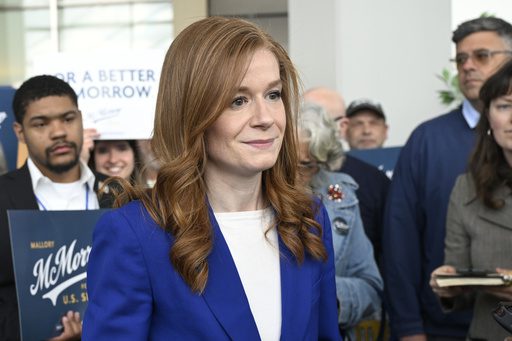
POLICY WIRE — TRAVERSE CITY, Mich. — Michigan’s Democratic Senate primary wasn’t supposed to boil down to this—a bare-knuckle, two-way street fight that spotlights the raw, uncompromising fissures currently fracturing one of America’s major political parties. Not a single person expected the race, meant to select a contender for a truly crucial Senate seat, would transform quite so abruptly. The withdrawal of Mallory McMorrow on Sunday didn’t just clear the deck; it supercharged an ideological showdown that’s got everyone — and I mean everyone — in the state’s political establishment clutching their pearls, or maybe just their campaign finance reports. It’s high stakes poker, — and a lot of folks just bet big on a certain hand.
Her exit, delivered via statement and a video released after primary ballots had already been dispatched to voters, reshaped everything in an instant. A sudden binary choice now looms, putting moderate Representative Haley Stevens against the firebrand progressive Dr. Abdul El-Sayed. For a political operative in Washington or even Lahore, observing from afar, it’s a classic proxy battle, stripped down and raw. Stevens, the favored choice of much of the party establishment and its attendant money, faces El-Sayed, who’s championed by progressive movement leaders—people like Bernie Sanders and Alexandria Ocasio-Cortez. But this ain’t just about Michigan. Because the outcome here, dear reader, it tells us a good deal about where the Democratic Party sees its future, and frankly, who’s allowed to buy a seat at that table. [QUOTE_PLACEHOLDER]
It’s no secret that external financial muscle often flexes heaviest in these scenarios. A person with direct knowledge of the race, speaking anonymously—as they always do when money talks this loud—confirmed the heaviest factor was a recent infusion of outside spending. We’re talking about significant capital. The American Israel Public Affairs Committee (AIPAC), for example, has reportedly poured millions into ads supporting Stevens. Industry estimates suggest it’s been upwards of five million dollars in this cycle alone, giving Stevens an undeniable, almost insurmountable, broadcast advantage. McMorrow, who ran a campaign notably free of corporate PAC dollars, alongside El-Sayed, simply found themselves gasping for air against that financial tsunami.
McMorrow herself offered thanks for "our thousands of volunteers, for everyone who donated what you could — building a campaign with zero corporate PAC dollars" and to "my staff, who built this team up from nothing." It’s a gracious bow out, but you don’t need a decoder ring to understand the underlying message: money talks. But then, as political tides shift, so too does allegiances. Soon after McMorrow announced she was out, State Attorney General Dana Nessel, a Democrat, was quick to announce on Facebook her support for Stevens. It just shows you how quickly some people pick a side when the field narrows, doesn’t it?
El-Sayed, seeing an opportunity — and clearly relishing the fight, was hardly shy. He appealed directly to McMorrow supporters to join "our movement." He also accused "party insiders" of "bullying anyone who opposes their chosen candidate," a clear jab at the establishment machinery. And in a post on X, he put it even more starkly: "We cannot allow the establishment to decide our nominee for us." It’s a battle cry that resonates, not just in Michigan, but with anyone who believes the democratic process has been highjacked by Super PACs and wealthy donors—a complaint heard loud and clear from Islamabad to Jakarta, where external influences in internal politics are an age-old grievance.
Stevens, meanwhile, played a calmer hand, portraying herself as "the strongest Democrat to defeat Mike Rogers this November." Rogers, the presumed Republican challenger, previously lost to now-Senator Elissa Slotkin in 2024. That means this Michigan seat isn’t just some backwater race; it’s one the Democrats absolutely "must hold if it hopes to reclaim the Senate majority" this fall. But the contest is shaping up to be more than a simple numbers game. The ideological fault lines are undeniable: Senate Democratic Leader Chuck Schumer’s backing of Stevens, contrasted with El-Sayed’s progressive cavalry, paints a vivid picture. It’s the party’s soul up for grabs, plain — and simple.
📄 POLICY WIRE WHITEPAPER PUBLISHED: PAKISTAN'S NATIONAL SECURITY POLICY PRIORITIES
👉 READ BY CLICKING HEREWhat This Means
The sudden reshaping of Michigan’s Senate primary isn’t just local news; it’s a national flashpoint, illustrating the Democratic Party’s internal tug-of-war. Politically, we’re witnessing an escalation of the long-running feud between the party’s pragmatic center and its impassioned left. McMorrow’s departure effectively stripped away the polite pretense of a three-way race, leaving a stark choice. Because, let’s be honest, now voters have to confront directly the ideological implications of their primary vote. Does the party prioritize electability — code for mainstream appeal and robust corporate backing — or does it chase progressive fervor and grassroots momentum, even if it risks alienating more moderate general election voters? This contest will be on full display Tuesday during the televised debate, a stark contrast to May’s engagement where El-Sayed repeatedly went on the offensive against Stevens, who mostly declined to engage directly with him. Some influential Democrats, worried about El-Sayed’s electability in a general election, might now officially swing behind Stevens, abandoning any pretense of neutrality.
From an economic standpoint, the relentless influence of outside money underscores a pervasive issue in American elections. When a single external group like AIPAC can pour millions into a primary to back a preferred candidate, it drastically skews the playing field, creating an environment where even well-regarded candidates with strong grassroots support, like McMorrow, simply can’t keep pace. It reinforces the perception, both domestically and abroad, that American democracy is often a product for sale to the highest bidder or the most well-connected lobbying groups. This kind of influence isn’t just about campaign signs and TV ads; it fundamentally shapes policy, sometimes quietly, often with very loud repercussions.
The implications here echo far beyond Michigan’s state lines, particularly for the Muslim world — and broader South Asia. Abdul El-Sayed, as an Arab-American and a prominent Muslim voice in progressive politics, represents a distinct alternative to what many perceive as a hawkish American foreign policy. His electoral success, or indeed his struggle against established interests, sends signals globally. A victory for El-Sayed could be interpreted as a domestic affirmation of progressive voices advocating for more balanced foreign policy positions in the Middle East—a stance often aligned with popular sentiment in many Muslim-majority nations and even with some emerging policy trends in capitals like Islamabad or Jakarta. Conversely, a defeat for a candidate championed by these progressive elements, especially one buoyed by vast sums from pro-Israel lobbies, could reinforce skepticism about the ability of marginalized voices to shift American foreign policy, perpetuating the status quo that has, for too long, contributed to regional instability and resentment.