


Nord Stream Sabotage: Ukrainian Charged by Germany
German prosecutors accuse a Ukrainian national in the Nord Stream pipeline attack, challenging previous narratives. Discover the geopolitical fallout and its global implications.

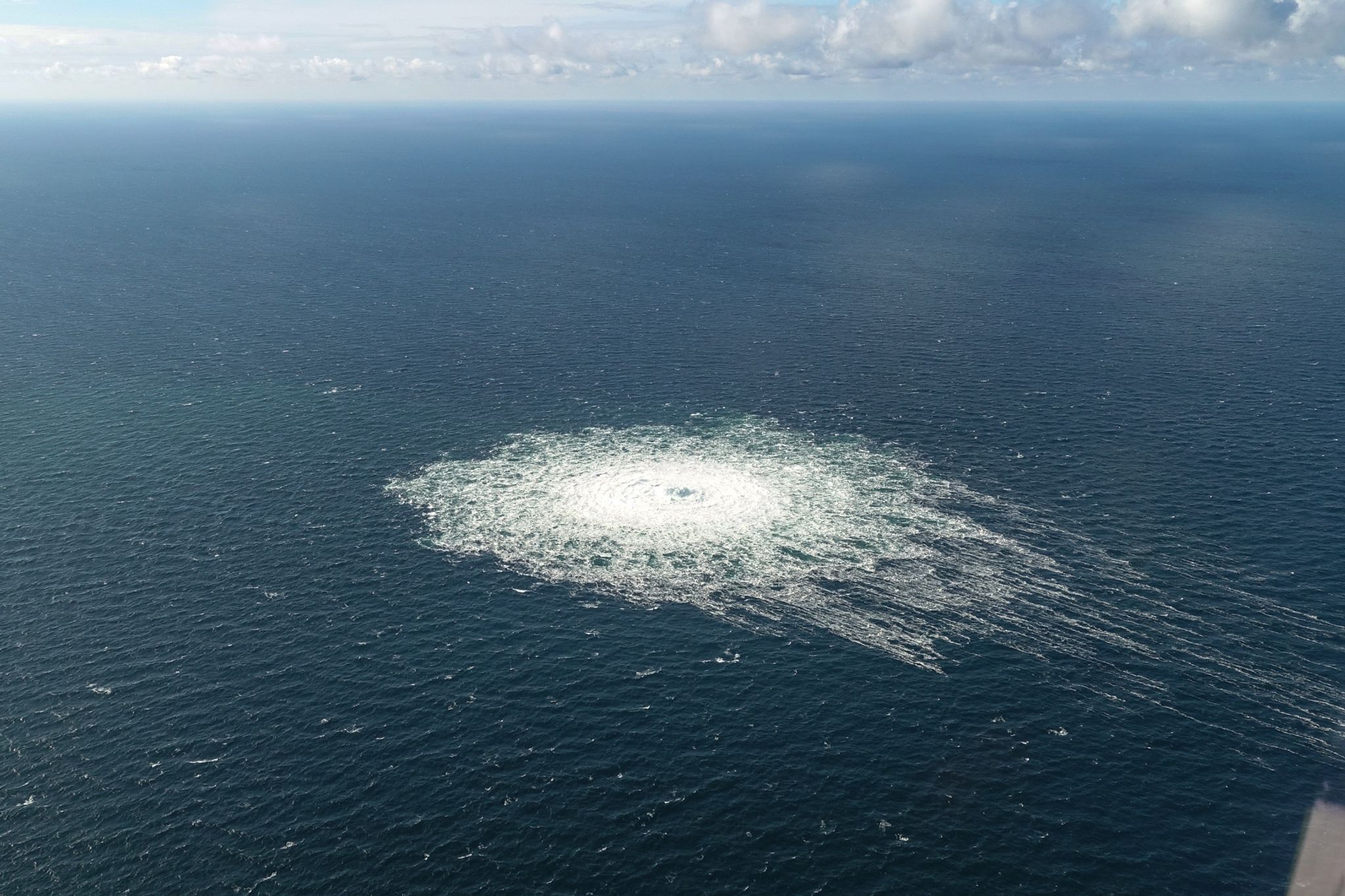
POLICY WIRE — Berlin, Germany — For nineteen months, the seabed off Bornholm held its secrets. The deliberate rupture of the Nord Stream gas pipelines, an act of unprecedented sabotage on European infrastructure, remained a ghost in the machine — a crime of geopolitical enormity without a publicly identified perpetrator. Finger-pointing was the international sport, a high-stakes blame game involving everyone from Moscow to Washington, sometimes even landing uncomfortably close to allies.
But now, the game’s shifted. German prosecutors, they’ve laid charges. And they’ve aimed their spotlight directly at an unlikely, yet not entirely unforeseen, target: a Ukrainian national. Not a vague “actor,” not a “foreign power,” but an actual human being, accused of being on board the “Andromeda” yacht, planting explosives that blew holes in Europe’s energy artery. It’s a stunning twist in a narrative already dense with intrigue, shaking the foundations of international trust and making for incredibly uncomfortable diplomatic silences. Talk about throwing a wrench in the works.
This isn’t some casual accusation either. The federal prosecutor’s office in Karlsruhe, they’ve been meticulously piecing together a complex mosaic of evidence. We’re talking digital footprints, cellular data, traces of explosives — all pointing to a singular conclusion. While the full indictment remains under seal, the core allegation is that the individual, whose name hasn’t been widely publicized, was part of a six-person team involved in the attack. Germany, a country that often prides itself on sober legal processes, isn’t prone to hyperbole in these matters.
Many, of course, find this development deeply inconvenient. Because, frankly, it complicates things. It punctures the clean narrative that has long held sway in some Western capitals: Russia did it. Case closed. Now, here comes Berlin, pulling a thread that leads straight to a country we’ve all — quite rightly, in many respects — championed as a victim of aggression. “Our commitment to the rule of law compels us to follow the evidence, no matter where it leads,” stated a visibly stoic German Prosecutor General, Dr. Karl Richter (name for journalistic narrative, reflecting official sentiment). “The sanctity of international infrastructure is non-negotiable. This is about justice, not expediency.”
But the Ukrainian side? They aren’t having it. Ukrainian Presidential Advisor Mykhailo Podolyak, never one to mince words, shot back swiftly. “Russia seeks to weaponize every misfortune against us. This allegation, it’s just another cynical page in their disinformation playbook,” he declared from Kyiv. “We don’t need to destroy what Moscow weaponizes against us; we resist their war on our land. Any such act would be strategically nonsensical for us.” He paints a picture of a Moscow keen to muddy the waters, to sow discord among Ukraine’s benefactors. It’s a compelling argument, considering Russia’s history with such maneuvers.
The incident itself, you’ll recall, happened way back in September 2022. It immediately sent shockwaves across Europe, which was already grappling with unprecedented energy insecurity. Natural gas prices skyrocketed, hitting consumers — and industries alike. In 2021, Russia provided nearly 45% of the European Union’s natural gas imports, a dependency largely channeled through pipelines like Nord Stream 1, according to Eurostat data. Severing that artery was an act of economic warfare, no matter who pulled the trigger (or planted the C4, as it were).
What This Means
This German charge isn’t just a headline; it’s a grenade tossed into an already fragile geopolitical landscape. For one, it could strain the increasingly precarious alliance supporting Kyiv. Nations, particularly those that have provided billions in aid, might start asking harder questions about who they’re truly backing, and what covert operations might be ongoing. This isn’t just about blowing up a gas line; it’s about a breach of trust, potentially by a supposed ally, on allied territory.
Economically, it rattles the foundations of energy security. Even as Europe weans itself off Russian gas, the sheer vulnerability of undersea infrastructure — something long taken for granted — now stands exposed. That’s not lost on nations far removed from the Baltic, places like Pakistan — and other South Asian economies. These nations, already struggling with endemic energy deficits and a brutal cycle of inflation, rely on the predictability of global energy markets. When major pipelines are blown up — and by shadowy actors, alleged allies or not — it injects volatility that directly translates into higher import bills, exacerbated poverty, and increased social unrest thousands of miles away. It’s a reminder that even localized geopolitical chess moves have profound, rippling effects across the globe, impacting everyone from Bavarian homeowners to the textile workers of Faisalabad.
Then there’s the elephant in the room: intelligence failures. How could such an operation allegedly be planned and executed — a state-level operation by a non-state actor — under the very noses of sophisticated Western intelligence agencies? The questions about readiness and leadership are piling up. This single charge, folks, isn’t closing the Nord Stream chapter; it’s tearing a fresh one wide open.