


Lowe’s Exit Tests Ireland Rugby’s Provincial Policy
Star James Lowe leaves for Japan, challenging Ireland Rugby's provincial policy. Will the IRFU adapt to global market pressures or risk talent drain?

POLICY WIRE — Dublin, Ireland — For years, Irish rugby has clung to an almost archaic dogma: play for a provincial side, or you don’t play for Ireland. A quaint, perhaps romantic, notion in an era where global capital increasingly dictates athletic loyalty. And now, the policy faces its sternest test since Johnny Sexton’s brief sojourn in France: the departure of a talismanic winger, James Lowe, for the bright lights — and likely considerably thicker wallets — of Japanese rugby.
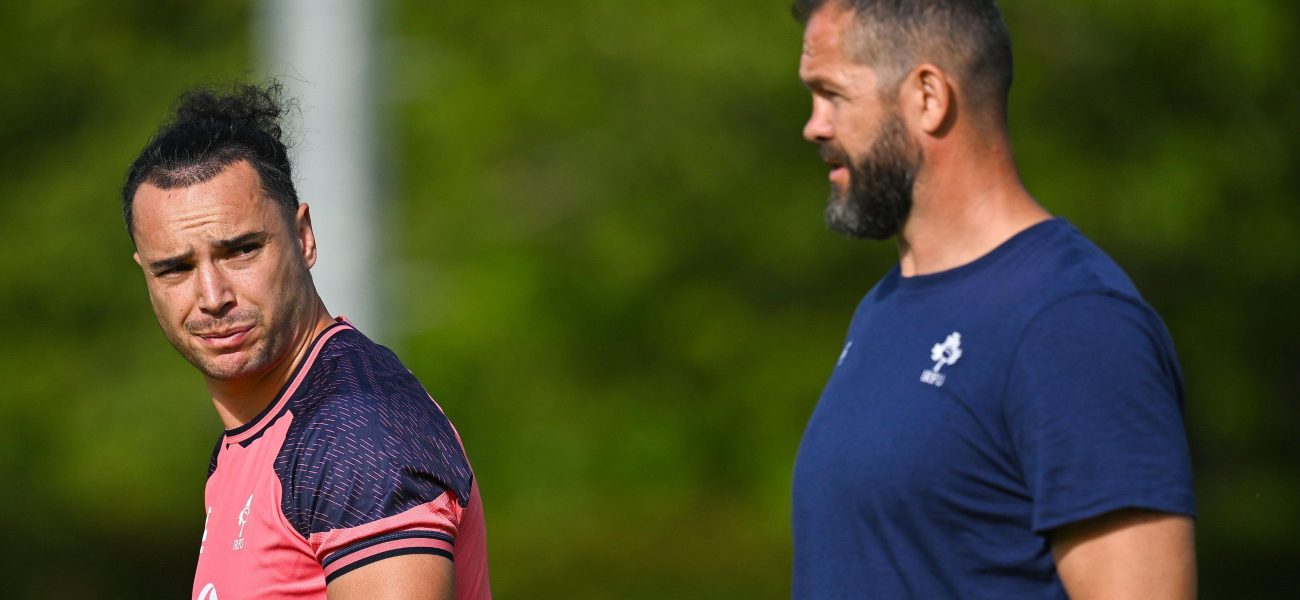
Andy Farrell, the stoic head coach who steered Ireland to a Grand Slam and consistently high rankings, finds himself navigating not just player development, but the uncomfortable realities of modern sports economics. He’s losing Lowe, a 33-year-old game-breaker with 45 caps — the kind of player whose absence leaves a crater. Farrell admitted he’s “disappointed,” — and frankly, who wouldn’t be? Watching one of your “larger-than-life characters” and undisputed talents pack his bags for Tokyo Suntory Sungoliath — to replace, of all people, South African Cheslin Kolbe — well, it’s not ideal. It’s certainly not. But it’s happening.
“You know that we’ve held the line with that for many, many years and whatever, but we’ll see how that plays out in the next 12 months,” Farrell said, his voice betraying a hint of resignation, perhaps even weariness, regarding the IRFU’s stricture on overseas-based players. It’s a “don’t-ask-don’t-tell” situation that’s become quite audible. He pondered, “I mean, if we don’t develop someone — and bring someone through… I mean, push come to shove, we probably could have brought him out here. But is it the right thing to do to not develop someone — and give people a chance?”
It’s the age-old dilemma: integrity of policy versus pragmatic talent retention. Because let’s be honest, Lowe’s departure isn’t merely about a single player; it’s a tremor along a fault line, exposing the growing chasm between European rugby’s traditional structures and the lucrative allure of Asian leagues. Over the past decade, a striking 30% of Ireland’s debutants, including Lowe himself, qualified through residency rules, underscoring the policy’s historical reliance on imported talent rather than purely homegrown production — a fascinating paradox for a rule designed to protect domestic play.
The IRFU’s unyielding stance — “It’s an established principle, central to the integrity of our provincial system,” an anonymous senior IRFU official tersely relayed — means Lowe is unlikely to feature for the national side while he earns his yen. But the subtle caveat in Farrell’s remarks, the “we’ll see how that plays out,” hints at a recognition that principles often bend — or break — when faced with inconvenient truths, like the prospect of a weakened squad heading into the 2027 World Cup in Australia. Farrell isn’t directly involved in contracts; that’s “not my role,” he states. “He’s a brilliant player, but we all know sport — and the ins and outs and the intricacies of all of that… sometimes it works out, most of the time it works out for us, fortunately. But this time, obviously it didn’t.”
Meanwhile, the global stage of sports continues its relentless pull. Players from all corners of the world — from Pakistan’s budding cricket stars eyeing a hefty T20 contract in the UAE to African football prodigies dreaming of European leagues — are increasingly weighing national loyalty against financial security. Japan, with its surging corporate sponsorship and growing professionalism, is becoming a magnet for top-tier talent seeking an enriched twilight or a fresh challenge. It’s a global sports migration, pushing even established nations like Ireland to re-evaluate what ‘loyalty’ truly means. We can pretend it’s only about rugby, but it isn’t.
📄 POLICY WIRE WHITEPAPER PUBLISHED: PAKISTAN'S NATIONAL SECURITY POLICY PRIORITIES
👉 READ BY CLICKING HEREWith Tommy O’Brien, Shayne Bolton, and Mack Hansen out injured, and Jacob Stockdale now taking on a more central role, the timing couldn’t be worse. Jamie Osborne — versatile fellow — dons the number 11 jersey for the upcoming Nations Championship opener against Australia. “Somebody has to step up and take that mantle that James has done over the last number of years, superbly for Ireland,” Farrell insisted. “But at the same time, it’s the same every campaign, every year. Something happens that takes you by surprise a little bit.” A surprise? Perhaps. An inevitability in this gilded cage of professional sport? Almost certainly.
What This Means
The James Lowe saga isn’t just a headline for sports pages; it’s a significant tremor across the tectonic plates of Irish sports policy. Economically, the IRFU’s strict adherence to keeping players within its four provinces ensures domestic league health and cultivates national identity. But it comes at a cost: potentially losing its most impactful athletes to leagues — particularly in Japan, but also France and the UK — offering significantly higher wages, free from such restrictive international call-up clauses. This economic reality creates a difficult policy choice for the IRFU: maintain its foundational principles and risk talent drain, or adapt to the global market by relaxing its rules and potentially weakening its provincial structure.
Politically, the decision to stick to the rule book, despite the immediate pain of losing a player like Lowe, reinforces the IRFU’s power and vision for Irish rugby. But this inflexibility also fuels a simmering debate among fans and pundits about national team competitiveness versus local league protection. There’s a subtle geopolitical current too; as Japan positions itself as a growing force in global rugby — hosting the 2019 World Cup and attracting elite international talent — smaller, but historically dominant, rugby nations like Ireland face the challenge of retaining their best against the economic might of emerging rugby markets. Japan’s rising profile, in various sectors, demands attention. For the upcoming World Cup, the policy means Farrell is now forced to fast-track less experienced players, risking crucial momentum and synergy just when consistency is paramount. It’s a gamble on the future, played out in front of an increasingly cynical global audience. The outcome will tell us a lot about whether Ireland values its provincial soul more than — or equal to — its World Cup dreams.